Boca Raton is one of the pricier places to live in Florida, and most of what you pay for is visible the day you arrive. You’re buying into well-kept public beaches, a compact downtown built around Mizner Park, a university city with its own Brightline station and a location between Palm Beach and Fort Lauderdale with easy access to both. There’s no state income tax, which offsets a meaningful share of the cost for anyone moving from the Northeast.
What you’re giving up is affordability, walkability outside a few pockets and any expectation of a mild summer. This guide covers the numbers, the neighborhoods and the practical side of arriving.
What It Costs to Live in Boca Raton
Boca Raton’s cost of living runs well above the national average, and housing is where most of the gap shows up.
Renting. The average rent across the city was $2,965 as of August 31, 2026, according to RentCafe’s Boca Raton rent data. By unit type, studios averaged $1,959, one-bedrooms $2,370, two-bedrooms $3,057 and three-bedrooms $4,170. That’s a little under 2% higher than a year earlier.
Buying. Prices climb the closer you get to the water. Condominiums and single-family homes inland cost far less than waterfront and beachfront property east of Federal Highway, where prices run into the millions. Get current comparables from a local agent for the specific neighborhood rather than relying on a citywide average.
The offsets. Florida has no state income tax, which is one of the biggest financial reasons people relocate here from high-tax states. Against that, budget for home insurance, which is expensive in coastal Florida, plus year-round air conditioning costs and, in many communities, homeowners association fees that aren’t trivial.
East Boca Versus West Boca
This is the basic geographic division, and it shapes almost everything about daily life.
East Boca covers the coastal core: downtown, Mizner Park and the areas near A1A and the beach. It’s the most walkable part of the city, the most expensive and the most urban in character. Luxury condominiums dominate near the water. It suits people who want to walk to dinner, who value beach access above square footage and who aren’t shopping on price.
West Boca is mostly unincorporated Palm Beach County west of Florida’s Turnpike, outside the city limits but with a Boca Raton mailing address. It’s a landscape of gated golf communities, family neighborhoods and 55-plus developments. You get more house for the money and quieter streets, and you give up walkability almost entirely.
The middle, between Federal Highway and the Turnpike, is the compromise: reasonable access to both the beach and the western amenities, at prices between the two.
The honest advice is to decide early which of those three you are, because the search is completely different in each.
Who Moves Here
Boca Raton draws four distinct groups, and the mix explains a lot about the city.
Working professionals, drawn by the city’s largest employers: Florida Atlantic University, Baptist Health Boca Raton Regional Hospital and Office Depot’s headquarters. A growing number of remote workers who could live anywhere have also chosen it.
University families, connected to Florida Atlantic University, which was founded in 1961 and sits in the middle of the city.
Retirees and 55-plus residents, many relocating from the Northeast and concentrated in the western communities.
Seasonal residents, who arrive in the fall and leave in the spring. The city is busiest from roughly November through April, with the peak from January through March, and this group is why restaurant waits, traffic and hotel rates swing so hard between February and August.
Schools
Boca Raton’s public schools are part of the School District of Palm Beach County, and school quality is a big part of why families look here. There’s also a substantial private and parochial school presence, and Florida Atlantic University anchors higher education within the city itself.
As anywhere in Florida, school assignment is tied to address in ways that can be counterintuitive. Check the assignment and the current school grade for a specific property before committing, rather than relying on a neighborhood’s general reputation.
Getting Around
Boca Raton is mostly a driving city. That’s the plain truth, and it’s the biggest adjustment for anyone arriving from a walkable northern city.
I-95 and Florida’s Turnpike both run north to south through the area and are the primary arteries. Federal Highway and Glades Road carry most local traffic, and Glades in particular is congested at peak hours.
Brightline has its own Boca Raton station downtown at 101 NW 4th St, next to the public library by Mizner Park. The station opened December 21, 2022, and trains run north to West Palm Beach and south through Fort Lauderdale and Aventura to Miami, with through service to Orlando. Tri-Rail commuter trains stop at Yamato Road station, where free shuttles connect to Florida Atlantic University and the office parks, and Palm Tran buses run several routes through the city, according to the city’s public transportation page.
Fort Lauderdale-Hollywood and Palm Beach International airports are both under an hour away by car, and Boca Raton Airport handles general aviation within the city.
Within the city, only downtown around Mizner Park and parts of East Boca are genuinely walkable. Everywhere else assumes a car per adult, even with the train downtown.
Weather and Hurricane Season
Winters are the reason people come: warm, dry and comfortable from roughly November through April. The National Weather Service’s rainy season for South Florida runs May 15 to October 15 and brings 60% to 70% of the year’s rain (NBC Miami on the rainy season). June through September is the hottest stretch, with frequent afternoon thunderstorms and heat that makes midday outdoor activity unpleasant.
Hurricane season runs June 1 through November 30, and it peaks around September 10, with most activity between mid-August and mid-October, according to the National Hurricane Center’s climatology. That’s a practical planning matter rather than a reason not to move. It means having a plan, knowing your property’s evacuation zone, budgeting for insurance and accepting that patio furniture, boats and outdoor equipment need somewhere to go when a storm approaches.
Our guide to the best time to visit Boca Raton covers the seasonal calendar in detail.
Settling In
The city is easy to enjoy once you arrive. The beaches at Red Reef and Spanish River are well kept, Gumbo Limbo Nature Center charges no admission and Mizner Park is the social center downtown. Our things to do in Boca Raton guide covers the essentials, and the restaurant guide covers a dining scene that’s stronger than the city’s size suggests.
For families, things to do with kids covers Sugar Sand Park and the indoor options that matter in summer. Golfers have four public courses to choose from, covered in our Boca Raton golf guide.
Storage During and After a Move to Boca Raton
Relocations into Boca Raton have a particular shape. A great many are downsizes: a household leaving a larger home in the Northeast for a condominium or a smaller Florida house, carrying furniture that won’t all fit and that nobody’s ready to sell. Others are staged moves, where the belongings arrive before the closing date. And a large share are seasonal, where the household is only here half the year.
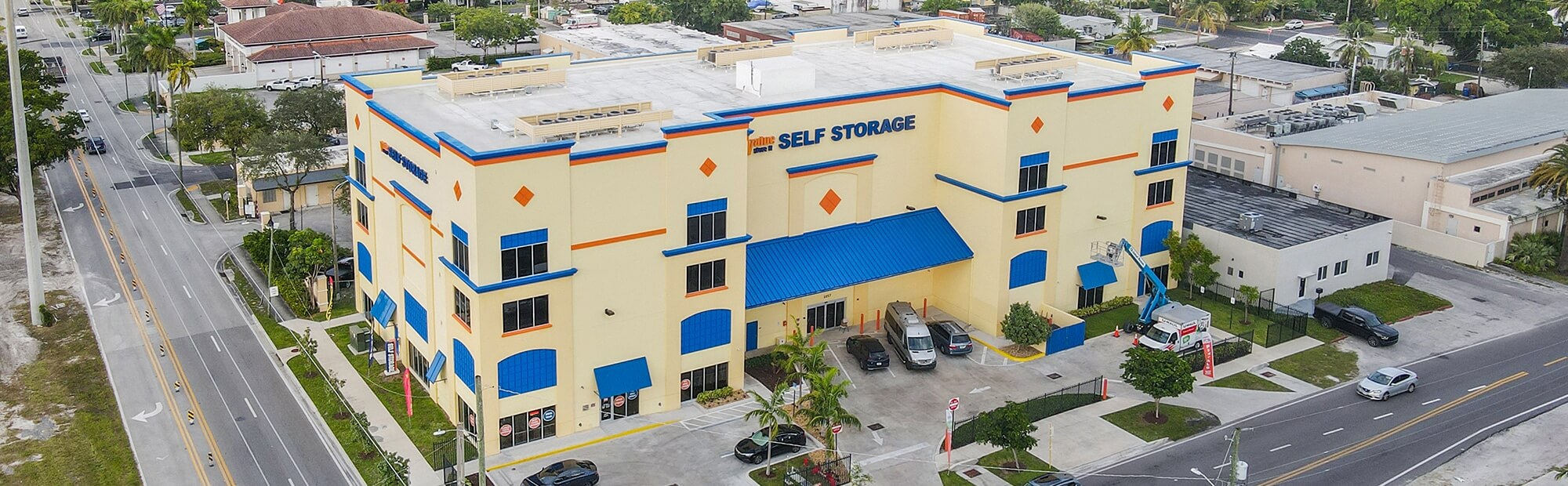
Value Store It’s Boca Raton facility rents month-to-month with no long-term contract, which is what all three situations actually need. Sizing follows the household.
A 5×5 unit, about the size of a small closet, covers boxes, documents and seasonal gear. A 5×10 holds the contents of one room, such as a furnished bedroom, and a 5×15 takes a studio apartment. A 10×10 holds a one-bedroom apartment, a 10×15 a two-bedroom apartment and a 10×20 a three-bedroom home in the middle of a move. A 10×30, about a garage and a half, takes a four-bedroom home arriving ahead of a downsize.
The decision that matters most in this climate is climate control. People moving from drier states routinely underestimate what South Florida humidity does to wooden furniture, upholstery, artwork, photographs, documents and electronics. If the contents matter, this isn’t the place to cut corners.
For vehicles, car storage is the standard answer for seasonal residents leaving a car over the summer or households with more vehicles than driveway. Boat storage covers both the off-season and hurricane season, when getting a vessel out of the water and secured is part of the plan.
Frequently Asked Questions
Is Boca Raton a good place to live?
For many people, yes. It offers well-kept public beaches, a respected public school district, a walkable downtown core and its own Brightline station. It suits families, professionals and retirees who can afford it. The trade-offs are cost, a car-dependent layout outside a few pockets and hot, stormy summers.
How much money do you need to live in Boca Raton?
More than in most of Florida. Housing is the biggest line: RentCafe put the average rent at $2,965 as of August 31, 2026, with one-bedrooms averaging $2,370 and two-bedrooms $3,057. Insurance and air conditioning add to the monthly budget, while Florida’s lack of a state income tax offsets part of the cost for people relocating from high-tax states.
What’s the difference between East Boca and West Boca?
East Boca is the coastal core, including downtown and Mizner Park, and it’s the most walkable, most urban and most expensive part of the city. West Boca is mostly unincorporated Palm Beach County west of Florida’s Turnpike, with gated golf communities, family neighborhoods and more space for the money.
Are people still moving to Boca Raton?
Yes. The city continues to attract professionals, remote workers, university families, retirees and seasonal residents, drawn by the absence of a state income tax, the schools, the beaches and the position between Palm Beach and Fort Lauderdale. That steady demand is a large part of why housing costs stay high.
Do you need a car in Boca Raton?
For daily life, yes. Only downtown and parts of East Boca are genuinely walkable. Boca Raton does have its own downtown Brightline station, with trains to Miami, West Palm Beach and Orlando, plus Tri-Rail at Yamato Road and Palm Tran buses, but most errands, schools and jobs assume a car.
Making the Move
The two decisions that matter are which side of the city you want and whether the numbers work. East Boca buys walkability and beach access at a premium. West Boca buys space and quiet for less. The middle splits the difference.
Beyond that, budget honestly for insurance and air conditioning, check school assignment for the specific address rather than the neighborhood and plan for the fact that your first summer will be hotter and wetter than you expect. Most people who make it through that first August end up staying.