
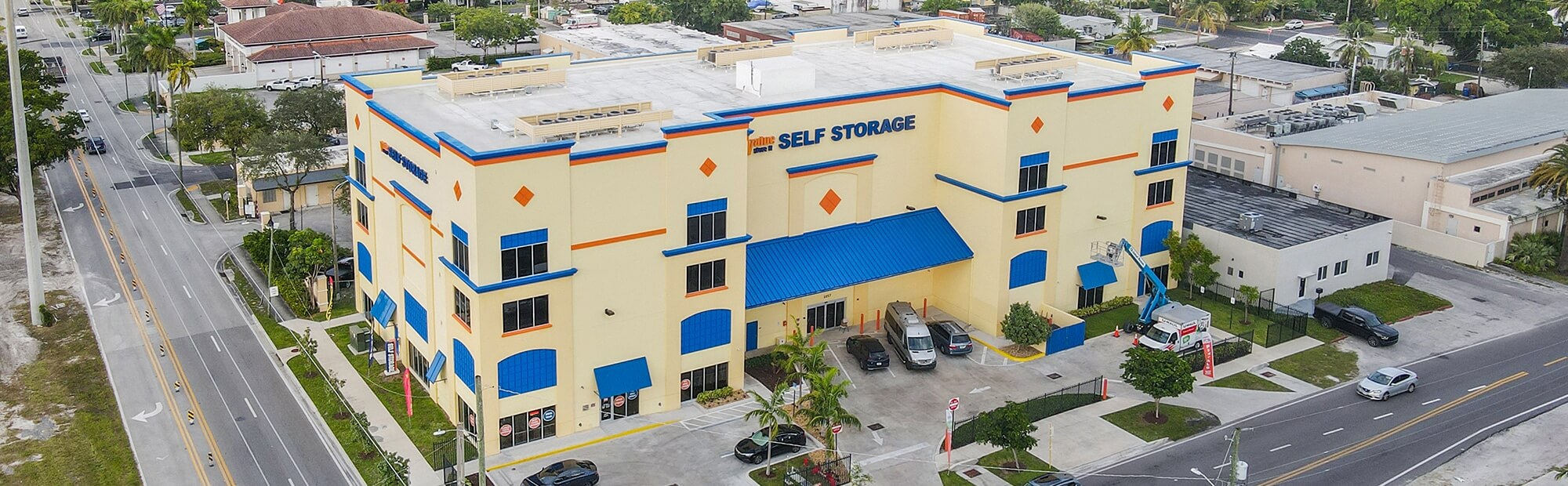
Find Car Storage Near You
What Car Storage Is
Car storage is a rented space held for a single vehicle over weeks, months, or years. Unlike a curbside spot or a friend’s driveway, the space belongs to you for as long as you keep the rental active, and nobody else parks in it. We rent car storage the same way we rent every other unit at Value Store It: month to month, no long-term contract, cancel any time.
Car storage is not a repair shop, a valet service, or a dealership consignment program. We don’t service your vehicle, start it for you, or move it around the property. What we provide is the space and the security that surrounds it. You keep your own keys, carry your own auto insurance, and decide when the car goes in and when it comes back out.
Vehicle storage is offered at selected Value Store It facilities rather than at every one, because it depends on the land and layout each site has. The location list at the bottom of this page names every Florida and Massachusetts facility that currently takes cars, so you can confirm your own market before you make plans around it.

Indoor Storage Units and Outdoor Parking Spaces
Car storage at Value Store It comes in two forms, an enclosed indoor unit or a marked outdoor parking space, and the right one depends on your vehicle and on what the nearby facility offers. An indoor unit puts walls and a roof between the car and the weather. An outdoor space is a designated spot inside a secured lot, sized for a vehicle rather than for furniture and boxes.
Indoor units are measured in square feet, and our climate controlled units run from 25 to 300 square feet. A 10x20 unit is 200 square feet, about the footprint of a one car garage, and our own size guide lists a compact car among the things that fit inside one. A 10x30 unit gives you 300 square feet, enough for a car plus lawn care equipment.
Outdoor parking is the practical answer for a second car you simply don’t need for a while, and for anything longer than a compact. Pulling into an open space is easier than threading a car through a roll-up door, and there’s more room to walk around the vehicle. The trade-off is real: an outdoor car sits in sun, rain, and pollen, so a breathable cover does more work.
Availability of each option varies by facility, and unit sizes differ from market to market. Check the location page for the facility closest to you to see which storage type it sells and what’s open right now. Every location page also lets you reserve or rent online, so you can lock in a space before you drive over.
Who Car Storage Is For
Car storage suits people with more vehicles than parking. That includes the extra car nobody drives daily, the vintage car that deserves protection from the elements, the project car taking up the garage bay, and the vehicle left behind while somebody travels for months. In each of those cases the car isn’t the problem, the parking is.
Students are one of the clearest cases. A car parked on a city street through a semester abroad or a long summer at home is a car collecting tickets, and plenty of students have come back to find theirs towed and sitting in an impound lot with fees attached. A monthly storage space costs far less trouble than that, and the car stays exactly where you left it.
Snowbirds, deployed service members, and anyone taking a long work assignment use car storage the same way. So do households in the middle of a move, a renovation, or a downsizing, when the new place has one fewer parking spot than the old one. Because the rental is month to month, you’re not signing up for a year to cover a three-month gap.
Car storage also settles the HOA and city ordinance problem. Many neighborhoods limit how long a vehicle can sit in a driveway or on the street, and some ban certain vehicles outright. Moving the car to a storage facility resolves that without selling something you fully intend to drive again.
How to Prepare a Car for Storage
Preparing a car for storage takes an afternoon and prevents most of the problems people blame on storage itself. Wash and dry the exterior so bird droppings and road salt aren’t left to etch the paint, and clear the interior of food, papers, and anything else that attracts pests. Change the oil if it’s anywhere near due, because used oil holds contaminants that sit against engine parts.
A few steps matter most for a car that will sit longer than a month:
- Fill the fuel tank and add a fuel stabilizer to limit condensation and fuel breakdown
- Inflate the tires to the pressure on the door jamb sticker, slightly higher for long storage, to reduce flat spots
- Disconnect the battery or connect a trickle charger so it doesn’t drain down
- Leave the parking brake off and use wheel chocks instead, so pads don’t bond to the rotors
- Cover the car with a breathable cover, never a plastic tarp, which traps moisture underneath
Handle the paperwork before drop-off day. Keep the registration current, and call your insurer before you cancel coverage, since many carriers offer a reduced comprehensive-only rate for a stored vehicle and a lapse can cost you more later. Photograph the car’s condition on the day you park it. Then clear out the valuables, the garage remote, and any spare key hiding in the glovebox.
Security and Access at Value Store It
Security is the whole reason a stored car sits at a facility instead of on the street. Value Store It runs state of the art security, with individualized pin access and individual door alarms on our storage units. Access is controlled, which means the people on the property are renters and staff rather than anyone who happens to be walking past.
Access hours run 7 days a week including holidays, from 6 AM to 10 PM, with extended hours at some locations. You can collect the car early on a Saturday or drop it back after work on a weekday without booking anything. Office hours are shorter, Monday through Saturday 9 AM to 6 PM and Sunday 10 AM to 2 PM, so plan any paperwork or payment questions around those.
Our staff are trained storage professionals who know their own market, and they’ll tell you honestly whether a given vehicle fits the space you’re looking at before you rent it. If you want to see the gate, the lot, and the actual space, ask. Walking a property before renting is the fastest way to settle any doubt about where the car will sit.
Storing a Car for Six Months or Longer
There’s no limit on how long you can keep a car in storage with us. A month-to-month rental simply renews until you end it, so a six-month plan and a three-year plan work the same way. What changes over a longer stretch is the maintenance the car needs, not the paperwork you sign.
For storage beyond about a month, the battery and the tires are what fail first. A trickle charger handles the battery. Tires lose pressure slowly and can develop flat spots under a car that never moves, so set them correctly before you leave and check them when you return. Fluids, belts, and rubber seals age on a calendar rather than an odometer.
If you can visit every month or two, start the car and let it reach operating temperature, or better, drive it around the property. Circulating oil and coolant, working the brakes, and running through the gears keeps seals wet and parts moving. Because access runs 7 days a week, that maintenance visit takes about twenty minutes out of a weekend.
Car Storage Costs and How to Rent
Car storage is billed as a monthly fee with no contract, and you can cancel any time. What the fee comes to depends on the space and the market. An outdoor parking space and an enclosed climate controlled unit are different products and are priced differently, and so are a 10x20 unit and a 10x30 unit, or an upstairs inside unit and a downstairs one.
Local market and current availability move the number as much as anything else does. A facility in a dense Miami neighborhood and one in a smaller market don’t charge the same for the same square footage, and rates shift as spaces fill and open up. That’s why we publish live pricing on each location page instead of a single figure here that would be wrong somewhere.
Renting is short work. Find the facility closest to you, confirm it offers car storage, compare the indoor units and outdoor spaces it currently has open, then reserve or rent online. Find a Value Store It location near you to see live availability and pricing for car storage in your market, and park the car whenever you’re ready.
Frequently Asked Questions
Is It Legal to Put a Car in a Storage Unit?
Yes. Storing a registered, insured vehicle in a storage unit or a rented parking space is legal, and it’s a common use of self storage. Your rental agreement sets the rules, which normally require current registration, no leaking fluids, and no living in or working on the vehicle on site.
How Do I Store My Car for 6 Months?
Rent a space month to month, then prep the car. Wash it, change the oil, fill and stabilize the fuel, set the tire pressure, disconnect the battery or add a trickle charger, and use a breathable cover. Keep the insurance and registration active, and check on it every month or two.
How Much Does Car Storage Cost?
Car storage is a monthly fee with no contract, and the amount depends on the space and the market. Indoor climate controlled units versus outdoor parking, unit size, upstairs versus downstairs, the local market, and current availability all move it. Check your nearest location page for live pricing.
Can I Get to My Car While It Is in Storage?
Yes. Access runs 7 days a week including holidays, 6 AM to 10 PM, with extended hours at some locations, so you can take the car out whenever you want to drive it. You’ll use your own individualized pin at the gate. No appointment and no advance notice are required.
Where Can I Find Car Storage Near Me?
Value Store It offers car storage at selected facilities in Florida and Massachusetts. The list below names every location that currently takes vehicles, from Miami and West Palm Beach to Wesley Chapel, Ocoee, Allston, and Lakeville. Pick the closest one to see its spaces, access hours, and live pricing.
Why Choose Value Store It?
Month-to-Month
Units rent month to month with no long-term contract, so you can cancel when you no longer need the space.
Climate Control
Indoor units hold temperature and humidity steady, which protects electronics, clothes, books and furniture.
State-of-the-Art Security
Secure access, monitoring and individual door alarms on every unit.
Easy Access
Open 7 days a week including holidays, from 6 AM to 10 PM, with extended hours at some locations.
Moving Supplies
Boxes and packing supplies are available onsite at every location, plus truck rentals and free moving carts.
Value Protection Plan
Optional protection plans cover your stored property while it is with us.
Car Storage Locations
Every facility below offers car storage. 13 locations across Florida and Massachusetts.
Ready to reserve your Car unit?
Pick the location nearest you to see what is available right now and rent online. Our onsite staff can walk you through the space before you commit.