
Pembroke Pines is a 35-square-mile commuter suburb in southwest Broward County, and moving to Pembroke Pines, FL almost always means trading a longer drive to work for more house than the coast will sell you. Over the three months ending August 2026, Redfin put the median sale price at $489,676, down 4.0% from a year earlier, with homes selling after 71 days on the market. This guide covers what it costs, which neighborhood fits which buyer, the schools, storm season and the first two weeks after the truck leaves.
The East-to-West Gradient Every House Hunter Learns First
The single most useful thing to know before you start shopping: Pembroke Pines gets newer as you drive west, and further from everything you commute to. Pines Boulevard runs the whole length of the city, University Drive marks the eastern edge, and the western subdivisions stop where the Everglades conservation land begins. Your street address is really a decision about how far you’re willing to drive.
The east end near University Drive is 1970s and 1980s housing plus two very large age-restricted condo communities, and it’s the cheapest way into the city. The middle, from Flamingo Road west to I-75, is where the retail and the 1990s master-planned neighborhoods sit. The far west, past the interstate, is 1990s and 2000s construction on bigger lots, and the run east to I-95 and the coast is a long one on a bad morning.
Three things the city doesn’t have are worth saying plainly, because listings won’t say them. There’s no beach; the nearest is the Hollywood Beach Broadwalk, roughly 25 minutes east. There’s no walkable downtown, only two clusters that function like one, the Shops at Pembroke Gardens and the City Center campus. And there’s no real job center inside the city limits, which is why your commute matters more here than the school ratings.
What It Costs to Live in Pembroke Pines
Housing is the whole cost-of-living story in Pembroke Pines, and the spread between property types is enormous. The citywide median sits just under $490,000, but the condo market is a different city: Redfin’s data for Century Village put that neighborhood’s median at $169,918 over the three months ending August 2026. That gap isn’t a bargain hiding in plain sight. It reflects how much of the city’s condo inventory sits inside the two big 55-plus communities on the east side, where resale prices run well below the rest of the city.
Income and carrying costs sit in a normal suburban range. The Census puts median household income at $85,104, and Niche classifies the city as a suburb of Fort Lauderdale where roughly 70% of housing is owner-occupied. That ownership rate is the number that best explains the feel of the place: this is a city of people who bought and stayed. The 2020 Census counted 171,178 residents across about 35 square miles, which makes Pembroke Pines the second-largest city in Broward County.
The line item newcomers underestimate is insurance. Florida windstorm and homeowner coverage runs above the national average, and it’s the cost that turns an affordable mortgage into an uncomfortable one. Get a real quote on the specific address before you go under contract, because premiums vary by roof age and construction in ways that surprise buyers from other states. Townhouse and condo buyers also give up garage and attic space, which is why a 10×10 storage unit, about half a one-car garage, is a common landing spot for what won’t fit.
Pembroke Pines Neighborhoods and Who Each One Suits
Pembroke Pines is a city of named communities rather than organic neighborhoods, and most of them are gated, master-planned and governed by an HOA. The useful way to sort them is by who they actually serve: the established east side, the mid-city middle, the trade-up communities, the far-west family tracts, the golf-resort address and the age-restricted condo market.
Pembroke Lakes and City Center: The Established East Side
Pembroke Lakes and the City Center area form the civic and retail heart of the city, and they’re the most affordable non-condo entry point. The housing is older single-family stock and the payoff is proximity: the Charles F. Dodge City Center, the Frank C. Ortis Art Gallery and Pembroke Lakes Mall all sit within a few minutes of each other, and so does the city-owned golf course. Buyers who want to walk from a show to dinner should look here first, and accept that the homes are 40 to 50 years old and will need work.
Towngate and Pembroke Shores: Mid-City Prices and Shorter Drives
Towngate and Pembroke Shores are the steady mid-priced family neighborhoods in the middle of the city. They’re more walkable than the far-west gated tracts, which in this city means a sidewalk network and a shopping plaza you could reach on foot rather than anything urban. First-time buyers and renters who want a shorter run east toward Fort Lauderdale tend to land here, and the housing is less dated than the University Drive corridor without the west-side commute.
Pembroke Falls: The Trade-Up Address Near Pembroke Gardens
Pembroke Falls is the best-known master-planned community in Pembroke Pines: gated, HOA-run and gathered around an 18,000-square-foot clubhouse with a heated pool, eight lighted tennis courts and three basketball courts. It’s the classic trade-up move for a family that has outgrown a townhouse and wants a clubhouse and a pool without joining a country club. The location is the practical argument: you’re minutes from the Flamingo Road retail corridor and the Shops at Pembroke Gardens, so the daily errands don’t cost you half an hour each way.
SilverLakes and Chapel Trail: Newer Homes at the Everglades Edge
SilverLakes and Chapel Trail are the two big western communities, and they suit families who rank school proximity and newer construction above walkability. SilverLakes is built around its own lake system. Chapel Trail is larger, a master-planned community of 17 sub-associations built out from the late 1980s through the late 1990s, and it backs onto the 450-acre Chapel Trail Nature Preserve, where an elevated boardwalk runs out through the sawgrass. Chapel Trail Elementary, Silver Trail Middle and West Broward High all sit on its edges. Living next to that boardwalk is a genuine perk. Living that far west of the coast and the county’s job centers is the price.
Grand Palms: Golf-Resort Living Inside the City
Grand Palms is built around the 27-hole course at the Grand Palms Hotel, Spa and Golf Resort, and it’s unusual for a landlocked Broward suburb because it has a 137-room hotel and spa on the property. Buyers who play several times a week and want the course out the back door choose it over the larger family communities. The golf is a real test, with the Grand and Royal nines combining for 6,813 yards at a 142 slope off the gold tees, so it suits a serious player rather than a casual one. Our guide to the golf courses in and around Pembroke Pines covers what a non-member can actually book.
Hollybrook and Century Village: The 55-Plus Condo Market
Hollybrook and Century Village are the two large age-restricted condominium communities on the east side, and together they hold most of the city’s condo inventory, which is why Pembroke Pines condo resale prices sit so far below its single-family median. Hollybrook is a gated 55-plus club open since 1968, with an 18-hole par-72 championship course and a full 18-hole executive course on site. Both communities carry notably low resale prices, which makes them the most realistic way to buy in Pembroke Pines on a fixed income. Downsizing into a condo usually leaves a gap, and a 5×10 unit holds the contents of one room, which is generally exactly what the new place won’t take.
Schools and Higher Education in Pembroke Pines
Pembroke Pines runs the largest charter school system in Broward County, and the largest municipally run nonprofit charter system anywhere: four elementary schools, three middle schools and one high school. The city operates those campuses alongside the Broward County public schools, so the enrollment question isn’t simply which zone you fall into. Apply early, because seats in a municipal charter system are finite and demand tracks the housing market.
On the traditional public side, the schools named most often by local sources are West Broward High School, Flanagan High School and Walter C. Young Middle School, all three of which earned state A grades for 2025-26. Zoning varies street by street across a city of this size, so confirm the assigned school for the exact address rather than the community name. Two houses in the same subdivision can feed different schools.
Higher education is better represented than the suburb label suggests. Broward College’s South Campus sits inside the city at 7200 Pines Blvd, which covers two years of college without a commute. For families with younger children, the practical weekday network is C.B. Smith Park, Pines Ice Arena and the city’s own art and cultural programs, all of which show up in our guide to things to do with kids in Pembroke Pines.
Commuting, Driving and Getting Around Southwest Broward
Plan on two cars. Pembroke Pines is a driving city, almost nothing outside the Shops at Pembroke Gardens and the City Center campus is reachable on foot, and there’s no job center inside the city limits, so expect a real commute. Public transit exists but it isn’t a realistic substitute for a car if you work anywhere else in the county.
Direction matters more than distance. Downtown Fort Lauderdale and Las Olas Boulevard are about 30 minutes northeast, Wynwood and downtown Miami are 40 to 45 minutes south, and the Miramar office corridor immediately south of the city is the closest concentration of white-collar employers. Fort Lauderdale-Hollywood International Airport sits 20 to 35 minutes away, which is close enough to make Pembroke Pines workable for people who fly weekly.
The road grid is simple once you learn four names. Pines Boulevard is the commercial spine running east to west. Flamingo Road and University Drive are the main north-south routes. I-75 runs north to south through the western half of the city, and Sheridan Street is the fast run east to Hollywood Beach and the coast. Rush hour on I-75 and I-95 is genuinely bad, so test your commute at the hour you’d actually drive it before you sign anything.
Climate, Storm Season and the Costs They Add
South Florida heat is a budgeting problem, not just a comfort problem. NOAA’s 1991 to 2020 normals for Fort Lauderdale-Hollywood International Airport put July and August at a 90°F high and a 78°F low, and January, the coolest month, at 76°F and 61°F. June is the wettest month at about 9.6 inches, February and March are the driest at about 2.4 inches each, and the rainy season runs roughly June through October, mostly as short afternoon showers. Air conditioning runs most of the year and the power bill shows it.
Hurricane season is the honest risk. The National Hurricane Center puts the Atlantic season from June 1 to November 30, peaking on September 10, with most activity between mid-August and mid-October. Pembroke Pines sits inland, about 25 minutes from the coast, but inland isn’t the same as safe here: a 2017 Climate Central study put the city behind only New York City and Miami for the number of residents exposed to coastal flooding. Pull the flood zone for the specific address before you make an offer and price flood insurance alongside windstorm coverage. Shutters or impact windows, a plan for the pool cage and a stocked pantry are normal parts of owning here.
Humidity that runs most of the year is why climate-controlled storage in Pembroke Pines matters more than it would in a dry climate, particularly for anything wooden, upholstered, paper or electronic that would otherwise live in a garage. On the pleasant side of the ledger, the dry season runs November through April, which is when the patios and the parks are genuinely worth the money you pay to live near them, and our seasonal guide to visiting Pembroke Pines takes that calendar month by month.
Your First Two Weeks in Pembroke Pines
Do the boring errands in one loop. The Walmart Supercenter at 12800 Pines Blvd covers the first grocery run, Burlington at 11930 Pines Blvd stays open to 11 p.m. Sunday through Thursday and 11:30 p.m. on Friday and Saturday for the things you discover missing at 9 p.m., and the second Burlington at 16024 Pines Blvd serves the western communities, closing an hour earlier Sunday through Thursday. JCPenney at Pembroke Lakes Mall is the practical stop for window treatments and home goods. For the yard, Flamingo Road Nursery is a 10-acre garden center open daily from 8 a.m. to 6 p.m., about 15 minutes north in Davie.
Closing dates slip, and this is a market where they slip often given a 71-day median time on market. Home2 Suites by Hilton Miramar Ft. Lauderdale and the Residence Inn Fort Lauderdale SW/Miramar are the two extended-stay properties worth comparing if you land before the house is ready, both about 4.5 miles south with in-suite kitchens. If the whole house needs to go somewhere for a few weeks, a 10×20 unit holds the contents of five rooms, or a three-bedroom home. Running the numbers first on our moving cost calculator and working through the moving checklist will save you the two or three expensive surprises most moves generate.
Then start acting like a resident. Get on the city’s events calendar, which carries the Hispanic Heritage Festival on September 26, 2026, Booville on October 28, the Storybook Festival and ParTee at Night on November 14, the Artisan Market on November 21 and SnowFest on December 5, with Taste of Pines in February and Pines Day in late April. Beats and Bites is a winter series rather than a year-round one; in 2026 it ran January through March. Walk the Chapel Trail Nature Preserve boardwalk early in the morning before the sun gets up. Get used to C.B. Smith Park, the 299-acre county regional park with lake trails, courts and the seasonal Paradise Cove water park, where Broward County charges $3 per motorized vehicle carrying eight or fewer occupants on weekends and County holidays, and nothing on a weekday. Then work through our Pembroke Pines restaurant guide and the local shopping guide at the pace of one new place a week.
Frequently Asked Questions
Is Pembroke Pines a good place to live in Florida?
Pembroke Pines suits families and retirees who want space, parks and schools more than nightlife or walkability. Niche classifies it as a suburb of Fort Lauderdale with 70% owner-occupied housing, and the city counts 41 arts and cultural facilities alongside its parks and its charter schools. If you want a downtown, a beach within walking distance or a short commute to a creative job, you’ll be happier elsewhere in Broward.
Is Pembroke Pines expensive to live?
Pembroke Pines is mid-market for Broward County rather than cheap. Redfin put the median sale price at $489,676 over the three months ending August 2026, down 4.0% year over year, and the Census puts median household income at $85,104. The condo market is the affordable end, with Century Village’s median at $169,918 on Redfin’s latest three-month read, largely because of the two big 55-plus communities. Insurance is the cost that stretches budgets, not the mortgage.
Is Pembroke Pines in Miami?
Pembroke Pines isn’t in Miami. It sits in southwest Broward County, and Niche classifies it as a suburb of Fort Lauderdale rather than Miami. Downtown Miami is about 40 to 45 minutes south by car, and downtown Fort Lauderdale is roughly 30 minutes northeast. The confusion is understandable because the metro area runs continuously, but the county, the school district and the tax bill are all Broward.
What’s the biggest risk of living in Florida?
Storms and the insurance costs attached to them. The National Hurricane Center puts the Atlantic season from June 1 to November 30, peaking September 10, with most activity between mid-August and mid-October. Pembroke Pines sits inland, but the land is low and flat, so flooding is a genuine exposure, and wind doesn’t care about the distance to the beach. Budget realistically for windstorm and flood coverage, and expect near-daily afternoon thunderstorms from June through September that are ordinary weather rather than emergencies.
How far is Pembroke Pines from a beach?
The nearest real beach is the Hollywood Beach Broadwalk, about 25 minutes east, reached fastest along Sheridan Street. It’s a 2.5-mile oceanfront promenade lined with restaurants and shops, and walking it costs nothing. Parking is the catch: weekend parking fills early, so arrive in the morning or park north of the main strip and walk down.
Is Pembroke Pines safe?
Safety varies by street in a city this large, so check the current Broward Sheriff’s Office reporting for the specific address rather than trusting a city-wide figure. Niche publishes graded rankings for crime alongside schools and outdoor activities and is a reasonable starting point. What the data does show is stability: 70% of homes are owner-occupied, and most of the city consists of gated or HOA-governed master-planned communities.
Storage and Space While You Settle Into Pembroke Pines
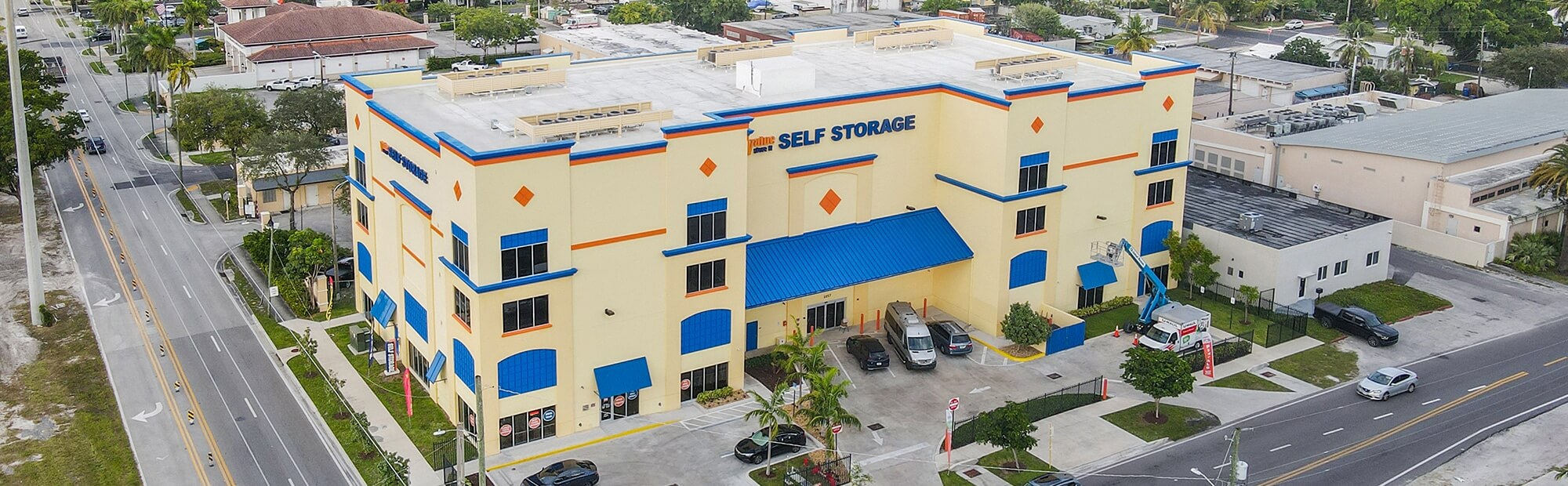
A move into a Broward suburb rarely lines up perfectly, and the gap between the closing date and the day everything finds its place is where storage earns its keep. Value Store It’s Sheridan Village facility rents month-to-month with no long-term contract, so you can take a unit for six weeks without committing to a year while the house, the schools and the commute settle into a routine.
Size it to the job. A 5×5 locker, about the size of a small closet, holds boxes, files and the holiday bins that don’t survive an HOA garage. A 10×5 unit gives you 50 square feet, the contents of one room, which covers a furnished bedroom or the overflow from a downsizing condo move. A 10×10 takes the contents of three rooms, roughly a one-bedroom apartment. A 10×20 holds the contents of five rooms, or a three-bedroom home. Climate control is the option to take seriously here, given how much of the year is humid. Start with the location page for hours, directions and current availability, and take the unit for a month longer than you think you’ll need it.