
The best time to visit Pembroke Pines, FL, is November through April, the dry half of the year, and March is the most comfortable month in it. Peak season across southeast Florida runs December through April (VISIT FLORIDA), which makes November the value pick: the weather has already turned and the winter crowds haven’t arrived. This guide walks the year season by season, covering weather, crowds, city events, hurricane risk and the timing that decides whether an afternoon outdoors actually works.
The Pembroke Pines Year Runs on Two Seasons, Not Four
Pembroke Pines has a dry season and a wet season, and nearly every trip decision follows from which one you land in. The dry, comfortable stretch runs November through April, and the wet season holds from roughly May or June through October. January is the coolest month, averaging a 76°F high and a 61°F low, while July and August both run 90°F days and 78°F nights (NOAA 1991 to 2020 climate normals).
Rain splits the same way. June is the wettest month at about 9.6 inches, and February and March are the driest at roughly 2.4 inches each. Wet-season rain doesn’t arrive as all-day drizzle either. It arrives as a heavy afternoon thunderstorm that clears within an hour, which changes how you schedule a day rather than whether you go out at all.
Geography sharpens both halves of the year. Pembroke Pines sits inland in southwest Broward County, about 25 minutes from the nearest ocean at Hollywood, so no reliable sea breeze cuts the afternoon heat the way it does in a coastal town. Shade is scarce across the newer western half of the city, and that one fact drives most of the seasonal advice below.
Crowds run on a separate clock. The city’s large 55-plus communities, Century Village and Hollybrook among them, fill with seasonal residents from January through March. That’s when restaurant waits stretch, weekend tee times vanish and Pines Boulevard traffic thickens. By June those same neighborhoods are half empty.
November Through February: The Dry Season Sets In and Demand Follows
November through February delivers the most reliable weather in Pembroke Pines, and demand builds across it rather than arriving all at once. November is the quiet end of the stretch; by January the 55-plus communities are full and peak-season rates are in force. Daytime plans almost never get rained out in this window, February is one of the two driest months of the year, and a light jacket for evenings is the whole packing question.
The city’s calendar is at its densest here. The City of Pembroke Pines runs the Storybook Festival and ParTee at Night on November 14, 2026, the Pembroke Pines Artisan Market on November 21 and SnowFest on December 5, with Taste of Pines following in February and the Beats and Bites music series running as a winter event through the first months of the year. Booking against one of those dates is how you see the city being social rather than just being suburban.
Chapel Trail Nature Preserve is the venue that gains the most from cool, dry air. The 450-acre wetland carries a 1,650-foot elevated boardwalk through sawgrass, with herons, egrets, wood storks and ospreys among the 120 bird species recorded there, and alligators turn up regularly. Admission is free, and the gates open at 8 a.m. Monday through Saturday and close at dusk, with a 6 p.m. close on Sunday (the city’s preserve page).
The Shops at Pembroke Gardens is the other cold-weather winner. The open-air center holds more than 75 retailers plus patio restaurants, and it runs a farmers market every Sunday from 11 a.m. to 5 p.m. (Pembroke Gardens). The walk is genuinely pleasant from December through March in a way it isn’t in August. Parking is free, pets are welcome, and the rows closest to the restaurants fill by noon on a Saturday.
Golf is the one thing winter makes harder. Pembroke Lakes Golf and Racquet Club, the city-owned John Sanford design that has been open to the public since 1969, is the course a visitor can most reliably get on, and its weekend tee times go early in season (the city golf page). Book a week ahead or play a weekday, and see our roundup of the city’s golf courses for the alternatives. The same seasonal pattern explains a local quirk: plenty of snowbirds keep a 5×5 locker year-round for the clubs, beach chairs and holiday boxes they’d rather not fly back and forth.
March Through May: The Comfort Peak and the Quiet Window
March through May is the best trade on the Pembroke Pines calendar. March pairs warm days with the year’s lowest rainfall, and by mid-April the seasonal residents have gone home while the real heat still hasn’t landed. Hotel demand across the Miramar cluster just south of the city softens once the winter season closes out in April.
The city programs hard through spring. The Mayor’s Golf Tournament and a spring edition of ParTee at Night both fall in March, the Annual Egg Hunts land around Easter, and Pines Day arrives in late April (the city events calendar). Pines Day is the one to plan around if you want to see the place the way residents experience it.
Grand Palms Golf and Country Club is worth a spring morning. It plays as three nine-hole courses, the Grand, the Royal and the Sabal, combined into three different 18-hole routings; the Grand and Royal combination runs 6,813 yards from the gold tees at a 73.3 rating and a 142 slope (Grand Palms). Play the silver or white tees unless you’re a single-digit handicap. Resort access means a visitor can book without knowing a member.
C.B. Smith Park is the spring default for a full day outdoors. The 299-acre Broward County regional park carries batting cages, a driving range, tennis, squash and pickleball courts, lake trails to walk or ride, and rentable BBQ pavilions by the water. Most of the county’s regional parks charge $3 per motorized vehicle carrying eight or fewer occupants on weekends and County holidays, and nothing midweek (Broward County Parks). Pavilions book weeks ahead for birthdays, so arrive early on a Saturday if shade matters, and see our guide to things to do in Pembroke Pines for more.
June Through October: Heat, Afternoon Storms and the Lowest Demand
June through October is the cheapest and emptiest time to visit Pembroke Pines, and the most demanding. July and August sit at 90°F days and 78°F nights, June brings the heaviest rain of the year, and the humidity rarely lets up before evening. The upside is real: shorter waits everywhere, easier tee times and hotel rates in the Miramar corridor that behave the opposite way to a beach town.
The storm pattern is predictable enough to schedule around. Build outdoor plans before noon and keep the afternoon indoors. Pembroke Lakes Mall, enclosed and air-conditioned with more than 150 specialty shops, is the standard fallback, and AMC Pembroke Lakes 9 inside it has reserved recliners and laser projection, so you can book seats from the parking lot rather than stand in line.
Pines Ice Arena is the answer nobody expects in a city this hot. Public skating runs daily alongside classes from first-timer through advanced, admission is $14 with skate rental at $6, and the standing weekly session times can change without notice (Pines Ice Arena). Check it before loading the car, and bring your own socks.
Paradise Cove Water Park inside C.B. Smith Park is the summer draw for families, with four five-story waterslides, the Crazy Creek tube ride and two play areas, Sharky’s Lagoon and Parrot’s Point. Admission runs $15 a person for the day or $10 a person after 3 p.m. on top of park entry, and the season is short: weekends from late March, daily through the middle of the summer, then weekends only until the 2026 season closes on September 27 (Broward County’s water park page).
Shade is thin at the water park, so a morning arrival beats an afternoon one. For the rest of the summer shortlist, see family-friendly things to do with kids. The floats, paddleboards and beach chairs that summer requires spend the other half of the year somewhere, which is why a 5×10 storage unit is a common household fixture around here.
Summer programming keeps going regardless of the heat. The Juneteenth Celebration and the Caribbean American Heritage Festival both land in June, Splash in the Pines runs in August, and the calendar sharpens again in the fall with the Hispanic Heritage Festival on September 26 and Booville on October 28 (city special events).
Hurricane Season and How to Plan Around It
The Atlantic hurricane season runs June 1 to November 30, peaks on September 10, and concentrates most of its activity between mid-August and mid-October (NOAA National Hurricane Center). That six-week block from mid-August is the only stretch of the year worth actively steering around if your dates can’t move later.
Inland doesn’t mean dry. Pembroke Pines sits well back from the ocean, yet a 2017 study ranked it third among U.S. cities most exposed to coastal flooding, with roughly 116,000 residents inside FEMA’s coastal floodplain (a 2017 flood-exposure ranking). Two habits cover most of the visitor risk. Buy refundable rates for anything booked between mid-August and mid-October, and check the forecast five days out rather than the night before, since South Florida evacuation notices and airport closures come with days of lead time.
Humidity is the quieter cost of the wet season. Air conditioning handles it indoors, but anything kept in an unconditioned garage or shed from June through October is on a clock, which is why climate-controlled storage in Pembroke Pines reads as standard here rather than as an upgrade. Residents also clear patio furniture, grills and bikes off the lanai when a storm gets named, and a 10×5 unit swallows that for a season.
What Closes When, and What Needs a Car
Pembroke Pines has no walkable downtown, so plan on driving. The city covers roughly 34 square miles of southwest Broward, and the clusters worth your time, meaning Pines Boulevard, the Flamingo Road retail corridor and City Center, sit several minutes apart in light traffic. No part of this city is a walking itinerary.
Two arts venues catch visitors out on the wrong day. The Frank C. Ortis Art Gallery at 601 City Center Way opens Wednesday through Sunday, 11 a.m. to 5 p.m., and closes Monday and Tuesday; admission is free except during summer exhibitions, when it runs $5, and Sensory Sunday sessions are scheduled for visitors who need a quieter room (The Frank). Studio 18 Art Complex runs Monday through Friday, 8:30 a.m. to 5 p.m., plus Saturday 10 a.m. to 2 p.m., and closes Sunday (Studio 18 Art Complex).
Live programming is event-driven, not nightly. The Charles F. Dodge City Center hosts touring music, comedy and theater in its Great Hall through the year, and the 442-seat Susan B. Katz Theater programs by season at River of Grass ArtsPark, out on Sheridan Street in the far west of the city. Check both calendars before you build a weekend around a show.
Parking is free nearly everywhere except the beach. Hollywood Beach is about 25 minutes east, and weekend parking there fills early, so leave in the morning or run Sheridan Street and park north of the main strip. Lodging spills outward the same way: only a handful of properties carry a Pembroke Pines address, and the rest cluster two to five miles south in Miramar, which our guide to where to stay in Pembroke Pines sorts by tier. For the beach runs, the Everglades and the Keys, see day trips from Pembroke Pines.
Frequently Asked Questions
What’s the nicest month to visit Florida?
For Pembroke Pines specifically, March is the nicest month. Highs are warm, rainfall sits at its annual low alongside February, and the summer humidity hasn’t started. November runs a close second with similar weather, fewer seasonal residents and a busier city event calendar, so it’s often the better booking of the two.
How far is Pembroke Pines from a beach?
Hollywood Beach is the nearest ocean beach, about 25 minutes east of central Pembroke Pines by car. No beach sits inside city limits, and driving is the practical way to reach one. The 2.5-mile Broadwalk is free to walk; the cost is parking, and the lots and garages fill early on weekend mornings.
What are the main attractions in Pembroke Pines?
The regular list is C.B. Smith Park and its Paradise Cove Water Park, Chapel Trail Nature Preserve, Pines Ice Arena, the Shops at Pembroke Gardens, Pembroke Lakes Mall and the Charles F. Dodge City Center Great Hall. Golf is the other draw, with four courses inside the city. Most of these are outdoor or open-air, which is why the visit date matters as much as the list does.
What are some free things to do in Pembroke Pines, Florida?
Chapel Trail Nature Preserve is the best free outing in the city, with a wetland boardwalk and genuine wildlife rather than a landscaped path. Rose G. Price Park and Ben Fiorendino Park, both city parks, add free green space. Walking the Shops at Pembroke Gardens costs nothing, the Frank C. Ortis Art Gallery is free outside its summer exhibitions, and several city events, Pines Day in April among them, cost nothing to attend.
Is Pembroke Pines in Miami?
No. Pembroke Pines is in Broward County, not Miami-Dade, and it’s classified as a suburb of Fort Lauderdale rather than of Miami. Downtown Miami is roughly 40 to 45 minutes south depending on traffic on I-95 or the Palmetto. Fort Lauderdale and Las Olas Boulevard are closer, at about 30 minutes northeast.
Where Value Store It Fits Into a Pembroke Pines Trip
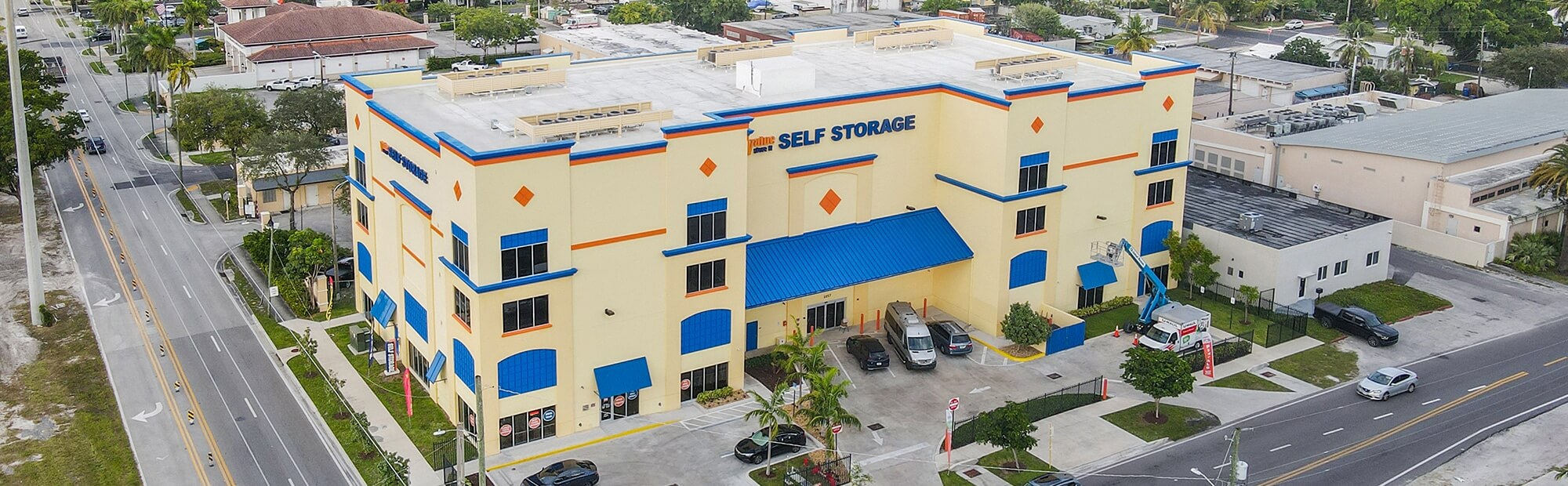
Seasonal storage is ordinary in a city where half the year is hot and wet and a slice of the population only lives here in winter. Value Store It’s Sheridan Village facility rents month-to-month with no long-term contract, so a unit can cover a single off-season rather than a year. A 10×10 storage unit takes the contents of three rooms, about a one-bedroom apartment, which covers a renovation or a between-leases gap. A 10×20 unit is the size of a one-car garage and holds the contents of five rooms, a three-bedroom home’s worth. If your move into the area lands mid-season and the dates don’t line up, that sizing question is the first one worth answering.