Moving to Fort Lauderdale, FL comes down to three trade-offs. Florida charges no state income tax, but property insurance takes back a good share of what you save. Housing gets cheaper the farther west you go from the water. And the neighborhood you pick decides whether you walk to coffee or drive to everything. This guide covers what it costs to live here, which neighborhoods suit which households, who’s hiring, how the schools work and what hurricane season and year-round humidity actually mean once you own a house.
The Shape of the City: Beach, Intracoastal and the Inland Grid
Fort Lauderdale is built on three parallel strips running north to south. The beach and A1A sit on the barrier island, the Intracoastal Waterway runs a few blocks inland, and the downtown core wraps around the New River and Las Olas Boulevard. Almost everything a newcomer pictures sits between the sand and the county courthouse downtown. A lot of what locals rate sits a little north of that, along Federal Highway.
The city is the seat of Broward County, covers about 34.6 square miles, and held 182,760 residents at the 2020 Census, with a 2024 estimate of 190,641 (U.S. Census Bureau QuickFacts). That makes it a real city with its own port, airport, downtown and beach, not a suburb of Miami. It’s also compact enough that most crosstown trips are short outside rush hour.
Water is the organizing fact. Greater Fort Lauderdale has 24 miles of beaches and more than 300 miles of Intracoastal and navigable inland canals, which is where the Venice of America nickname comes from, according to Visit Lauderdale’s fun facts. Canal frontage sets home prices, decides your flood zone and explains why so many driveways here have a boat on them.
One thing that catches new arrivals off guard: Broward County packs 31 separate municipalities edge to edge, and the city line is invisible on the ground. Your favorite Thai restaurant may be in Oakland Park, your gym in Wilton Manors and your kid’s soccer field in Plantation. Locals treat the eastern half of the county as one city and cross the lines without noticing.
What Living in Fort Lauderdale Costs
The honest headline is that Florida’s no-income-tax advantage is real but partly offset by insurance. Broward County’s median single-family sale price was $650,000 in July 2026, up 4.8% from a year earlier, and the condo median was $255,000, according to Miami Realtors’ Broward County sales report. Florida homeowners insurance averaged $8,292 a year in 2025, up 18%, per Insurify’s Florida home insurance report. Waterfront and low-lying properties run higher and usually need a separate flood policy on top.
That insurance and flood-zone math is the single most useful thing to work out before you sign anything, and it’s more useful than the no-state-income-tax pitch on its own. Ask for the current policy premium and the flood zone designation on any specific address before you make an offer, not after. Two houses three blocks apart can carry very different annual costs for reasons that have nothing to do with the kitchen.
Rent tracks the same geography as buying. Oceanfront and Las Olas command the premium, Victoria Park and Coral Ridge sit below that, and the inland suburbs west of I-95 are cheaper again. A common pattern for people relocating from out of state is to rent for a year in the east, learn the neighborhoods, then buy. That means moving twice, and it’s why a lot of new arrivals keep a 10×20 storage unit, the size that holds a three-bedroom home, for the furniture that doesn’t fit the rental but will fit the house.
Against the insurance bill, you can be outdoors 12 months a year, which quietly removes a whole category of spending. The area averages about 3,000 hours of sunshine a year and a year-round average temperature of 77°F.
Fort Lauderdale Neighborhoods and Who Each One Suits
In Fort Lauderdale, choosing a neighborhood is really a choice about distance from water and tolerance for traffic. The sections below start with the streets closest to downtown, work out to the beach and the north side, then head inland to West Broward and finish on the small beach town just north. Several of them are separate municipalities that most residents treat as part of Fort Lauderdale anyway.
Victoria Park: Walkable Blocks Without the Waterfront Premium
Victoria Park sits immediately north of downtown and is the neighborhood most often recommended to people relocating who want to walk somewhere. Older single-family homes and a genuine tree canopy give it a scale the towers don’t have, and Las Olas is a short walk or bike ride away. You can walk to coffee and still park in your own driveway.
The catch is that Victoria Park’s appeal is well known, so it isn’t a bargain, and the housing stock is old enough that roof age and plumbing matter to your insurance quote. Java & Jam, an all-day breakfast and lunch spot at 301 E Las Olas Blvd, is a short hop away and lets you join its waitlist online before you leave the house. That’s a small thing that tells you a lot about weekend demand in this part of the city.
Rio Vista and the South Side: Character Housing Near Downtown
Rio Vista sits just south of downtown and is the choice for buyers who want a house with history rather than a condo with a view. Wide streets, mature trees and canal-backed lots make it a favorite with families who still want to be minutes from the office. Sistrunk Marketplace, a food hall at 115 NW 6th St with vendor kiosks, a brew bar and distillery, and live music and DJs on weekend evenings, is a short drive north and solves the group dinner where nobody agrees on cuisine.
Canal lots come with the usual South Florida homework. Confirm seawall condition, flood zone and insurance cost before you fall for the dock.
Downtown and Las Olas: Tower Living on One Walkable Street
Downtown Fort Lauderdale and Las Olas Boulevard are where you live if you want an apartment, a short commute and one street you can spend an evening on. Las Olas Boulevard carries independent boutiques, galleries, jewelers and patio restaurants along a stretch you can cover on foot, and the Riverwalk runs west from it along the New River past the Broward Center for the Performing Arts and the Museum of Discovery and Science.
Tower living has a specific storage problem. Condo lockers here are usually the size of a closet, and garages are assigned, not spacious. People who move from a house into a downtown unit often keep the dining set and the second sofa in a 10×10 storage unit, which holds a one-bedroom apartment’s worth, rather than sell furniture they’ll want again when they buy. Weekend nights on Las Olas are loud, so ask which side of the building your unit faces.
Fort Lauderdale Beach and A1A: Living on the Sand
Fort Lauderdale Beach is the strip of resorts, oceanfront condos and restaurants along A1A, and living there means giving up easy parking in exchange for a two-minute walk to the Atlantic. Hugh Taylor Birch State Park sits between A1A and the Intracoastal with a 1.9-mile loop road through coastal hammock, picnic areas with grills, a playground and Intracoastal views, and it’s open 8 a.m. to sunset every day for $6 per vehicle carrying two to eight people (Florida State Parks hours and fees). It works as the beach neighborhood’s backyard.
The gear problem is real on the barrier island. Beach residents accumulate paddleboards, bikes, snorkel gear and folding chairs, and beach buildings rarely have anywhere to put them, which is why a 5×10 unit is a common line item in a beach household’s budget. Expect visitor parking to be a genuine negotiation and expect your guests to complain about it.
Coral Ridge and Imperial Point: North Fort Lauderdale Family Streets
Coral Ridge and Imperial Point run north along Federal Highway and Bayview Drive, and they’re where a lot of families land after a year in the east. Quieter residential streets, canal frontage in places and a strip-mall corridor with some of the city’s most talked-about cooking. Coral Ridge Mall handles the quick errand without the parking expedition that the Galleria can turn into.
The food makes the case. Larb Thai-Isan at 6234 N Federal Hwy cooks northeastern Thai Isan food rather than a standard pad thai menu, and the yum naem khao tod and som tum are the orders. It takes no reservations and it’s closed Tuesdays, so lunch is the easy way in. Epazote, a few doors away at 6206 N Federal Hwy, is the obvious backup, with a Mexican weekend brunch that runs 10 a.m. to 3 p.m.
Wilton Manors and Oakland Park: Neighborhood Scale Just North
Wilton Manors and Oakland Park are two independent cities directly north of Fort Lauderdale, and plenty of people who say they live in Fort Lauderdale actually live in one of them. Wilton Manors has its own walkable Wilton Drive corridor and a strong LGBTQ+ community identity, anchored by Rosie’s Bar & Grill, whose Sunday brunch with a DJ is its big weekly service. Oakland Park holds a cluster of the area’s best small restaurants.
Oakland Park is also where you find Tortilleria Mexicana at 4115 N Dixie Hwy, part grocery and part lunch counter, and Peter Pan Diner on East Oakland Park Boulevard, open since 1979 and unusual among diners for having a full bar (The Infatuation). Funky Buddha Brewery’s large taproom is here too. Housing runs smaller and older than Coral Ridge, and prices reflect that.
West Broward: Plantation, Davie, Sunrise and Tamarac
West Broward is where the square footage is. Plantation, Davie, Sunrise and Tamarac sit inland, and they trade proximity to the beach for newer houses, bigger lots, more parking and lower prices. This is also where a lot of the public golf lives, including Plantation Preserve Golf Course & Club, a municipal course run by the City of Plantation with five sets of tees on every hole and a junior academy for ages 6 to 14 (City of Plantation).
The trade is the commute. Getting east on I-595 or Broward Boulevard at 8 a.m. is a different experience from doing it at 11 a.m., and school runs compound it. Sawgrass Mills in Sunrise, with more than 350 stores, bills itself as the largest outlet destination in the U.S. (Simon), and most of the region’s big-box retail sits out here too, so weekly errands get easier as beach access gets harder.
Lauderdale-by-the-Sea: A Small Beach Town Just North
Lauderdale-by-the-Sea is a separate small town just north of Fort Lauderdale’s beach, low-rise and walkable, with reefs within about 100 yards of the beach that you can swim to straight from the sand (Town of Lauderdale-by-the-Sea). There’s a compact shopping strip along Commercial Boulevard and a seasonal Sunday farmers market at El Prado Park, typically December through early May from 9 a.m. to 1 p.m. (check the town calendar). It suits people who want beach living without the A1A resort strip.
Inventory is limited because the town is small, and the low-rise character that makes it appealing also caps what comes on the market. If you want the same feel with more housing choice, look at north Fort Lauderdale beach and drive up for the reef.
The Job Market and the Employers Behind It
Fort Lauderdale’s economy runs on water, air, health and hospitality. Marine industries are the signature sector, and Visit Lauderdale calls the city the Yachting Capital of the World, backed by the boatyards, brokerages and refit operations along the New River and the Dania Cut. Aviation is the second pillar, with Fort Lauderdale-Hollywood International Airport ranked the 18th-busiest airport in the U.S., according to Broward County Aviation’s statistics.
Tourism and healthcare carry the volume of local employment, and Port Everglades feeds both: it’s the world’s third-busiest cruise port, with a record 4.77 million cruise passenger movements in fiscal 2025 (Seatrade Cruise News). AutoNation is headquartered downtown, which gives the city a Fortune 500 corporate presence that most Florida beach markets lack. Remote workers relocating from higher-cost metros are part of the new-arrival mix too.
Two practical notes. Salaries here generally don’t match New York or California, so people moving from those markets should model the pay cut against the tax saving rather than assume the tax saving wins. And commuting patterns are metro-wide: plenty of Fort Lauderdale residents work in Miami-Dade or Palm Beach County, and at rush hour that drive can easily take an hour or more each way.
Schools, Colleges and How Assignment Works
Broward County Public Schools runs the public system across all 31 municipalities and is the sixth-largest district in the U.S. (Broward County Public Schools), which means school assignment follows a boundary map rather than a city name. Check the specific address with the district before you commit to a lease or a contract, because two houses on the same street can occasionally feed different schools. The district also operates magnet and choice programs that accept applications outside a home boundary.
Higher education is well covered without leaving the county. Nova Southeastern University’s main campus is in Davie, Florida Atlantic University runs a Davie campus, and Broward College operates campuses across the county, which matters both for continuing education and for households with a college-age student who’d rather stay local.
Weather, Hurricane Season and What Humidity Does to Your Things
Fort Lauderdale has two seasons rather than four. The dry season runs November through April, with highs in the mid-70s to low 80s, lower humidity and about 2.4 to 3.7 inches of rain a month. The wet season runs May through October, with highs of 88°F to 90°F from June through September, high humidity and frequent afternoon thunderstorms; June is the wettest month, at about 9.6 inches, according to NOAA’s 1991 to 2020 climate normals. Locals adapt by moving outdoor plans to early morning and after 6 p.m. in summer.
Hurricane season is the part worth reading twice. The Atlantic season runs June 1 through November 30, the statistical peak is September 10, and most activity falls between mid-August and mid-October (NOAA National Hurricane Center). The practical version for a resident is less dramatic than the reputation: forecasts give days of warning, and most storms miss any given city. What’s routine is street flooding in low-lying areas near the water during tropical storms, which is exactly why the flood zone question belongs in your house search.
Humidity is the constant, not the storms. Wood furniture, leather, artwork, photographs, electronics, instruments and paper all degrade faster in an unconditioned garage here than they did wherever you moved from. That’s the reason climate-controlled storage in Fort Lauderdale is the default rather than an upgrade, and the same logic applies to how you set up your own garage and closets.
Getting Around: Highways, Water and What’s Actually Walkable
Fort Lauderdale is a driving city with two walkable pockets. I-95 runs north to south and I-595 runs east to west to the airport and the Turnpike, and both carry real delays at rush hour and through winter, when the seasonal population arrives. Federal Highway and A1A are the slower surface alternatives, and locals use them more than visitors expect.
Las Olas and the downtown Riverwalk corridor are genuinely walkable, and the beach promenade is walkable along its length. Everything else needs a car, including most grocery runs in the residential neighborhoods. The flat terrain helps cyclists, though summer heat limits how far most people will ride.
The Fort Lauderdale Water Taxi is the local quirk worth knowing. It runs daily from 10 a.m. to 10 p.m. across more than 30 stops on the Intracoastal and the New River, and while advance ticket holders board first, you can also buy tickets the day you ride, per the Water Taxi FAQ. Parking downtown and at the beach is metered and enforced, garages fill on weekends, and free parking near the sand is essentially a myth.
Frequently Asked Questions
Is Fort Lauderdale a good place to move to?
Fort Lauderdale suits people who want warm weather year-round, water access and no state income tax, and who can absorb high insurance costs and a car-dependent layout. It’s a strong fit for boaters, remote workers, retirees and hospitality or marine-industry professionals. It’s a weaker fit if you need public transit, four seasons or big-city salaries. The compact size and 24 miles of beaches are the everyday payoff.
What salary do you need to live comfortably in Fort Lauderdale?
There’s no single number, and anyone who gives you one is guessing. Build your own figure from three inputs: the actual rent or mortgage on a specific address, the current homeowners or renters insurance quote for it, and whether that address needs separate flood coverage. Broward’s median single-family sale price was $650,000 in July 2026 (condos $255,000), per Miami Realtors, and Florida homeowners insurance averaged $8,292 a year in 2025, per Insurify.
Is it better to live in Miami or Fort Lauderdale?
Fort Lauderdale is smaller, calmer and easier to drive, with a shorter trip to the beach and a lower ceiling on housing prices than Miami. Miami offers more jobs, more nightlife, more international connections and considerably more traffic. Many households split the difference by living in Broward and working in Miami-Dade, which can mean an hour or more each way at rush hour. Choose Fort Lauderdale for scale, Miami for opportunity.
What are the downsides of living in Fort Lauderdale?
The real drawbacks are insurance cost, hurricane season, summer humidity and car dependence. Property insurance is the line item that surprises people from out of state, and flood coverage is often separate. From May through October the heat and afternoon storms change how you plan a day. Public transit is thin, so almost every household needs a car, and beach and downtown parking is paid and competitive.
How long does it take to feel settled after moving to Fort Lauderdale?
The practical side, a driver license, vehicle registration, school assignment and insurance, usually takes a month or two. The social side takes longer, and the fastest route is a neighborhood rather than a city, whether that’s the Wilton Drive strip, the Coral Ridge restaurant corridor or a Riverwalk running route. Renting for a year first is common precisely because it shortens that learning curve.
Storage While You Land in Fort Lauderdale
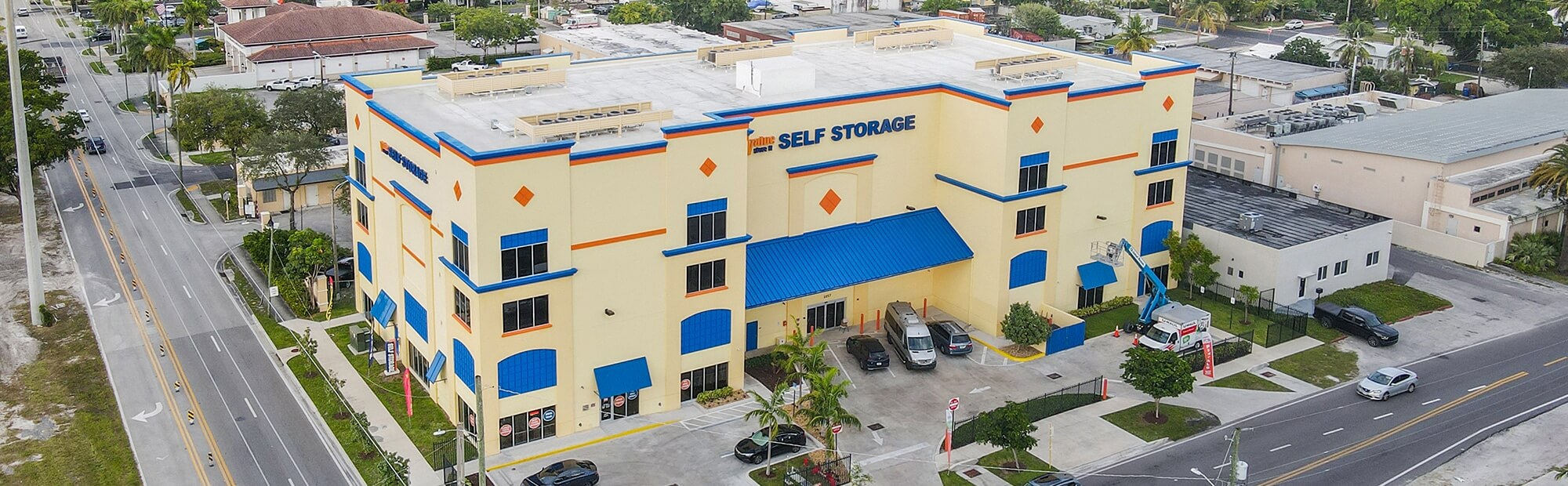
Relocations here rarely happen in one clean move. People rent first and buy later, close on a house three weeks after the lease ends, or arrive with a garage’s worth of belongings and no garage. Value Store It rents month-to-month with no long-term contract, so the unit lasts exactly as long as the gap does and no longer.
Sizing is the only decision that takes thought. A 5×5 locker, about the size of a small closet, holds boxes, files and seasonal clothing. A 10×5 space takes the contents of one room, a 5×15 unit takes a studio apartment, and a 10×15 unit covers a two-bedroom apartment. At the top end, a 10×30 unit holds a four-bedroom home or the inventory of a small business that has outgrown its back room, and the storage unit size calculator will get you closer than eyeballing it. If the timeline between your old place and your new one is still moving, see what’s available at Value Store It in Fort Lauderdale and take the month you need.
Once you’re unpacked, the rest of the city is worth working through deliberately. Start with the Fort Lauderdale restaurant guide and the local brunch guide for the neighborhoods you haven’t driven yet, use the Fort Lauderdale shopping guide when the new place needs furnishing, and check when to visit Fort Lauderdale before you tell family in a colder state which month to book.