
Allston is one of the more affordable ways to live in Boston proper without giving up a direct train to downtown, and the trade is noise, wear and a housing market that runs on a single date. You get a one-bedroom for several hundred dollars a month less than Back Bay, you get the B branch of the Green Line at the end of the street, and in exchange you live in a neighborhood where many of your neighbors are students and where most leases end on August 31.
This guide covers what it actually costs, how the lease cycle works, which parts of the neighborhood suit which kind of person and the practical steps that make the move go smoothly.
Allston in Brief
Allston sits on the western side of Boston, bounded by the Charles River to the north, Brighton to the west and Boston University along Commonwealth Avenue to the east. Harvard’s main campus is directly across the river in Cambridge, and the university has spent years building on the Allston side, where its Enterprise Research Campus officially opened on Western Avenue on June 23, 2026. The neighborhood’s ZIP code is 02134, and it’s named for the painter Washington Allston. Local historian William Marchione notes that it’s said to be the only community in the U.S. named for an artist.
The character is young, dense and international. Triple-deckers and older walk-ups dominate the housing stock, the commercial strip along Harvard and Brighton Avenues is full of Korean, Chinese, Latin American and Mediterranean restaurants, and the neighborhood remains, as WBUR’s field guide to Allston puts it, a hotspot for small and mid-sized music venues. It isn’t quiet and it isn’t polished. It’s convenient, affordable by Boston standards and genuinely interesting.
What It Costs to Live in Allston
Rent is the number that matters. Apartments.com’s Allston rent trends put the average studio at about $2,472 and the average one-bedroom at about $2,854, and RentHop’s Allston rent data lands in the same range, with a median one-bedroom of about $2,775 in September 2026. Figures shift from one month to the next, so treat those as a guide rather than a quote. Large shared apartments cost more in total but less per person, which is how most students actually live here.
Set against the rest of the city, that’s the appeal. RentHop’s Back Bay figures run several hundred dollars higher for a one-bedroom, so Allston and neighboring Brighton remain the practical choice for renters who want to stay close to central Boston.
One important caveat: Lower Allston, the pocket north toward the river and Harvard’s development, prices very differently from the rest of the neighborhood. Zumper’s North Allston rent data runs well above the Allston averages above. If you’re comparing listings, check which side of Cambridge Street you’re looking at.
Beyond rent, budget for Boston’s usual costs: high utilities in winter, expensive parking if you keep a car and a grocery bill that the neighborhood’s international markets can genuinely reduce if you cook. Public transit is the biggest saving available, and plenty of Allston residents don’t own a car at all.
The September 1 Lease Cycle
This is the single most important thing to understand about moving here, and it catches almost everyone from outside Boston.
Most Allston leases begin on September 1 and end on August 31. Across Boston as a whole, local reporting has long estimated that roughly two-thirds of apartment leases turn over around that date, according to Centre Realty Group’s Boston student apartment timeline, and Allston is where the pattern is most concentrated. The result is that much of the neighborhood moves on the same weekend, an event locally known as Allston Christmas, when the sidewalks fill with discarded furniture and the streets fill with double-parked trucks.
The practical consequences are significant:
Start looking early. Many September apartments are marketed while the current tenants still live there, and renters tour months before move-in.
Timing depends on unit size. Groups needing four bedrooms or more start earliest, organizing in October or November of the year before. For one- and two-bedrooms, January or February is a reasonable point to get serious, with listings continuing through spring.
Apartments rent fast. When you find the right place, apply immediately. Inventory doesn’t sit.
Don’t count on moving in early. A September 1 apartment rarely frees up days ahead, so plan your truck, storage and travel around the dates on the lease you actually sign.
Moving day itself is chaotic. Book movers and a truck months ahead, because everyone in the neighborhood needs both on the same weekend. Expect blocked streets and no parking.
Neighborhoods in and Around Allston
The neighborhood is small, but the pockets are genuinely different, and the two areas just over its western edge belong on any Allston search.
Allston Village is the commercial heart, centered on Harvard Avenue and Brighton Avenue. This is where the restaurants, bars and music venues are. It suits people who want to walk to everything and don’t mind noise on a Friday night. It’s the loudest part of the neighborhood and the most convenient.
Lower Allston sits north of Cambridge Street toward the Charles River and Harvard’s Allston development. It’s quieter, more residential, closer to the river paths and noticeably more expensive. It suits graduate students, people working at Harvard and anyone who wants Allston’s access without Allston’s volume.
The Commonwealth Avenue corridor runs along the Green Line toward Boston University. It’s dominated by student housing and is the most convenient for anyone at BU, with the trade-off that it’s the most student-heavy stretch in the neighborhood.
Boston Landing and the Guest Street area, just over the line in Brighton at Allston’s western edge, is the newest development, with purpose-built housing, retail, a commuter rail station and the Roadrunner concert venue. It feels different from the rest of Allston: newer, cleaner, less characterful and better suited to professionals than students.
Brighton, immediately west, is the natural alternative for anyone who wants a similar price range with a quieter, more family-oriented feel. Many people search both together as Allston-Brighton, and it’s reasonable to do so.
Getting Around
The B branch of the Green Line runs the length of Commonwealth Avenue with frequent stops, and it’s how most of the neighborhood commutes. It’s reliable but slow, since it runs on the street for much of its route. Service typically runs from 5 a.m. to 1 a.m. Monday through Thursday and until 2 a.m. on Friday and Saturday, according to the MBTA subway guide.
The Boston Landing commuter rail station on the Framingham/Worcester Line, which opened on May 22, 2017, offers a faster route into South Station and is a real advantage for anyone working downtown or in the Seaport.
Driving is the weak point. Street parking is resident-permit-heavy and genuinely scarce, garage space is limited, and the surrounding road network is congested at peak. Most residents who keep a car use it for weekends rather than commuting, and many decide not to keep one at all.
Cycling and walking work well within the neighborhood, and the Charles River paths give a pleasant car-free route toward Cambridge and downtown.
Jobs and Who Moves Here
Allston’s economy is anchored by education and, increasingly, by life sciences. Boston University sits at one end, Harvard is building its research presence in Lower Allston, and the biotech growth around that development has been reshaping the area’s job market and its rents.
Beyond the universities, the neighborhood’s employment is heavily hospitality and retail, which is what a strip of this density supports. Most residents who work outside those sectors commute into downtown Boston, the Longwood Medical Area or Cambridge, all of which are reachable by transit.
The population skews young: undergraduates, graduate students, medical residents, early-career professionals and a long-established international community. Families are more likely to look at Brighton or farther west.
Schools, Services and Daily Life
The neighborhood is served by Boston Public Schools, and families moving with children should look carefully at the assignment process, which isn’t a simple catchment system. Many families in this part of the city ultimately choose Brighton or the western suburbs for school reasons.
Day to day, Allston is well provisioned. The Honan-Allston Branch of the Boston Public Library is the community anchor. Groceries are a genuine strength, with Hong Kong Supermarket on Commonwealth Avenue (the store is still signed Super 88) alongside conventional options at Star Market, Stop & Shop and Trader Joe’s. Healthcare is close, with the Longwood Medical Area a short trip away.
The Allston restaurant guide covers where to eat, the Allston shopping guide covers thrift and groceries, and the brunch guide covers weekends. For weekends farther afield, our day trips from Allston guide covers what’s within a reasonable drive.
Weather and What to Expect Through the Year
Boston winters are cold, with real snow and a genuine need for proper clothing if you’re arriving from a warmer climate. January is the coldest month and July the warmest, according to Meet Boston’s weather guide, and July and August are both humid. Spring and fall are the most comfortable seasons and they’re short.
The practical implication for a move is storage of seasonal items. A Boston apartment requires two wardrobes, winter and summer, plus boots, coats and bedding that only get used half the year, and Allston apartments rarely have room for both at once. Our best time to visit Allston guide covers the calendar in more detail.
Storage During and After an Allston Move
The gap between leases is the standard Allston problem. If your current lease ends on August 31 and the new one starts on September 1, you’re moving in a single day alongside everyone else in the neighborhood. If the dates don’t line up at all, which happens constantly, you need somewhere to put your belongings in between.
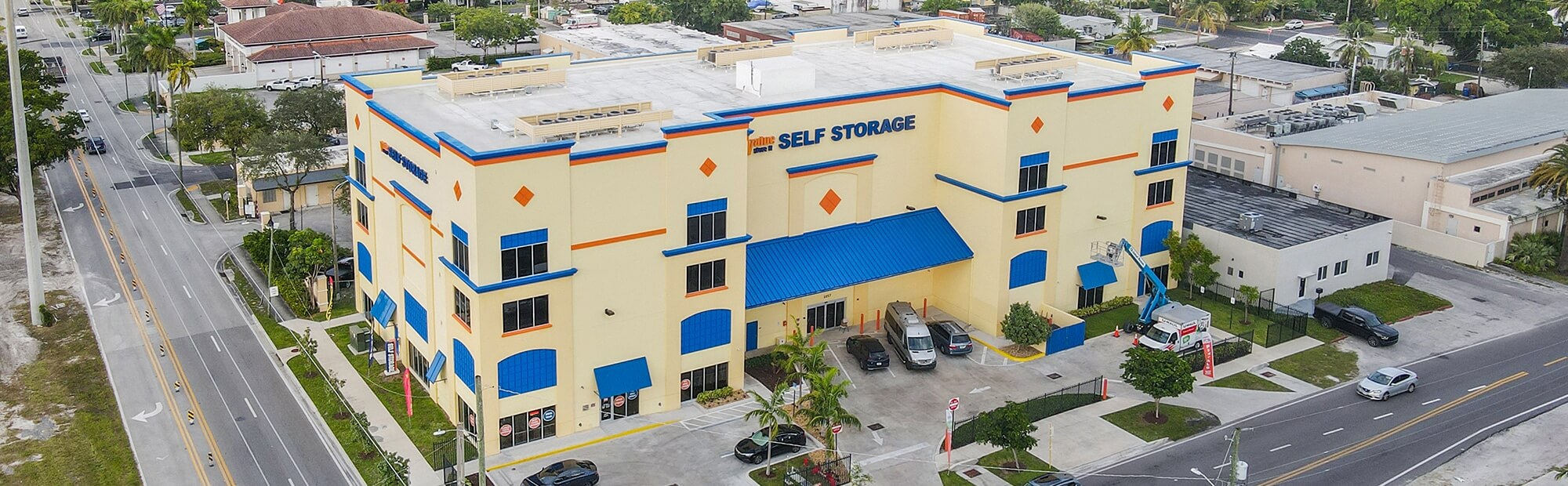
Value Store It’s Allston facility is close to Commonwealth Avenue and rents month-to-month with no long-term contract, which is the structure that actually fits a move rather than a year’s commitment. Choosing the right size is mostly about how much furniture is involved.
A 5×5 unit is about the size of a small closet and handles boxes, books and seasonal gear, which is the usual answer for a student emptying a dorm room for the summer. A 5×10 is about the size of a small walk-in closet and holds the contents of one room, such as a furnished bedroom with its bed and dresser. A 10×10 is about half a one-car garage and holds a one-bedroom apartment, sofa and mattress included.
Bigger households need more room. A 10×15 unit holds a two-bedroom apartment mid-move, and a 10×20 is the size of a one-car garage and holds a three-bedroom home, whether that’s a family arriving from out of state or a small business relocating. Given Boston’s humid summers and freezing winters, climate-controlled units are the right choice for anything wooden, electronic, paper-based or upholstered that’s staying more than a few weeks.
If you’re arriving with a vehicle and haven’t sorted a resident permit, car storage is available and solves a problem that catches a lot of people moving into permit-parking neighborhoods. Boat storage covers anything seasonal that comes off the Charles.
Frequently Asked Questions
Is Allston a good place to live?
Allston suits students, early-career professionals and anyone who wants Boston access at a lower rent. It’s walkable, extremely well served for food, has one of the city’s liveliest small-venue music scenes and has a direct Green Line connection downtown. It’s noisy, dense and heavily student-oriented, so it suits people who want energy rather than quiet. Families more often choose Brighton or farther west.
How much does it cost to live in Allston, Boston?
Apartments.com lists studios around $2,472 and one-bedrooms around $2,854, and RentHop’s September 2026 figures put the median one-bedroom at about $2,775. Large shared apartments run higher in total but lower per person, which is how most students manage it. Lower Allston prices well above the neighborhood average.
Why do all Allston leases start on September 1?
The neighborhood’s housing market is built around the university calendar, so most Allston leases run from September 1 to August 31. Big roommate groups start searching the fall before, and smaller apartments get serious attention from January through spring. The result is that much of the neighborhood moves on the same weekend, an event known locally as Allston Christmas.
Is Allston safe?
Allston is a dense urban neighborhood with the issues that come with a large student population, mainly noise, late-night activity and occasional property crime. Most residents describe it as comfortable, and the busy commercial streets stay active late. As anywhere in a city, the usual precautions on quiet side streets at night are sensible.
Do you need a car in Allston?
No, and many residents deliberately don’t have one. The Green Line B branch runs along Commonwealth Avenue, the Boston Landing commuter rail station serves the western edge, and the neighborhood is walkable for daily needs. Parking is the real constraint: street spaces are permit restricted and hard to find, so a car is more of a liability than an asset unless you need it for work.
Making the Move Work
The two decisions that matter most are timing and location. Start your search in the winter for a September lease, earlier if you need a large apartment, and be ready to apply the day you find something. Then choose your pocket deliberately: Allston Village if you want to be in the middle of it, Lower Allston or Boston Landing if you want quiet and the Commonwealth Avenue corridor if you’re at Boston University.
Get those right and Allston is one of the best-value places to live in Boston. Get the timing wrong and you’ll spend the summer competing for whatever’s left.