Moving to North Miami Beach, FL means buying a central address instead of a beachfront one. The city covers 5.37 square miles in northeast Miami-Dade County and holds about 43,700 residents, and despite the name it no longer has a beach inside its limits. The sand sits 10 minutes east, across the Intracoastal Waterway in Sunny Isles Beach. What you get in exchange is a shorter drive to almost everything in South Florida, a median home value under $400,000 and one of the best eating corridors in the county. This guide covers cost of living, neighborhoods, jobs, schools, climate and your first month.
North Miami Beach at a Glance: A Small City at the Crossroads of South Florida
North Miami Beach is a compact municipality, 5.37 square miles in total, that sits roughly midway between downtown Miami and Fort Lauderdale. Biscayne Boulevard (US 1) runs down the east side of the city, 11 miles south to downtown Miami and 14 miles north to Fort Lauderdale, and I-95 runs along the northwest border with access at Exit 12 (Wikipedia, citing the U.S. Census Bureau).
The city’s own pitch leans on that position. North Miami Beach sits next to the Golden Glades Interchange, where I-95, Florida’s Turnpike and the Palmetto Expressway meet, and the City of North Miami Beach describes itself as reachable from virtually all of South Florida in under 30 minutes. That’s the single fact that explains the housing market here: you’re paying for access rather than for a view.
Two streets organize daily life. The east-west run of NE 163rd Street and NE 167th Street is the commercial spine, and NE 167th Street has been called Chinatown unofficially by residents and city officials since the early 1990s. It’s where most people eat. Biscayne Boulevard is the north-south artery that connects the city to North Miami below and Aventura above. If you want a preview of the local calendar, the guide to things to do in North Miami Beach covers the parks, the monastery and the museums in more detail.
The population was 43,676 at the 2020 census, up 5.2% from 41,523 in 2010, with a median age of 39.8 and 15,521 households (U.S. Decennial Census figures). Hispanic or Latino residents of any race made up 42.41% of the population, non-Hispanic Black or African American residents 33.12% and non-Hispanic White residents 17.45%, according to the same census figures. It’s a genuinely mixed city.
2026 is also the city’s centennial year, and the NMB Centennial calendar still has its biggest dates ahead: a gala on October 1, 2026 at the Ancient Spanish Monastery and a Culture & Community Street Festival at City Hall on October 3, 2026.
The Cost of Living in North Miami Beach
North Miami Beach is cheaper than the coastal cities around it and expensive relative to what people here earn. Livability’s North Miami Beach profile puts the median home value at $383,660, median monthly rent at $1,495, median household income at $61,086 and median property tax at $2,167.
Read those numbers together and you get the honest picture. A median household income in the low $60,000s against a median home value near $380,000 is a stretch once you weigh housing against income. The offset is Florida’s lack of a state income tax, which is worth real money to anyone arriving from New York, New Jersey or Illinois and is the reason plenty of people land here in the first place.
Renting for a year before committing to a neighborhood is a common first move, and that year is where most newcomers hit a space problem. If you’re coming out of a house up north and into a condo or a rental apartment here, furniture you aren’t ready to sell tends to sit in the way, and a 10×10 unit in North Miami Beach is the size that holds a one-bedroom apartment’s worth of it while you decide.
Neighborhoods to Know Before You Choose an Address
North Miami Beach is small enough that the neighborhoods are 5 minutes apart and different enough that the choice matters. Here’s how locals sort them.
Eastern Shores: Canal-Front Homes and Dock Access
Eastern Shores is the waterfront pocket east of Biscayne Boulevard, built on canals and finger islands off the Intracoastal. Single-family homes with private docks and low-rise condos make up most of the stock, and it’s quieter than anything on the boulevard. This is the neighborhood for people who want water access without paying Sunny Isles Beach condo prices. The trade is that you’re buying older waterfront housing, so budget for seawall and dock condition the way you’d budget for a roof.
Living on the water here usually means acquiring gear. Oleta River State Park, Florida’s largest urban park at just over a thousand acres, is a few minutes away with 15 miles of off-road bike trails and kayak and canoe rentals in a mangrove estuary. When the garage fills, a 5×10 unit, which holds the contents of one room, takes the paddleboards, bikes and camping bins and gives you the garage back.
Skylake: Ranch Houses and Quick I-95 Access
Skylake sits on the western side of the city near NE Miami Gardens Drive, built around Sky Lake in the postwar years. Ranch houses, a strip retail center and a long-established Jewish community define it, and it’s the most conventionally suburban part of North Miami Beach. Families who want a settled single-family street and a fast run to I-95 at Exit 12 tend to end up here. First Watch at Sky Lake, open daily from 7 a.m. to 2:30 p.m., is the neighborhood’s default weekend breakfast and doesn’t take reservations, so use the online waitlist before you leave the house.
Fulford and City Center: The Original 1920s Townsite
Fulford and City Center is where the city started. The area was platted in 1881 as Fulford-by-the-Sea, incorporated as the Town of Fulford in 1926 and renamed North Miami Beach on June 15, 1931. Today it holds City Hall, the government center and older housing stock, and it’s the part of the city where buyers find the cheapest single-family homes close to city services. Expect 1950s and 1960s construction and the maintenance list that comes with it.
Uleta and Washington Park: The Entry Point to the Market
Uleta and Washington Park are the older working neighborhoods on the western side of the city, toward I-95 and the Golden Glades Interchange. Modest single-family homes and small apartment buildings dominate, and rents sit at the lower end of the local range. Commuters who need the interchange every morning get the shortest drive in the city from here. Be honest with yourself about highway noise before signing, because proximity to Golden Glades cuts both ways.
The 163rd and 167th Street Corridor: Living Next to the Food
The 163rd and 167th Street corridor isn’t a residential neighborhood so much as the reason to live near one. Chinese, Vietnamese, Korean, Thai, Uzbek, Lebanese, Peruvian and Brazilian kitchens sit in strip malls along a few miles of road, most of them cheap, several of them excellent. Sang’s Chinese Food & Dim Sum runs dim sum every day from 11 a.m. to 4 p.m. rather than only on weekends, King Palace Chinese BBQ handles the big group dinner, and Dumpling King is the easiest solo lunch in the city. Barra Callao, a 12-seat Peruvian counter on West Dixie Highway, earned a 2026 MICHELIN Bib Gourmand. It’s mostly walk-in, takes reservations Tuesday through Thursday from 5 p.m., closes Sunday and often has a wait on Saturday. Newcomers who want the full picture should start with the best restaurants in North Miami Beach.
Aventura, Sunny Isles Beach and North Miami: The Neighbors Worth Comparing
Three adjacent cities compete for the same buyer, and knowing the difference saves a wasted month of searching. Aventura, over the northern line, is condo towers and Aventura Mall, which USA Today 10Best readers named the best mall in the U.S. for a second straight year. Sunny Isles Beach, 10 minutes east on Collins Avenue, is the oceanfront high-rise strip and carries the price tag to match. North Miami, immediately south, is a separate city with MOCA North Miami, FIU’s Biscayne Bay campus and a dense Haitian, Jamaican and Nicaraguan food scene along NE 125th Street. North Miami Beach is the cheaper middle of the three, which is exactly why people choose it.
Jobs, Commuting and Getting Around When a Car Isn’t Optional
North Miami Beach is a commuter city with a local retail and office economy, not a job center of its own. Most residents work somewhere else in the metro: downtown Miami and Brickell are 30 to 45 minutes south, Fort Lauderdale is about 30 minutes north on I-95, and Aventura, Sunny Isles Beach and Hallandale Beach are all inside 15 minutes.
The city does have its own commercial base. The city calls itself one of South Florida’s best-known regional shopping areas, which is why the corridor has as many small businesses as restaurants. Anyone running one of those businesses out of a house eventually needs somewhere to keep stock and equipment, and 10×20 units, about the size of a one-car garage, are the common answer for inventory, seasonal displays and job-site gear.
Plan on driving. Miami-Dade County runs Metrobus, Metrorail, Metromover and the MetroConnect microtransit service (Miami-Dade Department of Transportation and Public Works), but there’s no Metrorail station in North Miami Beach, so local transit means a bus along Biscayne Boulevard or 163rd Street. Rail is closer than most newcomers expect: Brightline’s Aventura station at 19796 W Dixie Hwy, open since December 2022, sits just north of the city with trains to Fort Lauderdale, Boca Raton, West Palm Beach and Orlando. Fort Lauderdale-Hollywood International, about 13 miles away, is closer than Miami International, about 21 (Travelmath). Rush-hour traffic on Biscayne Boulevard is the single biggest tax on daily life.
Schools and Family Life in North Miami Beach
Zoned schools inside the city include North Miami Beach Senior High School on NE 167th Street and Fulford Elementary School on NE 18th Avenue, and charter and private options such as BridgePrep Academy of North Miami Beach and Allison Academy sit within the city limits. Magnet programs like MAST@FIU on FIU’s Biscayne Bay campus are a short drive south. Check zoning through Miami-Dade County Public Schools before you sign anything, because attendance boundaries here don’t follow city lines.
About 20% of residents are under 18 and 15.9% are 65 or older, so this is a city of young families and long-settled retirees more than of students. The everyday family infrastructure is good for a city this size. Greynolds Park covers 249 acres with two playgrounds, six picnic shelters, a boathouse with a canoe and kayak launch and a nine-hole golf course, and parking is free Monday through Thursday and $10 Friday through Sunday. Just south of the city, Arch Creek Park adds 9 acres around a natural limestone bridge, a museum and Camp Manatee for ages 6 to 14.
Beyond the city line, Haulover Park has 1.4 miles of beach with swimming areas lifeguarded year-round, about 10 minutes east, and the Slide Tower inside Aventura Mall is the reliable rainy-afternoon answer. Families comparing options in their first few months will find more of them in the guide to things to do with kids in North Miami Beach.
Climate, Hurricane Season and What Humidity Does to Your Things
The weather runs on two seasons, not four. The NOAA 1991 to 2020 normals for the North Miami Beach station put the annual daily mean at 76.0°F with 68.33 inches of rain across 137.7 rainy days (Wikipedia climate table). January is the coolest and driest month at a 67.1°F mean and 2.30 inches, August is the warmest at 83.1°F, and September is the wettest at 10.26 inches across 18 days. There’s no winter to plan for; the coldest normal low is 59°F.
Hurricane season runs June 1 through November 30, with a climatological peak on September 10 and most activity between mid-August and mid-October (NOAA National Hurricane Center). For residents that means expecting at least one week a season of watching a forecast cone, keeping shutters or panels accounted for and knowing where your documents are. The city’s own history is tied to a storm: the 1926 Miami hurricane ended the South Florida land boom the year Fulford incorporated. From June through September, the daily pattern is a clear morning, an afternoon thunderstorm and a clear evening, so schedule outdoor work before 1 p.m.
Humidity is the part newcomers underestimate. Sixty-eight inches of annual rain and month after month of high dew points are hard on wood furniture, leather, electronics, photographs, documents and anything upholstered, which is why climate-controlled storage in North Miami Beach is standard rather than a luxury here. If you’re timing the move itself, the best time to visit North Miami Beach breaks the year down month by month, and the same logic applies to moving day.
Your First Month: Utilities, Licenses and the Errands Nobody Warns You About
Set up utilities before the truck arrives. Electricity comes from Florida Power & Light, and new accounts need identification, the service address and a connection date. Water and sewer come from NMB Water, the city-owned utility that also serves Aventura, Sunny Isles Beach and nearby areas. Internet and cable are the third call, and it’s worth asking about installation and equipment fees upfront rather than finding them on the first bill.
Two deadlines catch people out. Florida’s new-resident rules require a Florida driver’s license within 30 days of establishing residency, and vehicles must be titled and registered within 10 days. Book the Department of Highway Safety and Motor Vehicles appointment in your first week, because walk-in waits in Miami-Dade are long. Voter registration can be done online. Our moving checklist covers the rest of the sequence in order.
Then come the errands. The North Miami Beach Walmart Supercenter handles the stock-the-kitchen run. Uptown Cheapskate, at 14861 Biscayne Blvd on the city’s southeast edge, buys and sells secondhand clothing, and buying stops 1 hour before close, so check the hours before hauling in a trunk of things you no longer want. The Promenade Shops on NE 163rd Street and Biscayne Commons, anchored by Publix, Petco and Ulta Beauty, form the everyday retail cluster residents actually use, while Aventura Mall is for the bigger trip. The North Miami Beach shopping guide maps the rest.
If your lease dates don’t line up, plan for a gap. The Hampton Inn Hallandale Beach Aventura, just over the Broward line, is a practical base for a moving week. Whatever you can’t fit into a hotel room goes into a 5×5 unit, about the size of a small closet, for the boxes and seasonal gear in between.
What Needs a Car, What Closes on Mondays and Other Local Mechanics
North Miami Beach isn’t a walking city, with two exceptions. The restaurant corridor works on foot once you’ve parked somewhere on 163rd or 167th Street, and most residential streets in Skylake and Eastern Shores are pleasant to walk in the early morning. Everything else, including the beach, needs a car. Getting to the sand means crossing the Intracoastal on the 163rd Street causeway to Sunny Isles Beach, or driving 10 minutes to Haulover Park, where parking runs $7 Monday through Thursday and $10 Friday through Sunday and holidays, and lots close 1 hour before sunset.
Mondays and Tuesdays quietly shut down the cultural options. The Ancient Spanish Monastery, built from 12th-century cloisters that William Randolph Hearst bought in Segovia in 1925 and that were reassembled here in the 1950s, is closed Mondays and Tuesdays and often closed for events on other days, so check the schedule before driving over. MOCA North Miami is also closed Mondays and Tuesdays, opening Wednesday from noon to 7 p.m. and Thursday through Sunday from 10 a.m. to 5 p.m.
Weekday timing saves money more than it saves time. Greynolds Park parking is free Monday through Thursday, dim sum on 163rd Street runs every weekday afternoon, and Oleta River State Park’s trails are exposed and unshaded in places, which makes a weekday morning the right window from May through September. Learning that rhythm in your first month is the difference between feeling like a resident and feeling like a visitor who moved in.
Frequently Asked Questions
Is North Miami Beach a good place to live?
It suits people who want a central, relatively affordable, extremely diverse city with an outstanding food corridor and don’t need to walk to a beach. The Golden Glades Interchange puts most of South Florida within 30 minutes, and Brightline’s Aventura station is just north. It suits people who want quiet, walkable, brand-new housing considerably less.
What’s the difference between North Miami and North Miami Beach?
They’re two separate cities. North Miami sits immediately south and is home to MOCA North Miami, FIU’s Biscayne Bay campus and a dense Haitian and Caribbean food scene along NE 125th Street. North Miami Beach sits north of it, is smaller at 5.37 square miles and holds the 163rd and 167th Street restaurant corridor. Neither one contains the Miami Beach neighborhood called North Beach, which is a third place entirely.
How much does it cost to move to North Miami Beach?
Budget for first month, last month and a security deposit on a rental at a median rent of about $1,495, plus utility deposits with Florida Power & Light, a $48 Florida Class E driver’s license and vehicle registration. Buyers should plan around a median home value near $383,660 and a median property tax bill of about $2,167. Truck rental, storage and short-term lodging during the gap are the costs people forget.
Is North Miami Beach safe?
Safety varies block by block rather than citywide, which is why locals recommend renting first and visiting a prospective street at night as well as at midday. Check recent incident maps for the exact address you’re considering rather than relying on a single citywide grade. Traffic, not crime, is the complaint newcomers tend to raise first.
Is North Miami Beach better than living on Miami Beach?
For most people relocating on a working budget, yes. North Miami Beach costs less, parks more easily, sits closer to I-95 and the Turnpike and puts you 10 to 20 minutes from Haulover Park, Sunny Isles Beach and North Beach. Miami Beach offers the walkable oceanfront lifestyle that North Miami Beach can’t, at a substantially higher price and with causeway traffic on every trip inland.
Storage While You Settle In
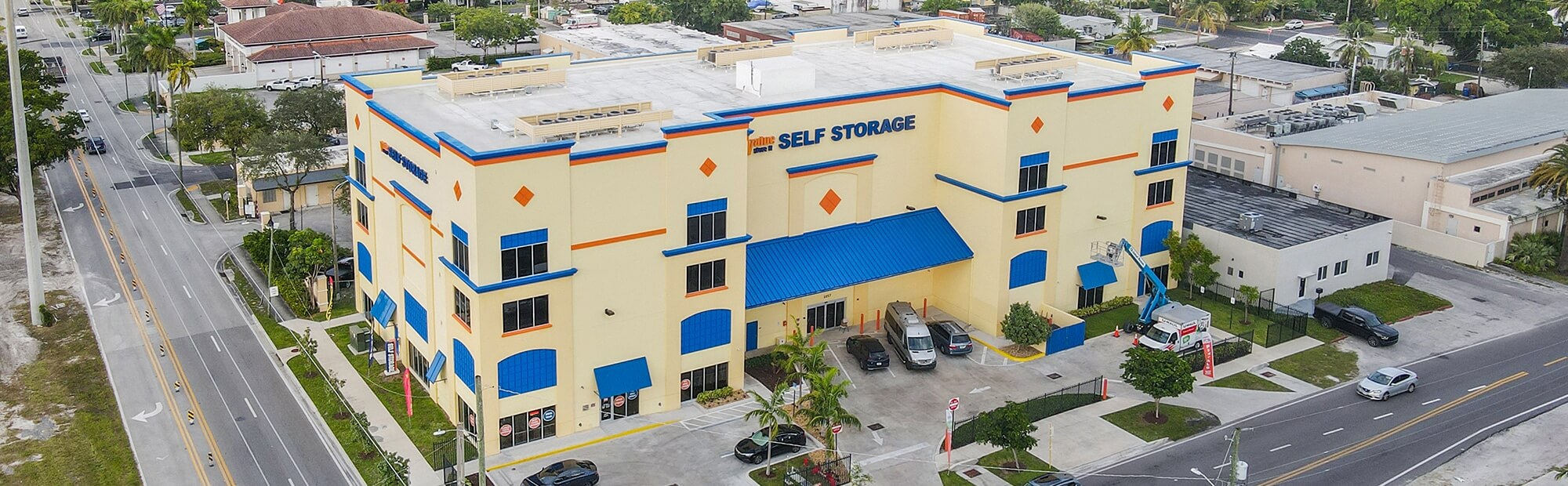
Move-in rarely finishes on the day the truck leaves. Value Store It’s North Miami Beach facility rents month-to-month with no long-term contract, which fits the reality of renting for a year before you buy. The unit lineup runs from small units for boxes and off-season clothes up through mid-size spaces, with a 10×15 handling a two-bedroom apartment’s contents and the 5×15, about the size of a large walk-in closet, holding a studio apartment without paying for floor space you won’t use. When a whole four-bedroom home is in transit, or a contractor needs equipment plus inventory in one place, the 10×30 is the largest option in the city. Our storage size guide shows what each footprint actually holds.
If you’re moving to North Miami Beach and the new place is smaller than the old one, sort what stays and store the rest before it ends up stacked in a spare room for a year. Value Store It can hold it for as long as the move takes.