
Little Havana is a neighborhood of the City of Miami, not a city of its own, so moving to Little Havana, FL really means picking one of five distinct pockets inside a grid that runs roughly 27 blocks long by 24 blocks wide. The Calle Ocho core is walkable and loud. East Little Havana puts you minutes from Brickell. West Little Havana is where locals eat and where parking is easier. Riverside and Shenandoah are the quiet residential half, and the blocks around loanDepot park stay quiet until there’s a game. This guide covers all five, plus housing, schools, commutes, hurricane season and the first-month paperwork.
Where Little Havana Sits on the Miami Map
Little Havana’s boundaries are SW 3rd Avenue on the east, SW 37th Avenue on the west, NW 7th Street on the north and SW 22nd Street, better known as Coral Way, on the south, according to Wikipedia’s Little Havana entry. Five ZIP codes cover it: 33125, 33126, 33128, 33130 and 33135. Because it’s a neighborhood rather than a municipality, there’s no separate city hall, police department or school board. City of Miami and Miami-Dade County services run everything.
Density is what surprises people arriving from a suburb. Little Havana is one of the densest neighborhoods in Miami-Dade County. Lots are small, houses sit close to the sidewalk, and most streets have no garages. That density is also why the neighborhood feels lived in at 8 a.m. on a Tuesday and not only on festival weekends.
The location is the real selling point. Brickell, Downtown Miami, Coral Gables, Wynwood and Miami International Airport are all a short drive away in normal traffic. VISIT FLORIDA reports that a quarter of Miami-Dade’s 2.7 million residents were born in Cuba, and the National Trust for Historic Preservation named the neighborhood a National Treasure on January 27, 2017.
Choosing Your Pocket of Little Havana
Little Havana isn’t one housing market. Rent, noise, parking difficulty and walkability all change as you move west from SW 3rd Avenue, and picking the wrong pocket is the regret new arrivals mention most.
The Calle Ocho Core: Walkable, Loud and Rarely Quiet
The blocks between SW 12th and SW 17th Avenues are the tourist and cultural heart, which is both the appeal and the drawback of living in them. You can run most errands on foot, alongside tour groups. Weekends stay busy from late morning until well after midnight.
Máximo Gómez Park, which everyone calls Domino Park, sits at 801 SW 15th Avenue and works as the neighborhood’s living room. It’s open 9 a.m. to 6 p.m., has been there since 1976, and an Oscar Thomas mural of the 1994 Summit of the Americas covers one wall. One thing new residents get wrong: the regular tables are for members who are 55 or older and City of Miami residents, but the city opens play to the public on Fridays, so bring ID. Spectators are always welcome.
Los Pinareños Frutería at 1334 SW 8th Street has been the neighborhood’s open-air fruit stand since 1963, and plenty of residents buy mango, papaya, yuca and plantains here rather than driving to a supermarket. Order a guarapo, the fresh-pressed sugarcane juice, or a batido de mamey. It’s cash only, so go in the morning with bills in your pocket.
East Little Havana: The Brickell Commute Without Brickell Rent
East Little Havana runs from SW 3rd to SW 12th Avenues, where Calle Ocho meets Brickell. It’s denser, more residential and far less curated than the tourist blocks, which suits people priced out of the financial district who still want to reach it in 10 minutes.
Jose Marti Park covers 8.9 acres on the Miami River and is the closest real green space for the eastern half of the neighborhood, with a playground, basketball courts and a six-lane pool. The park is free to walk into, the six-lane, 25-meter pool runs lap swimming, lessons and water aerobics for a fee set by the city, and the skyline view across the water is genuinely good.
For a first apartment on a budget, Goodwill at 982 SW 8th Street is the nearest secondhand stop on Calle Ocho for home goods and clothing, and stock turns over often enough to reward repeat visits.
The South River Drive Historic District, on the National Register of Historic Places since 1987, holds nine buildings, including the oldest surviving frame vernacular boarding houses on the Miami River plus four 1940s apartment buildings, per the National Register listing. It’s free, and almost nobody goes. A 15-minute walk will change how you think about the neighborhood’s age.
West Little Havana: Wider Streets and Easier Parking
West of SW 17th Avenue the road widens, traffic moves faster, tourists thin out and parking stops being a daily argument. This is the pocket for people who’ll own a car and would rather live near a supermarket than a cigar shop.
Versailles Restaurant at 3555 SW 8th Street anchors the far west end and functions as the neighborhood’s town square, especially at the walk-up ventanita. It’s been open since 1971, has its own parking lot, and stays open until 2:30 a.m. on Friday and Saturday.
Centro City Plaza at 3825 NW 7th Street answers everything the Calle Ocho gift shops don’t sell, with its own parking and a lineup that includes Target, Walgreens, dd’s Discounts and Fresco y Más. River Landing Shops and Residences at 1400 NW N River Drive, on the Miami River, adds Publix, T.J. Maxx and Old Navy.
Riverside and Shenandoah: The Residential Half
Riverside and Shenandoah are the older neighborhood names that got the Little Havana label in the 1960s, and they’re where families looking for a yard usually end up. Riverside sits north toward the Miami River and contains the Riverview Historic District, designated by the City of Miami on April 7, 2015, covering bungalow, Mission, Mediterranean Revival and Miami Modern homes. Shenandoah sits south toward Coral Way and is leafier and mostly single-family, with Shenandoah Park and a public school within walking distance of much of it.
The loanDepot Park Pocket: Quiet Except on Game Nights
The blocks around 16th Avenue between NW 7th Street and SW 1st Street surround loanDepot park, the Miami Marlins ballpark at 501 Marlins Way, built on the old Orange Bowl site with a retractable roof. Per the Marlins’ transportation page, Metrorail’s Culmer and Civic Center stations are within a mile and a free trolley runs a Stadium Route. There’s no Brightline station at the park; Brightline riders take the HOME RUNNER shuttle from MiamiCentral on designated game trains. Most days these streets are quiet. On game and concert nights they aren’t, and that trade is the whole calculation for living here.
Housing Stock and the Cost of Living
Little Havana is one of the lower-cost places to rent close to Downtown Miami, and the housing stock is the reason. Most of the stock is low-rise: 1920s bungalows, mid-century duplexes, small walk-up apartment buildings and condos in three-story complexes. Square footage runs small, closets are shallow, and in-unit laundry and covered parking are the exception.
Be skeptical of the cost-of-living numbers you’ll find for this neighborhood online. Much of what ranks in search quotes median condo prices and household incomes from a decade or more ago, and the market has moved a great deal since, with developers pushing west from Brickell. Pull current listings and tax records instead, and budget separately for property insurance, which is the line item that catches people relocating from outside Florida.
Downsizing is the usual reality of the move. A house full of furniture from elsewhere doesn’t fit into a Little Havana one-bedroom, and 10×10 storage units hold a one-bedroom apartment’s worth of furniture while you decide what stays. Lease gaps are common here too, and a 5×5 locker in Little Havana covers boxes and seasonal gear for a few weeks between addresses.
Florida charges no state income tax, which partly offsets the insurance and parking costs. If you’re building a budget, our storage unit size calculator will tell you what actually fits before you sign for an apartment smaller than your furniture.
The Job Market and the Commute Rings
Little Havana is residential, not an employment center, so most working residents commute out. The commutes are short: Brickell’s financial district and Downtown Miami sit just east, Coral Gables borders the neighborhood to the west, and Miami International Airport is a short drive northwest, which matters if you work in aviation, logistics or hospitality.
Inside the neighborhood, the largest employers are institutions rather than offices. Miami Dade College’s Eduardo J. Padrón Campus, Miami-Dade County Public Schools, the City of Miami, loanDepot park and the businesses along Calle Ocho account for most local jobs. Spanish is a working requirement in a large share of them, and being genuinely bilingual widens your options more here than in most American neighborhoods.
Parking, Transit and Whether You Need a Car
Parking is the most common resident complaint, and it’s worth understanding before you sign a lease. The Calle Ocho core is mostly metered street parking with a few small lots, including one behind Domino Park, and most residents pay through a parking app. Visitors are usually told to drop off near SW 13th Avenue and SW 8th Street. Ask any prospective landlord where your car goes at 9 p.m. on a Saturday, and get a real answer.
Transit is better than in most Miami neighborhoods. Miami-Dade County runs Metrorail, Metromover and Metrobus, and the 207 and 208 Little Havana Connection routes link Government Center and Brickell Metrorail stations to Calle Ocho. The City of Miami also runs a free trolley whose Little Havana route runs from Brickell Station along Calle Ocho. Living car-free is realistic in the eastern half and difficult past SW 27th Avenue.
Anything larger than a car creates a problem here, since street rules and small lots make an RV storage space the practical alternative for a motorhome you can’t leave at the curb. Weekend gear runs into the same wall. Bikes, coolers and paddleboards for Key Biscayne trips don’t fit in a 1940s duplex closet, and a 5×10 unit swallows the lot.
Two deadlines catch new Florida residents. According to the Florida Department of Highway Safety and Motor Vehicles, you need a Florida driver license within 30 days of establishing residency, and your insurance, title and registration within 10 days. Set up Florida Power and Light and Miami-Dade Water and Sewer accounts before your move-in date rather than after.
Schools, Colleges and Libraries in Little Havana
Miami-Dade County Public Schools runs the public schools here, and the neighborhood holds an unusual number of them for its size. Elementary options inside the boundaries include Citrus Grove, Riverside, Auburndale, Shenandoah and Kensington Park, plus Ada Merritt K-8 Center, which continues through middle school. Shenandoah Middle and Citrus Grove Middle serve the same area.
Miami Senior High School opened in 1903 and is the oldest high school in Miami-Dade County. Young Women’s Preparatory Academy is an all-girls public school in the neighborhood, and International Studies Charter School and SLAM serve students from the middle grades up. Miami Dade College’s Eduardo J. Padrón Campus handles higher education without leaving the neighborhood, and the Miami-Dade Public Library System operates the Shenandoah and Hispanic branches.
Hurricane Season, Humidity and Old Housing Stock
There’s no winter here, and the year splits into a dry season and a wet one. NOAA’s 1991 to 2020 climate normals put Miami’s average high at 76°F in January and 91°F in July and August. The dry season runs roughly November through April, and in the wet season from May through October, thunderstorms roll in most afternoons.
Hurricane season is a fixture of the local calendar rather than an emergency. It opens June 1, closes November 30 and peaks on September 10, with the heaviest stretch from mid-August through mid-October, according to the National Hurricane Center. The 1991 to 2020 baseline for an average season is 14 named storms, seven hurricanes and three major hurricanes. Little Havana sits inland and away from the barrier islands, so storm surge isn’t the local threat. Wind, power outages and street flooding are, and those are what a household here plans around.
The 1920s and 1930s housing stock deserves planning. These homes generally don’t have the impact glass a new Brickell tower does, so confirm your shutters or panels and learn your Miami-Dade County evacuation zone before June 1. Year-round humidity is the quieter problem, and it’s why climate-controlled storage in Little Havana is worth the difference for documents, wood furniture, instruments and anything upholstered.
Tourist Traffic, Festival Days and Neighborhood Noise
Living in Little Havana means sharing it. Resident reviews are mixed rather than glowing, with parking, traffic and street noise named far more often than crime. Read a spread of those reviews rather than one, and visit your prospective block on a Saturday night before deciding.
Two dates reshape the neighborhood every year. Viernes Culturales, the free monthly street festival running since May 2000, takes over Calle Ocho between SW 14th and SW 17th Avenues on the last Friday of each month, from noon until late. The next dates are September 25, October 30 and November 27, 2026. The Calle Ocho Music Festival, the closing event of Carnaval Miami, fills 15 blocks from SW 12th to SW 27th Avenue, and the next one is Sunday, March 14, 2027, from 11 a.m. to 7 p.m.
Marlins home games are the third variable, and across a season they affect parking most often. If you live within a few blocks of loanDepot park, check the schedule the way people elsewhere check for snow. Our guide to the best time of year to be on Calle Ocho breaks the calendar down month by month.
Frequently Asked Questions
Is Little Havana a good place to live in Miami?
Little Havana suits people who want walkable culture, short commutes to Brickell and Downtown, and lower rent than the financial district. It frustrates people who need quiet, parking and space. Resident reviews are mixed. Pick your pocket carefully: the Calle Ocho core is loud, while Shenandoah and West Little Havana are ordinary residential Miami.
Is Little Havana in Miami safe or high crime?
Little Havana is a dense urban neighborhood, and resident opinion on safety is split rather than uniform. Some residents describe a friendly, low-incident block, and others report crime in specific areas. Safety varies street by street more than it varies by neighborhood name here, so walk the exact block at different hours and ask neighbors directly before signing anything.
Is Calle Ocho safe at night?
Calle Ocho’s core between SW 12th and SW 17th Avenues stays busy and well populated late. Cubaocho stays open until 2 a.m. and Ball & Chain until 3 a.m. on Friday and Saturday. Crowds and open businesses are what make a street feel safe after dark. Side streets away from the strip are much quieter, so plan your walk home along the main road.
Is Little Havana gentrifying?
Development pressure is moving west from Brickell. That’s why the National Trust for Historic Preservation listed the neighborhood among America’s 11 Most Endangered Historic Places in 2015 before naming it a National Treasure in 2017. Local historic designations, including the Riverview Historic District created in 2015, protect some of the housing stock, though not all of it.
Is Little Havana close to Coral Gables?
Coral Gables begins at Little Havana’s western edge, and Miracle Mile is a short drive from Calle Ocho. Downtown Coral Gables centers on four blocks of Coral Way between Douglas and LeJeune roads, and its municipal garages beat hunting for metered street parking. Many Little Havana residents treat it as their everyday shopping district.
Storage and the First Few Months After You Move
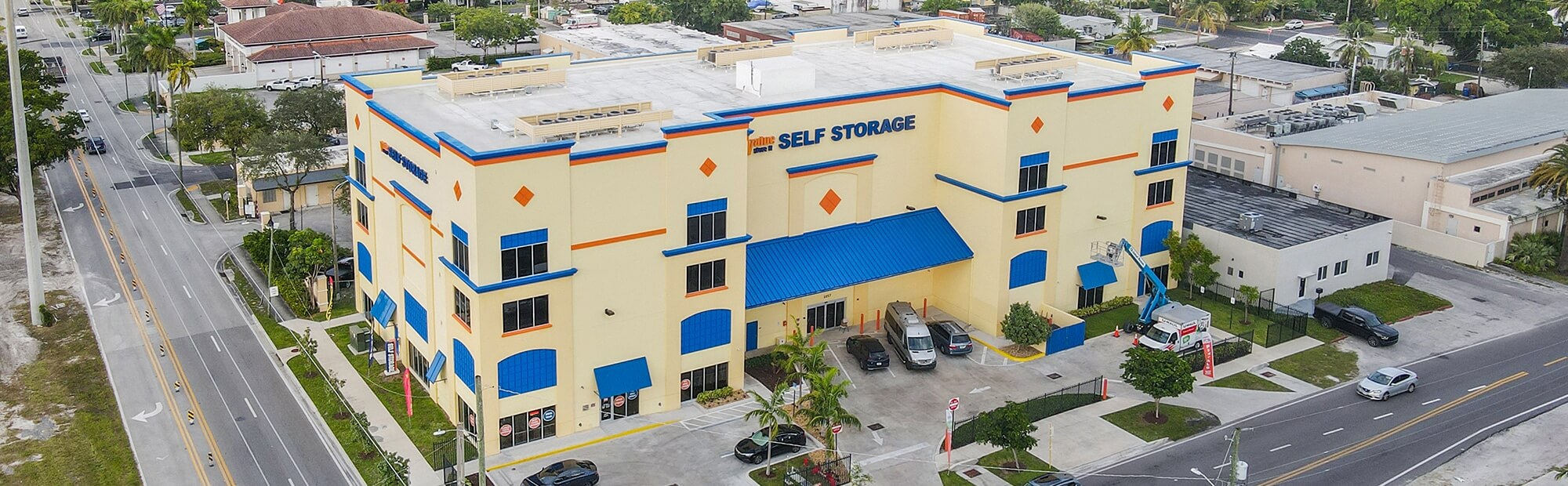
Most Little Havana moves involve a gap: closing dates that don’t line up, a lease starting three weeks late, or a house full of furniture meeting an apartment with shallow closets. Our Little Havana storage facility rents month-to-month with no long-term contract, which fits that timeline better than an annual commitment. 10×5 units take the contents of one room, 10×15 storage holds a two-bedroom apartment, and a 10×20 unit holds a three-bedroom home during a renovation. When a move involves a car plus lawn equipment, the 10×30 size is the largest option in this market. Working through our moving checklist a few weeks out is the cheapest way to avoid deciding any of it on moving day.
Once the boxes are gone, start eating. Our guide to the neighborhood’s restaurants, block by block runs from Salvadoran pupusas to Spanish tapas, the breakfast and brunch counters list the places open before 7 a.m., and the Little Havana shopping guide covers where to buy a guayabera, a domino table and a shower curtain.