
Clearwater is built around one of the best beaches in the United States, and almost everything worth doing revolves around that fact. Clearwater Beach was named the #1 beach in Florida and #2 in the country in Tripadvisor’s 2026 Travelers’ Choice awards, with soft white sand and Gulf water that runs from about 64°F in January to 87°F in August, and the town that’s grown around it offers a marine rescue aquarium, a nightly sunset festival at Pier 60, an island state park you reach by ferry, and a downtown across the harbor that’s quietly become worth visiting in its own right.
The important thing to understand before planning is that Clearwater is two places. This guide covers 16 things worth doing across both sides, plus the practical details that decide whether a day here goes well: parking, timing and the causeway in between.
Understanding the Geography
Clearwater Beach sits on a barrier island. This is the beach, the resorts, Pier 60 and almost all the tourism.
Downtown Clearwater sits on the mainland across Clearwater Harbor, connected by the Memorial Causeway. This is the Cleveland Street District, Coachman Park and the civic side of the city. The Clearwater Marine Aquarium sits between the two, on Island Estates just off the causeway.
The causeway is the pinch point, and it dominates practical planning. Traffic backs up on weekend afternoons in season, and getting from the mainland to the beach at the wrong hour takes far longer than the short distance suggests.
Two things fix this. The Jolley Trolley runs beach routes plus a coastal route from Clearwater Beach through downtown Dunedin and Palm Harbor to the Tarpon Springs Sponge Docks, and rides are free with a room key at several partner resorts. And going early, before 10 a.m., avoids both the traffic and the competition for beach parking, which is genuinely fierce.
Clearwater Beach
The main event. The beach is wide enough that even a busy day doesn’t feel packed, with the fine white sand this stretch of Florida coast is known for.
It’s a resort beach rather than a wild one, and that’s the appeal for most visitors: lifeguards on duty daily from 10 a.m. to 5 p.m. according to the city’s beach rules, rentals, food within walking distance and a paved promenade behind the sand. City lots cost $3.50 an hour from 6 a.m. to 11 p.m.
Pier 60 Park is the hub. There’s a fishing pier whose front section reopened after the 2024 hurricanes while the "T" end stayed closed for repairs, a large covered playground, and the Wheel of Lights, a 90-foot LED Ferris wheel that runs nightly, weather permitting. Then there’s Sunsets at Pier 60, the free festival of street performers and local artisans that runs every night of the year, weather permitting, from 2 hours before to 2 hours after sunset. It’s the single most characteristic Clearwater experience.
Sand Key Park sits just south across a short bridge and is the quieter alternative. Pinellas County runs 95 acres there with a wide beach, a playground, picnic shelters and a boardwalk nature trail, open 7 a.m. to sunset with $6 parking. If Clearwater Beach feels too busy, this is the fix.
Clearwater Marine Aquarium
Not a conventional aquarium. The Clearwater Marine Aquarium focuses on the rescue, rehabilitation and release of marine animals, and the dolphins that live there are non-releasable residents that couldn’t return to the wild.
It became internationally known through Winter the Dolphin, who lost her tail in a crab trap and lived at the aquarium for 16 years before she died in 2021. The Tales of Winter exhibit remains, and Pinniped Pier is one of the newer additions, alongside sea turtles, sharks, stingrays and otters.
It’s smaller than a major city aquarium, and visitors expecting scale sometimes come away underwhelmed. Visitors who understand it as a working rescue hospital generally find it the most interesting attraction in the city. It’s open 10 a.m. to 5 p.m., so allow half a day and check the presentation schedule when you arrive.
Getting Out on the Water
This is where Clearwater genuinely excels, and it’s what separates it from a straightforward beach town.
Dolphin-watching cruises leave from the Clearwater Beach Municipal Marina, and sunset sailing trips are the other standard. On this coast the sunsets justify it.
Kayaking and paddleboarding through the mangroves and the Intracoastal are the calmer option, and jet ski rentals, parasailing and fishing charters cover the rest.
The two island state parks north of the city are the best day outdoors. Caladesi Island State Park has no bridge, so most visitors take the ferry from neighboring Honeymoon Island, and that limited access keeps it uncrowded. Coastal geologist Dr. Beach ranked it the #4 beach in the U.S. in 2025 and #2 in 2022, according to Visit St. Pete/Clearwater. Honeymoon Island State Park in Dunedin is reachable by causeway and is easier, with more than 4 miles of beach and a 3-mile trail through virgin slash pine.
If you do one thing beyond the main beach, take the ferry to Caladesi.
Downtown and the Cleveland Street District
The mainland side is often skipped and increasingly shouldn’t be.
The Cleveland Street District is downtown Clearwater’s main street, with restaurants, bars and independent shops. The Bilheimer Capitol Theatre at 405 Cleveland Street opened in 1921, was expanded in a 2013 renovation and is now run by Ruth Eckerd Hall, programming music and comedy through the year.
Coachman Park on the waterfront was rebuilt around The BayCare Sound, an amphitheater with 4,000 covered seats, plus a pirate-themed playground and a large splash pad. It brings touring acts to a downtown that used to send people to Tampa for them. The 47th Clearwater Jazz Holiday runs October 15 to 18, 2026, so check what’s scheduled before your visit.
Our Clearwater nightlife guide covers the evening options on both sides of the harbor.
Parks and Quieter Options
Moccasin Lake Nature Park is a 54-acre preserve, according to Clearwater Parks and Recreation, with a lake, boardwalks, nature trails, resident birds of prey and a nature center. It’s free, open Tuesday through Sunday, completely unlike the beach side of the city and a good option on a hot afternoon or with children who need a change of pace.
The Fred Marquis Pinellas Trail, a paved 47-mile path built on an old railroad corridor from St. Petersburg to Tarpon Springs, passes through the area and is excellent for cycling. Pinellas County has the full trail guide.
Traveling with children? Our guide to things to do in Clearwater with kids covers the playgrounds, rainy-day backups and family boat trips in detail.
When to Go and What to Skip
The dry, mild season runs November through April. The busiest visitor stretch is January through April, peaking in March, when spring break and Phillies spring training (late February through March) land together. Summer is hot and humid with near-daily afternoon thunderstorms, and hurricane season runs June 1 to November 30, peaking around September 10, according to the National Hurricane Center.
What to skip: don’t plan to drive to the beach at midday on a weekend in March. The causeway and the beach parking will defeat you. Either go early, use the Jolley Trolley or go to Sand Key instead.
Our guide to the best time to visit Clearwater covers the calendar month by month, and day trips from Clearwater covers Tampa, St. Petersburg and Dunedin, all of which are close.
Storage in Clearwater
A beach city generates a specific set of storage needs. Boats and personal watercraft need somewhere to sit between trips and, more urgently, somewhere secure through hurricane season. Beach and watersports equipment accumulates. Seasonal residents leave for months at a time. And plenty of households move between rentals on a regular cycle.
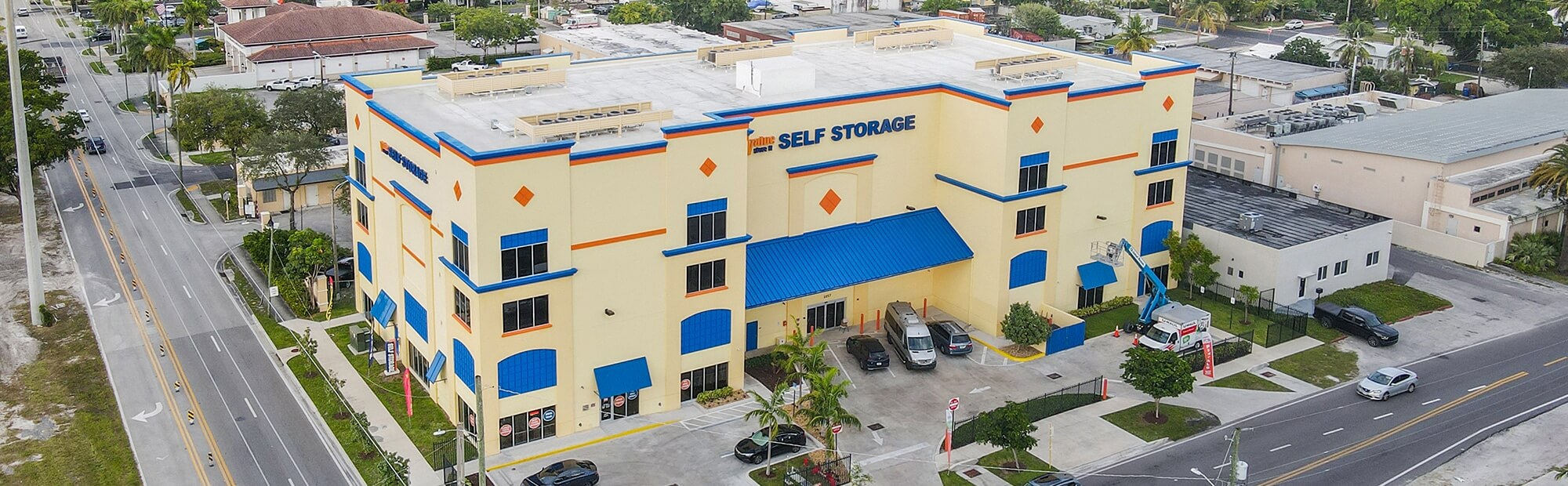
Value Store It operates two sites in the city, at Clearwater and Clearwater II, both renting month-to-month with no long-term contract.
At the smaller end, a 5×5 unit, about the size of a small closet, holds beach gear, snorkeling equipment and off-season clothing, and a 5×10 takes the contents of one room. A 5×15 holds the contents of two rooms and has the length for kayaks, paddleboards and fishing gear, while a 10×5 offers the same 50 square feet as a 5×10 in a different shape.
For households, a 10×10 covers a one-bedroom apartment, a 10×15 a two-bedroom apartment, a 10×20 a three-bedroom home and a 10×30 a four-bedroom home or a small business’s stock.
The Clearwater II site stops a size short of that but covers the same ground for anyone nearer to it. A 5×5 there takes the beach gear, a 5×10 or a 10×5 clears one room, and a 10×10 holds a one-bedroom apartment. Above those, a 10×15 takes a two-bedroom apartment and a 10×20 a three-bedroom home.
In Gulf Coast humidity and salt air, climate control is the decision that protects everything else, and both sites offer it at Clearwater and Clearwater II. For anything on the water there’s dedicated boat storage, which matters as much for hurricane preparation as for the off-season, and car storage for seasonal residents leaving a vehicle behind.
Frequently Asked Questions
What’s Clearwater, Florida known for?
Clearwater is best known for Clearwater Beach, which Tripadvisor travelers ranked the #1 beach in Florida and #2 in the U.S. for 2026. It’s also known for the Clearwater Marine Aquarium, a working marine rescue and rehabilitation facility and the former home of Winter the Dolphin, and for the nightly Sunsets at Pier 60 festival on the beach.
What are the best free things to do in Clearwater?
The beach itself is free once you’ve paid for parking, and the nightly Sunsets at Pier 60 festival, with street performers and artisans around sunset, costs nothing to attend. Walking the beach promenade, Coachman Park’s playground and splash pad, and the trails at Moccasin Lake Nature Park are all free, and Sand Key Park costs only its $6 parking fee.
Is Clearwater Beach worth visiting?
Yes. It’s among the top-ranked beaches in the country, and the combination of soft white sand, lifeguards and walkable amenities makes it one of the easiest good beach days in Florida. It’s a resort beach rather than a secluded one, so visitors wanting quiet should try Sand Key Park or take the ferry to Caladesi Island.
How do you get to Caladesi Island from Clearwater?
Caladesi Island State Park has no bridge or road, so most visitors take the ferry that runs from Honeymoon Island State Park in Dunedin, which is reachable by causeway. That limited access is exactly why the beach stays uncrowded and why Dr. Beach keeps ranking it among the best in the country.
How many days do you need in Clearwater?
Two to three days covers it well: one for Clearwater Beach and Pier 60, one for the Marine Aquarium and a boat trip or the ferry to Caladesi Island, and a third for downtown, Sand Key or a day trip. Tampa is about 25 miles away, a 30- to 40-minute drive according to VISIT FLORIDA.
Planning a Visit
The Clearwater formula is simple. Go to the beach early, before the causeway and the parking lots fill. Spend the middle of the day on the water or at the aquarium. Come back for the sunset festival at Pier 60, which is free and genuinely good.
If you have a third day, take the ferry to Caladesi Island. It’s one of the best beaches in the area and the one most visitors never reach.