
Moving to Clearwater, FL means picking a side of the Memorial Causeway. West of it sits a barrier island of sugar sand, resorts and island prices. East of it sits the real city: county offices, mid-century subdivisions, hospital campuses and suburban corridors along US 19 and Gulf to Bay Boulevard. Clearwater is the seat of Pinellas County and one of the three named principal cities of the Tampa-St. Petersburg-Clearwater metro, with a population of 116,821 and a median age of 48.1 according to Census Reporter’s ACS 2024 estimates. This guide covers housing costs, neighborhoods, jobs, schools, transportation and hurricane season.
Clearwater at a Glance: Geography, Size and the Causeway Divide
Clearwater reads much smaller than it is, because its most famous stretch sits on an island most residents visit rather than live on. The mainland carries almost all of the housing stock, the employers, the schools and the shopping.
Distance shapes daily life here more than city limits do, because Pinellas County is dense and the towns run together. Dunedin is a short drive north, Largo and Belleair sit just to the south, and Safety Harbor lies east around the upper bay. Tampa is about 25 miles east, a 30- to 40-minute drive on FL-60 and the Courtney Campbell Causeway, and Orlando is about 106 miles away, roughly 2 hours, per VISIT FLORIDA. Tampa International handles most long-haul flights, but St. Pete-Clearwater International Airport, which sits in unincorporated Pinellas with a Clearwater mailing address about 7 miles southeast of the city, is far quicker to reach.
The Cost of Living in Clearwater, From Rent to Property Taxes
Clearwater isn’t a cheap Florida market, but it’s a noticeably cheaper one than the beach towns south of it. Median household income sits at $66,357 and the median home value at $415,600, per Census Reporter’s ACS 2024 estimates. Livability’s Clearwater profile puts median monthly rent at $1,348 and the median annual property tax bill at $2,527, with an average commute of 21 minutes.
Florida has no state income tax, which is the largest line-item difference for anyone arriving from the Northeast or the Midwest. That saving gets partly eaten by insurance. Homeowners west of the causeway and in low-lying mainland pockets should expect windstorm and flood coverage to be a real annual cost, and lenders require flood coverage in a designated flood zone. Price the total monthly carrying cost, not the list price.
One cost most relocation guides skip: the house you’re leaving is probably bigger than the one you’re buying. Florida homes trade square footage for outdoor space, and the garages are smaller. A 10×10 unit in Clearwater holds about a one-bedroom apartment’s worth of furniture, which is roughly the gap most out-of-state buyers find on moving day. Running the numbers with a moving cost calculator beats finding the shortfall while the truck idles.
Clearwater Neighborhoods and Who Each One Suits
Clearwater’s neighborhoods sort by three questions: how close to the water, how new the housing and which high school. Island addresses trade space and parking for beach access. The mid-city grid offers modest mid-century houses close to city recreation. The north and east sides, around Countryside, carry newer and larger inland housing on bigger lots.
Clearwater Beach and Sand Key: Island Living at Resort Prices
Clearwater Beach is the barrier island’s tourist core, walkable end to end, expensive to park in and busiest from January through April, with the peak in March. Living here means accepting resort economics for a west-facing beach and a short walk to the water. Sand Key, immediately south across the Sand Key Bridge, is the calmer version: mid-rise condos and the 95-acre Sand Key Park at its north end, which opens 7 a.m. to sunset and charges $6 to park.
Island Estates: Waterfront Houses With Boat Access
Island Estates is a small residential island between the causeway and the beach, with waterfront houses, a Publix in the Island Village Shopping Center and a short bridge in either direction. It suits boat owners who want water access without living in the middle of beach traffic. The Clearwater Marine Aquarium sits on the island at 249 Windward Passage, so the neighborhood absorbs visitor traffic on rainy days. If the boat outgrows the dock or the driveway, boat storage in Clearwater is the usual workaround on the smaller lots.
Downtown Clearwater and the Cleveland Street District: Walkable and Still Filling In
Downtown Clearwater sits on a bluff above the harbor at the foot of the causeway, and it’s the only genuinely walkable dinner and live music option that doesn’t carry beach prices. Coachman Park and The BayCare Sound amphitheater anchor the waterfront, with the Bilheimer Capitol Theatre and Cleveland Street Market a few blocks inland. The district is compact and still filling in, and a Tampa Bay Times investigation found the Church of Scientology and companies tied to its members own most of the commercial property within walking distance of the waterfront, which keeps parts of the street quieter than the square footage suggests.
Harbor Oaks: Historic Houses on the Bluff
Harbor Oaks is the historic bluff neighborhood just south of downtown between South Fort Harrison Avenue and Clearwater Harbor, listed on the National Register of Historic Places and developed in the early 20th century. Morton Plant Hospital sits at its southern edge, which matters for medical workers and for anyone who wants a hospital close by. This is the neighborhood for buyers who want character rather than square footage, and inventory is thin.
Countryside: School Zoning, Garages and Indoor Options
Countryside covers northeast Clearwater, which grew up around Countryside Mall (opened in 1975), Countryside Country Club and Countryside High School. Wide arterials, subdivisions, chain retail and the largest concentration of indoor options in the city make it the default family answer. The trade is distance: budget real driving time to the beach, and more on a March Saturday. For mall walkers, Countryside Mall’s doors open at 9:30 a.m. Monday to Saturday and 10:30 a.m. Sunday, which is the quiet window with small children on a rainy morning.
Morningside and Skycrest: Mid-City Houses Near the City Pools
Morningside and Skycrest sit in mid-city Clearwater near Crest Lake Park, The Long Center and the Morningside Recreation Complex. The housing is modest mid-century stock at some of the more affordable prices in the city, which makes it a common landing spot for first-time buyers. The Long Center’s pools reopened on July 31, 2026 after a 17-month renovation, so lap swimming is back.
Feather Sound and the Gateway Area: The Tampa Commute Corner
Feather Sound isn’t technically inside the city. It’s an unincorporated community with Clearwater mailing addresses near the Bayside Bridge and Ulmerton Road, close to St. Pete-Clearwater International Airport. This is the commuter’s neighborhood, built around office parks in the Gateway area with quick access to the Tampa causeways and I-275. Bascom’s Chop House on Ulmerton Road has been the area’s special-occasion table since 2001, and the tourist crowd rarely crosses the causeway for it.
Jobs and the Pinellas County Economy
Clearwater’s economy leans on healthcare, manufacturing, financial services and tourism. Across the county, Pinellas County’s top private employers are Publix, Walmart and Raymond James, which is headquartered in St. Petersburg, followed by Johns Hopkins All Children’s Hospital. Pinellas also holds Florida’s third-largest manufacturing employment base, organized around six target industry clusters.
The market is wider than the beach suggests. Tourism hires year-round on the island, but the salaried work sits on the mainland and across the bay, and plenty of residents accept the causeway commute to Tampa. Healthcare is a steady local employer, anchored by Morton Plant Hospital at the edge of Harbor Oaks, and the Gateway corridor near the airport is where much of the office park work concentrates.
Schools and Higher Education in Clearwater
Clearwater is served by Pinellas County Schools, and neighborhoods are zoned for high schools such as Clearwater High and Countryside High. School zoning drives a meaningful share of the price difference between neighborhoods on the north and east sides, so check the assigned school before you fall for a house.
St. Petersburg College’s Clearwater Campus covers 40 acres on Drew Street and serves more than 14,000 students a year, which matters for families with a college-age child who wants to stay local and for adults retraining into a new field.
Getting Around Clearwater by Car, Ferry and Trolley
Clearwater is a car city with two genuinely useful alternatives. The Clearwater Ferry runs Thursday through Sunday between downtown Clearwater, the Clearwater Beach Marina near Pier 60 and Dunedin Marina. Parking downtown and riding across is the standard local answer to beach parking, and it beats sitting on the causeway.
The Jolley Trolley runs seven days a week, year-round, from Clearwater Beach through downtown and up the coast through Dunedin and Palm Harbor to the Tarpon Springs Sponge Docks, and its passes work across the PSTA bus system. Cyclists get the Pinellas Trail, a paved rail trail running the length of the county, and the Courtney Campbell Causeway Trail across the bay to Tampa.
For everything else you need a car, and probably two if both adults work. Seasonal residents who head north for the summer often leave a second vehicle behind rather than driving it twice a year, which is what car storage covers.
Hurricane Season, Flood Zones and the Realities of the Climate
Clearwater’s January averages run 70°F by day and 54°F overnight, and July averages 91°F by day and 77°F overnight, according to the Visit St. Pete/Clearwater weather FAQ. The wet season runs June through September with near-daily afternoon storms rather than all-day rain, August is the wettest month and November the driest.
Atlantic hurricane season runs June 1 to November 30, and the climatological peak falls around September 10, per the NOAA National Hurricane Center. For a low-lying barrier island and harbor city, the practical risk is storm surge and flooding rather than wind alone. Check FEMA flood maps before you sign anything, budget flood insurance as a line item and learn your evacuation zone if you live west of the causeway.
Humidity is the other constant, and it’s why climate-controlled storage in Clearwater is the default here rather than an upgrade. Wood furniture, paper, photographs and anything upholstered do badly in an uncooled Florida garage over a summer. One last seasonal fact: from January through April the population swells, the arterials slow and restaurant waits stretch, with March the busiest month. Late summer and early fall are quieter, but they’re also the wettest stretch and the heart of hurricane season.
Settling In: Where Clearwater Residents Actually Spend Their Weekends
The fastest way to feel like you live here rather than visit is to stop driving to the beach every Saturday. Coachman Park downtown is free, with a pirate-themed playground, a year-round splash pad and a four-acre green, and the Clearwater Main Library next door runs its own kids and teens programming. Crest Lake Park and the 54-acre Moccasin Lake Nature Park, open Tuesday through Sunday, cover the walking, dog and trail end of the week, and both are free.
Evenings sort into two districts. Downtown gives you Cleveland Street Market, a food hall of independent stalls with a self-serve beer and wine bar, plus Clear Sky on Cleveland, where Sunday breakfast runs to 1 p.m., and Chiang Mai Thai and Sushi Bar near the Capitol Theatre. Chiang Mai closes between 3 and 4 p.m. on weekdays and doesn’t open until 4 p.m. on weekends, which catches people out before a matinee. Our guide to eating out in Clearwater goes deeper, and the Clearwater brunch guide covers the wait problem at the beach spots.
Ruth Eckerd Hall at 1111 McMullen Booth Road runs touring music and theater on the east side, and it also operates the Bilheimer Capitol Theatre and The BayCare Sound downtown, so check which venue your ticket names. BayCare Ballpark hosts Phillies spring training from late February through March and the Clearwater Threshers from April through September, with Dollar Tuesdays that make a family evening cheap. The Clearwater Jazz Holiday takes over Coachman Park and The BayCare Sound October 15 to 18, 2026.
Day to day, Wildflower Cafe on South Fort Harrison serves breakfast and lunch with an attached market, and Bealls Florida on Gulf to Bay is where residents buy beach clothing instead of paying Mandalay Avenue prices. The Clearwater shopping guide covers Countryside Mall and the Cleveland Street District in detail, and the best time to visit Clearwater breaks the year down month by month if you’re timing a house-hunting trip. Many people land in an extended-stay suite while they hunt, and if that’s your plan, a 5×5 locker holds the boxes and seasonal gear you don’t want in a hotel room, while a moving checklist keeps two address changes from turning into three.
Frequently Asked Questions
Is moving to Clearwater, Florida worth it?
For most people, yes, provided you go in clear-eyed about insurance and hurricane season. You get no state income tax, a Gulf beach, a real job market across the Tampa Bay metro and a median home value of $415,600. The costs are windstorm and flood coverage, summer humidity and a busy season from January through April when traffic slows noticeably.
How much do I need to make to live in Clearwater, Florida?
Median rent in Clearwater is $1,348 a month, according to Livability. At the standard rule of keeping housing under 30% of gross income, that points to roughly $54,000 a year for a renter in a median unit. Buyers should budget higher, because insurance and association fees on a coastal property often add several hundred dollars a month that a rent figure never shows.
What’s the best place to live in Clearwater, Florida?
It depends on what you’re optimizing for. Countryside is the family answer, with school zoning, garages and yards. Harbor Oaks wins on character and proximity. Morningside and Skycrest are the value picks for first-time buyers. Feather Sound, just outside the city line, suits Tampa commuters, and Island Estates suits boat owners. The beach and Sand Key are for people who genuinely want island life.
What are the pros and cons of moving to Clearwater, FL?
The pros: no state income tax, a 21-minute average commute, a beach on your doorstep and a diversified economy spanning healthcare, manufacturing and financial services. The cons: insurance costs, storm surge risk west of the causeway, a rainy season concentrated in summer afternoons and a winter tourist season that makes every arterial slower from January through April.
What’s it like to live in Clearwater, FL?
Life here runs on a seasonal rhythm. Winter and early spring are busy, bright and crowded. Summer is hot, wet and quieter, with afternoon storms you plan around rather than cancel for. Most residents treat the beach as a weekday morning or off-season thing, and spend weekends downtown, at the county parks or up the coast in Dunedin.
Storage in Clearwater While You Get Settled
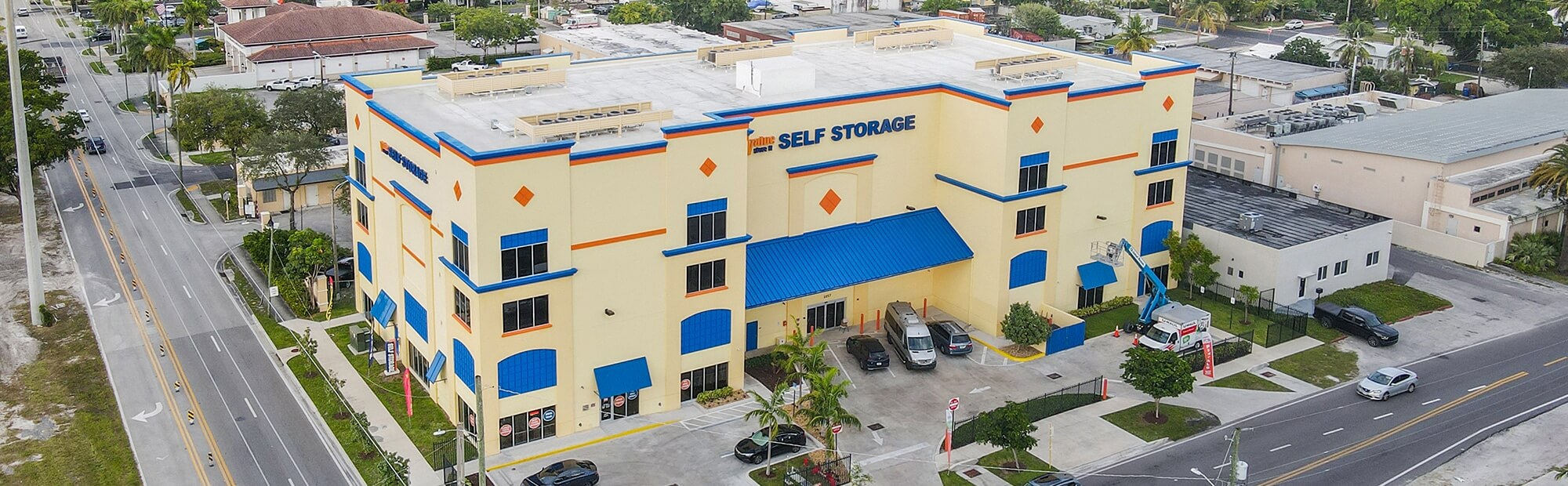
Few interstate moves land cleanly, and the gap between closing dates is where most people need space. Value Store It runs two facilities in Clearwater, both month-to-month with no long-term contract, open seven days a week and stocked with boxes and packing supplies.
Our Clearwater self-storage location carries the widest range in the market. 5×10 units and 10×5 units hold the contents of one room, and 5×15 units take a studio apartment. 10×15 units handle a two-bedroom apartment. For bigger households, 10×20 units fit a three-bedroom home and 10×30 units take a four-bedroom home.
Our second Clearwater facility covers the same ground with a slightly shorter lineup. It starts with a 5×5 unit at Clearwater II, about the size of a small closet, for seasonal bins and paperwork, moves through 5×10 units at Clearwater II, 10×5 units at Clearwater II and 10×10 units at Clearwater II, and tops out at 10×15 units at Clearwater II and 10×20 units at Clearwater II. Climate-controlled units at Clearwater II are available there too.
If you need somewhere to put the furniture that doesn’t fit the new place yet, Value Store It can help you land in Clearwater without renting a bigger house than you need. Each location page carries that facility’s own contact details and current availability.