
Moving to Jupiter, FL comes down to one honest trade. You’ll pay well above the national average for housing, and in exchange you get a low-rise beach town of about 61,000 people, well-regarded public schools, a 20-minute average commute and no state income tax. Jupiter sits in northern Palm Beach County, just south of Tequesta and about 15 miles north of West Palm Beach. This guide covers what it actually costs, which neighborhood fits which buyer, the schools, the job market, hurricane season and how to get through your first month.
Jupiter at a Glance: The Landmarks Locals Navigate By
Jupiter is organized around four things, and once you know them you can find anything. The red 1860 lighthouse marks the Jupiter Inlet at the mouth of the Loxahatchee River. Indiantown Road is the main east-west artery. US Highway 1 runs north to south through the everyday retail. A1A hugs the ocean. Learn those four and the rest of the town falls into place quickly.
The town covers 23.12 square miles and recorded 61,047 residents at the 2020 Census, according to Jupiter’s Wikipedia entry. Jupiter sits about 84 miles north of Miami, which is far enough that it functions as its own town rather than a Miami suburb. The low skyline is the single biggest visual difference between Jupiter and the coastal cities south of it.
Everyday life crosses municipal lines constantly, so it helps to know the edges. Tequesta is the small village directly north. Juno Beach is the next town south on US 1. Palm Beach Gardens, about 15 to 20 minutes south, holds The Gardens Mall and most of the big-box shopping. Nothing in that orbit is more than roughly 20 minutes from the inlet, which is why residents talk about the whole northern county as one place.
What It Costs to Live in Jupiter
Housing is the entire cost-of-living story here. The median home value in Jupiter is $547,228, median rent runs about $1,666 and the median property tax is $4,312, according to Livability’s Jupiter data. Expect the single-family market to be tight at the lower end.
Income offsets some of that. Jupiter’s median household income is $113,588, and Florida charges no state income tax on wages or retirement income. Once you buy and file for homestead exemption, Florida’s Save Our Homes cap limits how fast your assessed value can climb, which protects long-term owners from the worst of the run-up.
The line item newcomers underestimate is insurance. Coastal Florida homeowners policies cost real money, and they should be quoted before you make an offer rather than after. Groceries, dining and household services also tend to run higher in an affluent town like this one. Budget for the premium instead of being surprised by it in month two.
Renting first is a reasonable strategy in a market this expensive, and it’s what a lot of relocating families do. If you’re renting while you shop for a house, the furniture usually outgrows the rental. A 10×10 storage unit in Jupiter holds a one-bedroom apartment’s worth of furniture, which is the usual gap between what you owned before and what fits now.
Jupiter Neighborhoods and Who Each One Suits
Jupiter’s neighborhoods differ more than the town’s size suggests. You can buy acreage with horses on it or a condo you can walk to dinner from, and both are inside the same 23 square miles. Pick the one that matches how you actually spend a Saturday.
Abacoa: Sidewalks, a Town Center and the Easiest Landing for Renters
Abacoa is the planned, higher-density community inland off Central Boulevard, and it’s one of the few parts of Jupiter that works without a car. Downtown Abacoa at 1200 Town Center Drive has surface parking, real sidewalks and a walkable cluster that includes Civil Society Brewing Co., Crux Coffee Roasters, Das Beer Garden and Stadium Grill. Roger Dean Chevrolet Stadium, the spring training home of both the Miami Marlins and the St. Louis Cardinals, is a short walk from those bars.
Abacoa suits renters, younger buyers and families who want neighbors and sidewalks more than a water view. Florida Atlantic University’s John D. MacArthur Campus and Abacoa Golf Club both sit inside it. The trade-off is noise and traffic on game nights, in February and March for spring training and from April through August for minor league baseball, which is worth weighing if you’re touring a townhouse near the stadium.
Jupiter Farms: Acreage, Horses and Room to Spread Out
Jupiter Farms is rural western Jupiter, off Indiantown Road past the turnpike, and it’s a different town in every way that matters. Lots are large, horses are normal, and it draws people who want a workshop, a boat trailer or a barn.
Riverbend Park sits on Indiantown Road nearby, with nearly 10 miles of hiking and biking trails plus about 7 miles of equestrian trails, 17 miles in all according to the Town of Jupiter’s Riverbend Park page. The honest downside is distance. You’re 15 to 20 minutes from the beach and farther from everything on A1A, and a household moving from a compact house to acreage often ends up parking the overflow in a 10×20 storage unit while the garage or barn gets built.
The Beachfront and A1A: Paying Directly for Ocean Access
The A1A corridor is where you pay for the ocean, and Jupiter’s version is low density by South Florida standards. Carlin Park anchors the middle of it with 109 acres, 3,000 feet of guarded beach, six lighted tennis courts and the Seabreeze Amphitheater. Dubois Park at the inlet has a swimming lagoon that’s popular with families of small children. Ocean Cay Park is the smaller lot to fall back on when the others fill.
This is also where Jupiter’s 2.5-mile dog-friendly beach sits, running from marker #26 at Marcinski Road north to marker #57, where dogs can be off leash on the sand if they respond to voice commands, and it’s a real reason people choose Jupiter. Beachfront buyers should know that parking pressure is constant on weekends and that condo insurance and assessments deserve a hard look before closing.
Inlet Village and the US 1 Corridor: Waterfront Living You Can Walk
Harbourside Place and Inlet Village give you Jupiter’s walkable waterfront living. Harbourside Place at 200 N US Highway One puts restaurants, a hotel, an amphitheater and the Riverwalk in one complex on the Intracoastal Waterway. A few minutes north, the Inlet Village cluster around Love Street holds Lucky Shuck Oyster Bar and Taphouse, U-Tiki Beach and The Beacon, with Guanabanas nearby on A1A, all close to the water.
This pocket suits downsizers, second-home buyers and anyone who wants to leave the car parked on a Friday night. It’s the busiest part of town on a weekend afternoon, and the Harbourside events calendar dictates how loud your street is. Check it before you commit to a lease facing the amphitheater. If dining is what’s pulling you here, our guide to the best restaurants in Jupiter goes deeper on which rooms are worth the wait.
Tequesta and Juno Beach: The Edges Locals Treat as Jupiter
Plenty of houses people call Jupiter are technically in Tequesta or Juno Beach, and buyers should know the difference because taxes, schools and services follow the actual municipality. Tequesta is just north and holds several of the area’s best casual rooms, including Hog Snappers, Tiki 52 and Blue Pointe Bar and Grill. It’s quieter than the busiest Jupiter addresses.
Juno Beach, 5 to 10 minutes south, is mostly residential and built around the Juno Beach Pier and Loggerhead Marinelife Center, a sea turtle hospital that’s free to enter and open 10 a.m. to 5 p.m. seven days a week. Both towns keep you inside the same 20-minute orbit, so they belong on your search list rather than outside it.
Schools, Healthcare and Higher Education
Schools are the reason a large share of families move to Jupiter, and the public options are the draw. The School District of Palm Beach County runs the public schools, and Jupiter’s include Lighthouse Elementary, Jupiter Farms Elementary, Limestone Creek Elementary, Jerry Thomas Elementary, Beacon Cove Intermediate School, Jupiter Middle School, Independence Middle School and Jupiter Community High School. Jupiter High offers the Cambridge AICE Diploma and hosts the Environmental Research and Field Studies Academy. Some Jupiter students are zoned to Watson B. Duncan Middle School, which is in Palm Beach Gardens.
Private options include Jupiter Christian School (PreK-12) and All Saints Catholic School (PK-8). The Benjamin School (PK-12) is nearby, with campuses in North Palm Beach and Palm Beach Gardens. If a specific school is driving your move, verify current boundaries with the district before you sign anything, because Jupiter, Tequesta and Juno Beach addresses don’t all feed the same schools.
For healthcare, Jupiter Medical Center is an independent not-for-profit hospital with specialty programs in orthopedics and spine, cancer, cardiac and vascular care, neuroscience and stroke, and women’s services. On the higher-education side, FAU’s Jupiter campus houses the Harriet L. Wilkes Honors College alongside the Scripps and Max Planck Florida research institutes, which are why the town has a scientific employment base at all. The nearest Palm Beach State College campus is in Palm Beach Gardens.
The Job Market, Commuting and Getting Around
Jupiter’s job market is healthy but small. Employment concentrates in healthcare, education, research, tourism and trades, with Jupiter Medical Center, FAU and the research institutes among the larger employers, and FPL headquartered next door in Juno Beach. Many residents commute south to West Palm Beach or Palm Beach Gardens instead.
The commute is the pleasant surprise. The average one-way trip is about 20 minutes, and most residents drive. Read that as a plain fact: Jupiter is a driving town, and a household here generally needs a car per working adult.
Getting around is easy except on Indiantown Road, which predictably slows from January through April as seasonal residents arrive. Palm Beach International Airport is the closest commercial airport, with Fort Lauderdale-Hollywood International as the backup. Jupiter has no Brightline station; the nearest is in West Palm Beach. Harbourside Place, Downtown Abacoa and the Riverwalk and Inlet Village waterfront are the three pockets where you can park once and walk.
Hurricane Season, Summer Heat and What Closes When
Jupiter runs on two seasons rather than four, and both matter to a new resident. The dry season runs November through April, and the NOAA normals for nearby West Palm Beach put January at about 75°F high and 58°F low (Current Results). July and August average about 90°F with lows in the high 70s, most of the year’s rain falls June through October, and afternoon thundershowers are common. There’s no snow at all.
Atlantic hurricane season runs June 1 through November 30, and the climatological peak falls around September 10, with most activity between mid-August and mid-October. Jupiter has real history here: the inlet lighthouse was recoated after Hurricane Jeanne in 2004. Practically, that means a shutter plan, a documented home inventory and an insurance policy you’ve actually read before your first August.
Humidity is the quieter problem, and it’s the one that damages belongings. Wood furniture, leather, photographs, artwork, electronics and paper all suffer in an unconditioned Florida garage over a summer. That’s the case for climate-controlled storage in Jupiter rather than a shed, and it’s the difference between finding your boxes intact in October and finding mildew.
A few seasonal closures catch newcomers out. The Jupiter Inlet Lighthouse and Museum is closed Mondays. The Maltz Jupiter Theatre’s 2026/27 MainStage season runs late October through March, so there’s far less on stage in summer. The Parisian Restaurant and Wine Bar is closed for summer until October 1, then closes Sundays and Mondays through October, and Little Moir’s Leftovers Cafe is closed Sundays year-round. At Dubois Park, lifeguards work daily during the summer school recess but only on weekends during the school year, which is worth knowing before you take a toddler there in November. If you’re timing a house-hunting trip, our best time to visit Jupiter guide breaks the calendar down month by month.
Settling In: What to Do in Your First Month
Start with the free things, because they’re what make the place feel like home. The Town of Jupiter operates more than 25 parks, some jointly with Palm Beach County, and sunrise at Jupiter Beach Park costs nothing. Busch Wildlife Sanctuary in western Jupiter is admission by donation, and Loggerhead Marinelife Center is an easy first weekend.
Get your food routine established next. Little Moir’s Food Shack on US 1 is the strip-plaza restaurant locals send newcomers to first, Dune Dog Cafe has been the no-fuss standby since 1994, and Jupiter Donuts on Center Street sells out and closes early most days. Weekend mornings are their own topic, and our Jupiter brunch guide covers the wait-time problem in detail. For everyday errands, The Shoppes at Jupiter and Jupiter Square on US 1 handle most of it, and our Jupiter shopping guide covers the boutiques and the consignment furniture worth the drive south.
Then handle the logistics. Update your address, register the cars, get a Florida license and file for homestead exemption on your new home. A written moving checklist keeps that from turning into three separate Saturdays. And if the move brought beach gear you didn’t own before, bikes, coolers and folding chairs pile up fast in a Florida garage; a 5×10 unit absorbs the seasonal overflow without giving up a parking space.
Frequently Asked Questions
Is Jupiter, Florida a good place to live?
Jupiter rates well on the things families weigh: well-regarded public schools, a 20-minute average commute, extensive parks and beaches without high-rises. The honest counterweight is cost. The median home value is roughly $547,000, and insurance and everyday services run high. If the budget works, the quality-of-life case is strong.
How much money do you need to live in Jupiter, Florida?
Jupiter’s median household income is $113,588, which is a fair benchmark for comfortably carrying a typical home here. Median rent runs about $1,666 and the median property tax is around $4,312. Homeowners insurance is the wildcard and should be quoted before you commit. Florida charges no state income tax, so more of a paycheck survives than in most comparable coastal markets.
Why is Jupiter, FL so expensive?
Supply is the short answer. Jupiter is mostly low-rise and built out, so there’s a limited inventory of single-family homes. Add strong schools and ocean access, and prices hold. Groceries, dining and services follow the same pattern in an affluent town.
Which is nicer, Jupiter or West Palm Beach?
They solve different problems. Jupiter is quieter, lower density and more residential, with an easier commute and better beach access. West Palm Beach, 15 miles south, has the airport, a Brightline station, the bigger job market and downtown nightlife. Families and retirees usually prefer Jupiter; young professionals often prefer West Palm Beach.
Has Jupiter, FL ever been hit by a hurricane?
Yes. Jupiter sits on the Atlantic coast inside the hurricane belt, and the Jupiter Inlet Lighthouse needed a new coating after Hurricane Jeanne in 2004. Atlantic hurricane season runs June 1 to November 30, and the peak falls around September 10. Plan for shutters, a home inventory and an insurance review each spring rather than each September.
Does Jupiter, FL have a downtown?
Jupiter has no traditional downtown, which surprises new residents. Instead it has three walkable pockets. Harbourside Place on US 1 is the waterfront shop-and-dine complex, Downtown Abacoa at 1200 Town Center Drive is the inland town center with its own lots, and the Riverwalk and Inlet Village near Love Street is the waterfront restaurant and bar cluster by the lighthouse.
Storage While You Land in Jupiter
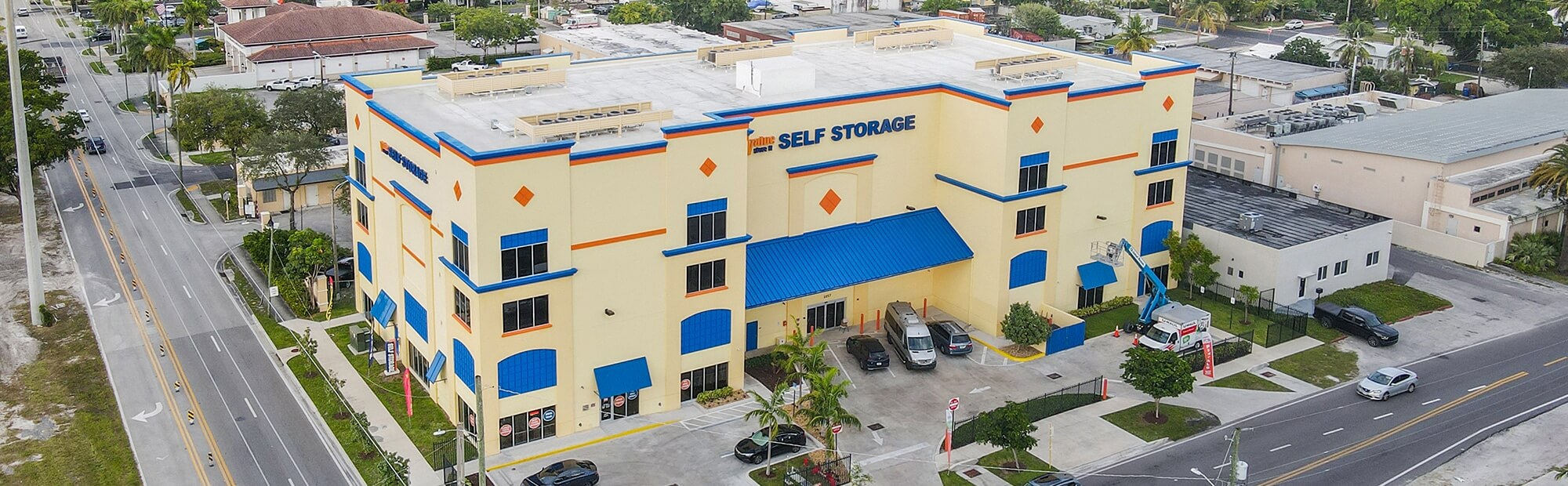
Almost nobody’s move lands cleanly. Closings slide, the rental is smaller than the last house, and the trailer that fit a two-car garage up north doesn’t fit a Jupiter driveway. Value Store It’s Jupiter facility rents month-to-month with no long-term contract, which is what matters when you don’t yet know if you need the space for six weeks or six months.
The sizes step up in a way that maps to real moves. A 5×5 locker takes boxes, files and holiday bins. A 10×5 unit holds a furnished bedroom, and a 5×15 unit holds a studio apartment. Families between houses often land on a 10×15 unit, which holds a two-bedroom apartment, and a 10×30 unit holds a four-bedroom home. If you’re guessing, the storage unit size calculator will settle it in about a minute, and you can sort the unit out after you’ve seen the new place rather than before.