
The best time to visit Pompano Beach, Florida, is March through early May, when the dry season is still holding, April highs sit around 83°F and the ocean has climbed back to about 78°F. December through February is cooler, with the biggest crowds. October is the sleeper month, with water near 82°F and hotels off their winter rates. This guide walks the year season by season, covering weather, water temperature, crowds, events and the storm risk nobody wants to talk about.
The Pompano Beach Calendar in Two Weather Seasons and Three Price Tiers
Pompano Beach runs on a dry season and a wet season, and the two change how a day here’s shaped, not just what you pack. From November through April the weather’s stable enough to plan an entire day outdoors and lose nothing. The wet season runs May through October, and from June through September the day breaks in half: mornings belong to the sand, and afternoons belong to whatever has a roof.
Prices follow a slightly different calendar than the weather does. Peak runs December through April, when snowbirds arrive and availability tightens. May and October are the value months, and the value holds into November, when the water’s warm and the crowds haven’t arrived yet. June through September has the lowest rates and the most heat, and it’s the run-up to the hurricane peak.
The arts calendar fills Pompano Beach’s evenings on its own schedule, with a fall-through-spring season of concerts and theater. If you want the full version of the city rather than the beach alone, our guide to things to do in Pompano Beach covers what’s open year-round.
December Through April: Dry Air, Cool Water and the Full Arts Season
December through April is the most comfortable stretch of the Pompano Beach year and the reason the city’s winter population swells. January is the coolest month, with a normal range of 61 to 76°F, and each dry-season month typically gets only about 2.4 to 3.7 inches of rain, according to NOAA’s 1991 to 2020 climate normals for nearby Fort Lauderdale. The catch is the water: NOAA’s coastal water temperature guide puts the ocean at about 75°F in January and February, swimmable but brisk enough that plenty of visitors stay on the sand.
Pompano Beach’s 3 miles of shoreline are at their best in this window, with the volleyball courts, the playground and the splash pad all usable at midday instead of punishing. The Fisher Family Pier is free to walk at 900 feet, and sunrise is both the quiet hour and the best light. Lifeguards are on duty seven days a week, 9 a.m. to 4:45 p.m., year-round.
Winter is also when the indoor calendar is fullest. The Pompano Beach Cultural Center stages concerts and theater through the cooler months, and the Pompano Beach Amphitheater brings touring acts to a fully covered, 3,000-seat open-air venue. The city’s events calendar lists free fixtures, including Old Town Untapped on first Fridays (next on October 2, 2026) and the Backyard Jam concert series on third Fridays, plus JazzFest, set for April 16 to 17, 2027.
The Green Market is the winter-only extra worth timing a trip around. It runs on the second and fourth Saturdays at the Cultural Center from November through April, so a winter trip catches it and a summer one misses it. Booking gets real in this window too: beach hotels fill first, restaurants and charters want a few days’ notice on winter weekends, and the cheaper inland rooms in our Pompano Beach hotel guide go from a compromise to a smart move.
May, October and November: Warm Water Without the Peak Crowds
May and October are the best value months in Pompano Beach, and October is the stronger of the two for anyone who actually wants to get in the ocean. The water’s about 82°F in October against roughly 78°F in April, the winter crowds have gone home, and hotel rates drop off their December-through-April peak. May carries the same advantage in reverse, before June’s heavier rain arrives. November extends the window at the other end: the dry season has already started, the water’s still warm, and peak rates don’t take hold until December.
Diving is the clearest argument for these two months. According to Visit Pompano Beach, 18 wreck sites have earned the area its title as the "Wreck Capital of Florida," and natural coral reefs sit just a short swim from shore, so snorkeling doesn’t need a boat. You’ll need certification for the wreck dives, and visibility can drop after rough weather, so book a charter with a flexible date rather than a fixed one.
The Pompano Beach Water Taxi is the other shoulder-season pleasure, running daily from 10 a.m. to 10 p.m. across 12 local stops, with an upgrade that continues into Fort Lauderdale. Its stops include Indian Mound Park and Roy Rogers Family Park by the Hillsboro Lighthouse, and it solves the parking problem outright. The lighthouse itself, first lit in 1907, opens its 175-step climb only on a few boat tours a year for Hillsboro Lighthouse Preservation Society members, and that climb is far more pleasant in October than in July.
June Through September: Hot Mornings, Wet Afternoons and the Warmest Ocean
June through September is hot, humid and cheap, with normal highs of 88 to 90°F and ocean water peaking near 86°F in August. June is the wettest month at about 9.6 inches of rain, with September and August close behind. The storms are an afternoon pattern rather than an all-day event, so the workable summer plan is beach in the morning and an indoor block held in reserve for when the sky darkens.
The Jellyfish Museum, a block from the Fishing Village and the pier, is the closest indoor option to the sand, air-conditioned and small enough to pair with a pier walk rather than fill an afternoon. Topgolf Pompano Beach is the bigger rainy-day room, with more than 100 hitting bays over three floors, open until 11 p.m. Monday through Thursday and 1 a.m. Friday and Saturday. Book bays online rather than walking in, and note that anyone under 16 needs a guest 21 or older present at all times, and under-18s need one after 9 p.m.
Old Town’s cultural block is the quieter answer. The Pompano Beach Cultural Center hosts exhibitions and performances, and the Bailey Contemporary Arts Center runs hands-on workshops and rotating art displays, so an afternoon storm can be spent on art instead of a hotel lobby. Both run on scheduled programming, so check the calendar first. Harrah’s Pompano Beach is the all-weather option for adults, with slots, electronic table games, a WSOP Poker Room and two restaurants on site.
Summer humidity is also why anything stored here for the season goes into climate-controlled storage in Pompano Beach rather than a garage. If the forecast rules out the coast entirely, the inland options in our day trips from Pompano Beach guide are the better use of the afternoon.
Hurricane Season, Rip Currents and Turtle Nesting
Hurricane season runs June 1 through November 30, and NOAA’s National Hurricane Center puts the peak around September 10, with most activity from mid-August to mid-October. A direct hit is rare but genuinely possible, so watch the forecast in the week before a late-summer trip and price travel insurance rather than assuming you’ll be fine.
The everyday risk is more mundane. Rip currents are real on this coast, the beach flag system isn’t decorative, and the correct response if you’re caught is to swim parallel to shore until you’re out of it. Sea turtles nest along the shoreline from March through October, which is why beachfront lighting is restricted. Boat owners plan around the same calendar, which is why boat storage in Pompano Beach between trips is normal here rather than unusual.
Parking, Seasonal Closures and Getting Around Without a Fight
Parking near the Fisher Family Pier is the single biggest weekend bottleneck in Pompano Beach, and it gets worse in season. Arrive before mid-morning on a Saturday, head for the Pier Garage at 3465 Pier Street, or use the city’s free Circuit rides around the beach area (Visit Pompano Beach). Rideshares surge on holiday weekends along A1A, so build in a buffer if you have a reservation.
Seasonal closures catch people out. The two municipal courses at Pompano Beach Golf Club typically close for aerification a couple of days each July, and county pipeline work has closed holes 15 and 16 on the Pines and hole 14 on the Palms, with modified routing, so call the pro shop before you drive over rather than after. Our Pompano Beach golf guide covers which courses a visitor can actually get onto.
A car is the honest answer to how you get around, since most locals drive and the beach, Old Town and the inland corridors aren’t walkable to each other. Snowbirds who fly in and out often solve that with car storage in Pompano Beach instead of shipping a vehicle twice a year, and the same logic applies to RV storage in Pompano Beach for anyone who drives down for the winter. Beach rules are consistent year-round, per the Visit Pompano Beach FAQ: no glass, no open fires, no pets on the main public beach and alcohol only in permitted areas.
Frequently Asked Questions
What’s the best month to visit Pompano Beach?
April is the strongest single month. The dry season’s still holding, the air runs about 70 to 83°F, ocean water is back to roughly 78°F, and the peak-season crowds start thinning. March is a close second with slightly cooler water. If your priority is warm water over dry air, October beats both, with the ocean near 82°F.
When is the off season in Pompano Beach?
Peak season runs December through April. May, October and November are the value months, and June through September has the lowest rates. Hotel rates fall, restaurant tables open up, and the beach is noticeably emptier on weekdays. The trade is heat, humidity, afternoon thunderstorms and hurricane season, which officially runs June 1 through November 30.
What’s the best time to visit Pompano Beach for swimming?
August has the warmest ocean at around 86°F, which is bath-warm and best paired with early mornings before the heat and the storms. For a balance of comfortable water and comfortable air, October is better, with the ocean around 82°F. January and February have the coolest water of the year at about 75°F.
What’s there to do in Pompano Beach when it rains?
The Jellyfish Museum, the Pompano Beach Cultural Center and the Bailey Contemporary Arts Center are the closest indoor options to the beach, and Topgolf’s bays are covered. Harrah’s Pompano Beach is the indoor pick for adults, with gaming and two restaurants.
How many days should you spend in Pompano Beach?
Three to four days covers the pier, a full beach day, one water activity such as a dive or the Water Taxi, and a couple of good meals without rushing. A week lets you add Fort Lauderdale, the Everglades or Butterfly World, and gives you slack to move plans around an afternoon storm in summer.
Seasonal Storage in Pompano Beach for Visitors Who Stay
If a winter here turns into something longer, our Pompano Beach location rents month-to-month with no long-term contract, which suits a season rather than a year. It starts with a 5×5 locker, about the size of a small closet, for dive gear and holiday bins. A 5×10 unit holds the contents of one room, and a 5×15 unit takes a studio apartment. From there it steps up to a 10×10 unit for a one-bedroom apartment, a 10×15 unit for a two-bedroom apartment, a 10×20 unit for a three-bedroom home and a 10×30 unit for a four-bedroom home.
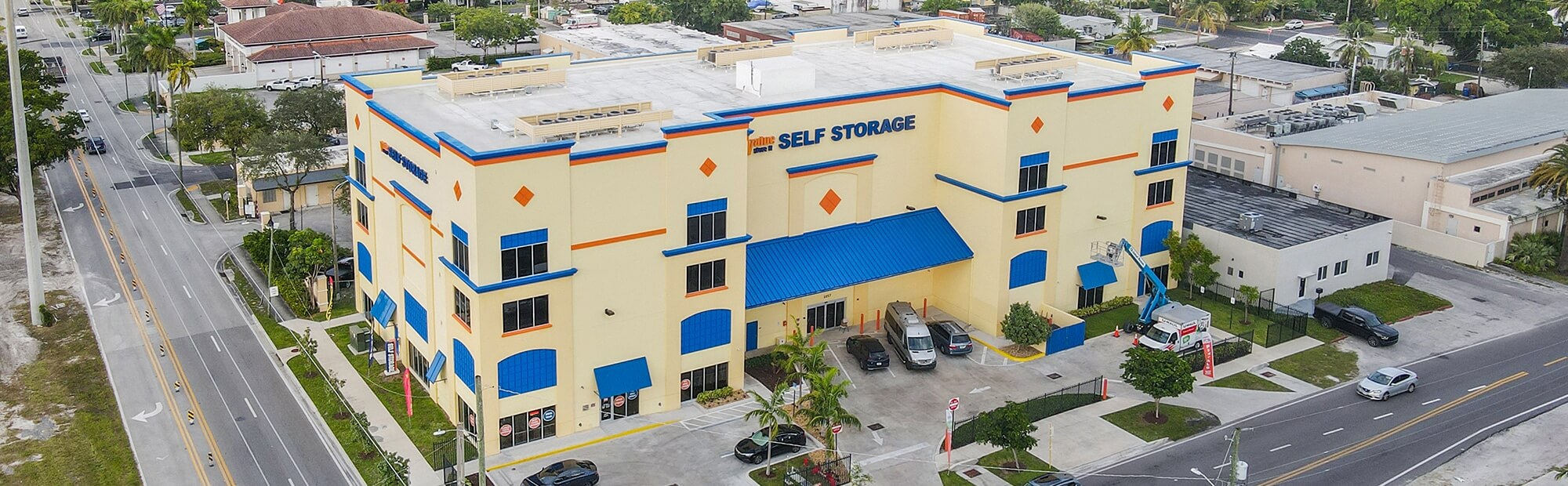
The Pompano Beach II facility covers the same ground from a second address. A 5×5 unit at Pompano Beach II takes boxes and seasonal gear, a 5×10 unit at Pompano Beach II or a 10×5 unit holds a furnished bedroom, and a 5×15 unit at Pompano Beach II fits the contents of two rooms. The 10×10 unit at Pompano Beach II, 10×15 unit at Pompano Beach II and 10×20 unit at Pompano Beach II run from half a one-car garage to a full one. Climate-controlled units at Pompano Beach II handle the same August humidity, and boat parking at Pompano Beach II, RV parking at Pompano Beach II and car storage at Pompano Beach II give boaters and snowbirds a second option.