The best things to do in Fort Lauderdale, FL sit along three parallel strips: the beach on A1A, the Intracoastal Waterway and New River a few blocks inland, and the downtown core around Las Olas Boulevard. Almost everything a first-time visitor wants is inside those few miles. The rest is a short drive north to Oakland Park and Lauderdale-by-the-Sea or west to the sawgrass. This guide covers 17 places worth your time, organized by where they actually are, with hours, parking and the honest caveats.
The Three Strips That Organize Fort Lauderdale
Fort Lauderdale is a real city rather than a suburb of Miami. It’s the seat of Broward County, covers about 34.6 square miles, and held 182,760 people at the 2020 Census, according to U.S. Census Bureau QuickFacts. Its shape is simple once you see it: A1A and the sand run north to south on the barrier island, the Intracoastal runs parallel behind it, and downtown sits about 2 miles west on the New River. Greater Fort Lauderdale counts 24 miles of beaches and more than 300 miles of Intracoastal and navigable canals, which is where the Venice of America nickname comes from, per Visit Lauderdale’s fun facts.
The city line is also invisible on the ground. Broward County packs 31 municipalities edge to edge, so several places below sit in Davie, Lauderdale-by-the-Sea or out on the Everglades edge, and each entry names the real town. Anything east of Federal Highway is roughly 10 minutes from anything else east of Federal Highway, while west Broward and the Everglades edge run 25 to 35 minutes.
Fort Lauderdale Beach and the A1A Strip
The beach strip is where most visitors start, and it’s the one part of the city where the car can stay parked for two days.
Fort Lauderdale Beach Park: Courts, Grills and the Busiest Sand
Fort Lauderdale Beach Park, at 1100 Seabreeze Boulevard, backs the sand with volleyball and basketball courts, a playground, grills, picnic tables and showers, and it’s open 5 a.m. to midnight, according to the City of Fort Lauderdale’s beaches page. It’s free to walk onto and you pay only to park, and the lot fills badly on weekends. If you want the livelier end, head north toward Las Olas Oceanside Park, where Las Olas Boulevard meets the beach.
Hugh Taylor Birch State Park: The Cheapest Full Beach Day in the City
Hugh Taylor Birch State Park occupies the land between A1A and the Intracoastal. A 1.9-mile loop road runs through tropical hammock for walking and cycling, with playgrounds, grills, paddling and a pedestrian tunnel under A1A to the beach. It’s open 8 a.m. to sunset every day and charges $6 per vehicle carrying two to eight people, per Florida State Parks, so one payment covers a whole carload.
Bonnet House Museum and Gardens: An Artists’ Estate on the Barrier Island
Bonnet House is the estate Frederic and Evelyn Bartlett built into a private world of art about a century ago, with shaded breezeways and subtropical gardens that still read as a home rather than a museum. Self-guided tours run Tuesday through Sunday, 11 a.m. to 4 p.m. It closes Mondays, holidays and the Fort Lauderdale Air Show weekend, which catches people out every year, so check the Bonnet House site first.
Sea Experience: Snorkeling the Reef That Sits Offshore
Sea Experience at 801 Seabreeze Boulevard runs daily scuba trips plus snorkeling and glass-bottom boat outings, and the draw is that Greater Fort Lauderdale has a three-tiered living coral reef close to shore and more than 76 artificial reefs. Book a morning trip, because the wind usually builds through the afternoon. Locals who dive or paddle end up with boards and tanks a condo closet won’t take, which is what a 5×10 storage unit, about the size of a small walk-in closet, is sized for.
Wreck Bar at B Ocean Resort: The Mermaid Show Behind the Portholes
The Wreck Bar sits inside B Ocean Resort and is styled like a shipwrecked Spanish galleon, with large portholes that look into the hotel’s swimming pool. On Friday and Saturday nights at 8 p.m., performers put on a mermaid show you watch through the glass from the bar, and the resort’s show page notes Saturday’s burlesque-inspired show is 21+. Arrive early for a porthole seat, and note it slots into a wider Fort Lauderdale nightlife evening without moving the car.
The Intracoastal Waterway and the New River
Two of the city’s best experiences happen on the water rather than beside it, and one of them doubles as public transport.
Fort Lauderdale Water Taxi: Transport That Doubles as a Tour
The Fort Lauderdale Water Taxi runs a hop-on, hop-off service across more than 30 stops on the Intracoastal and the New River, and crews add narration about the mansions and yachts when the load allows. It runs daily 10 a.m. to 10 p.m., rain or shine. You can buy a ticket at the dock on the day, but the Water Taxi FAQ says guests who already hold one board first, so buying ahead is worth it on a busy afternoon. Treat it as transport and a downtown stay stops requiring a car.
Jungle Queen Riverboat: 90 Minutes Past the Mega Yachts
The Jungle Queen has run sightseeing cruises out of Bahia Mar Yachting Center since 1935, and the 90-minute narrated trip passes mega yachts, waterfront homes and the entrance to Port Everglades. There’s also a 6 p.m. dinner cruise with barbecue ribs and Polynesian fire dancing on a tropical island. Check the schedule first: the Jungle Queen sails Wednesday through Sunday, and reservations are required.
Downtown, Las Olas Boulevard and the Riverwalk
Downtown is the walkable half of Fort Lauderdale. Park once and you can cover a museum, a historic house, a mile of riverfront and dinner without moving the car.
Las Olas Boulevard: One Street to Browse on Foot
Las Olas Boulevard runs from downtown east toward the beach and is the city’s best street for browsing on foot, mixing independent boutiques, fine jewelry and galleries with sidewalk cafes. The Las Olas Boulevard Association keeps a current merchant and events list. It’s calm by day and loud on weekend nights, and it anchors a good share of the best restaurants in Fort Lauderdale.
Riverwalk Fort Lauderdale: The Best First Walk in the City
Riverwalk Fort Lauderdale is a landscaped promenade along the New River that links shops, restaurants, museums and the Broward Center for the Performing Arts, and Riverwalk Fort Lauderdale bills it as Florida’s most beautiful mile. It’s free, outdoor and the best orientation walk a first-time visitor can take. A good routing is to park at Cooley’s Landing at the western end, walk east for the full length, and stop at The Wharf, an open-air riverfront bar with food vendors, on the way back.
NSU Art Museum Fort Lauderdale: A Free First Thursday
NSU Art Museum sits at One East Las Olas Boulevard and holds the CoBrA Collection alongside rotating exhibitions, including Christo and Jeanne-Claude’s Surrounded Islands documentation through spring 2027. Per the museum, it’s open Tuesday to Saturday 11 a.m. to 5 p.m. and Sunday noon to 5 p.m., closed Mondays. Admission is free for children 12 and under and for students aged 13 to 17, and free for everyone on the first Thursday of the month, when hours run 11 a.m. to 7 p.m.
Museum of Discovery and Science: The Answer to a Rainy Afternoon
The Museum of Discovery and Science covers Florida wildlife and the Everglades in its Florida Ecoscapes exhibit, and its AutoNation IMAX Theater has the largest movie screen in South Florida, so there’s enough to fill most of a day with school-age children. Its real value is as the wet-season fallback, since summer afternoons here often come with thunderstorms. The Broward Center for the Performing Arts is next door, so an exhibit afternoon and an evening show work as one trip.
Historic Stranahan House Museum: The Oldest Building in Fort Lauderdale
The Historic Stranahan House is the oldest surviving structure in Broward County, built in 1901 by Frank Stranahan and later home to him and his wife, Ivy. It served as a trading post, post office and town hall, and it sits on the New River downtown. Open days shift week to week with field trips and private events, so reserve ahead and note the final tour slot is 3:15 p.m., per the museum. Downtown parking is tight, and the house suggests parking at the Riverside Hotel or arriving by Water Taxi.
Sistrunk Marketplace: A Food Hall for Groups Who Can’t Agree
Sistrunk Marketplace at 115 NW 6th Street is a food hall with a brew bar and distillery, cocktails at The Shady Local and Mama Hanks, and axe throwing at Chops + Hops, with live music and DJs on weekend evenings (check the calendar). It’s closed Monday and Tuesday. Because it’s a hall, it solves the group where nobody wants the same dinner. Small food businesses like these keep dry stock and packaging in climate-controlled storage in Fort Lauderdale rather than a garage, because humidity here ruins cardboard in a season.
North Fort Lauderdale, Oakland Park and Lauderdale-by-the-Sea
About 15 minutes north of Las Olas, the buildings drop to a few stories and the parking gets easier.
Mai-Kai: A 1956 Polynesian Dinner Show, Restored and Reopened
Mai-Kai opened on North Federal Highway in 1956, closed in October 2020 after a roof collapse, and reopened on November 22, 2024 after a multimillion-dollar restoration, as Miami New Times reported. It’s on the National Register of Historic Places, and its Polynesian revue is billed as the longest-running in the country. Order rum drinks at the Molokai Bar or the Bora Bora Bar and treat the food as secondary to the room. Happy hour runs 4 to 7 p.m. and is the cheap way in without committing to the show, which needs a booking for every guest, per the Mai-Kai FAQ.
Lauderdale-by-the-Sea: A Reef You Can Swim to From the Sand
Lauderdale-by-the-Sea is its own small town about 15 minutes north, low-rise and walkable, with reefs within about 100 yards of the beach that you can snorkel straight from the sand without a boat, according to the town’s diving and snorkeling page. The fishing pier at the end of Commercial Boulevard anchors the strip, and a seasonal farmers market runs Sundays 9 a.m. to 1 p.m. at El Prado Park, typically December through early May. There are no lifeguards on this beach, which parents should know before choosing it over the city beach.
West Broward and the Everglades Edge
Drive 25 to 35 minutes west and South Florida stops being a beach town. This is also where most day trips from Fort Lauderdale begin.
Everglades Holiday Park: Airboats on the Everglades Edge
The city in the mailing address is a trick of the map here. Everglades Holiday Park is a Broward County park out on Griffin Road, a 35-minute drive west of the sand, and the reason to make that drive is that South Florida stops looking like South Florida the moment the airboat clears the dock. The run across the sawgrass takes roughly an hour and a gator show comes with the ticket, while hands-on animal encounters cost a separate $49.99, per the park’s hours and prices page. Aim for the morning: the park opens at 9 a.m. daily and the final tour pushes off at 5 p.m. through spring and summer, 4 p.m. for the rest of the year.
Flamingo Gardens: Flamingos and Otters on 60 Acres in Davie
Head 25 minutes west into Davie and the subdivisions give way to 60 acres of botanical garden wrapped around an Everglades wildlife sanctuary, and it’s the closest you’ll get to a Florida panther without leaving Broward County. Flamingos, river otters, alligators and an aviary of 250-plus native birds fill the rest of it, and the walking is shaded enough to survive a summer morning. The gardens run 9:30 a.m. to 5 p.m. every day, but the last ticket sells at 4 p.m., so an after-lunch start costs you the best of it. It’s also on every list of things to do in Fort Lauderdale with kids.
Parking, Monday Closures and the Wet Season
The practical problems here are parking, Mondays and rain, in that order. Beach parking on A1A is metered and competitive from mid-morning on weekends, which is why the Water Taxi and a single downtown garage beat driving between stops. Cooley’s Landing and the Riverside Hotel are the two most useful places to leave a car downtown.
Mondays close more than visitors expect. Bonnet House and the NSU Art Museum are both shut Mondays, the Jungle Queen doesn’t sail Monday or Tuesday, and Sistrunk Marketplace is closed both days too. Treat Monday as a beach day, a Riverwalk day or a west Broward day, so book the indoor stops midweek.
Weather splits the year in two rather than four. The dry season runs November through April, with January averaging 61 to 76 degrees, and peak crowds and rates run December through April, highest December through March. The wet season runs May through October, with June through September highs of 88 to 90 degrees and frequent afternoon storms that usually pass within the hour, per NOAA’s climate normals for FLL. That’s why locals move outdoor plans to early morning and after 6 p.m. The best time to visit Fort Lauderdale comes down to whether you’d rather fight crowds or humidity.
Hurricane season deserves a straight answer rather than a footnote. The Atlantic season runs June 1 through November 30 and peaks statistically on September 10, according to the NOAA National Hurricane Center. Forecasting gives days of warning and most storms miss any given city, but travel insurance is worth it on a September booking. Residents bring in loose yard gear and cushions before a named storm, and a 5×5 locker, sized for boxes and seasonal gear, is where a lot of that sits from June to November.
Frequently Asked Questions
Is there anything fun to do in Fort Lauderdale?
Plenty, and most of it isn’t the beach. In one weekend you can snorkel a living coral reef close to shore, watch a mermaid show through the wall of a hotel swimming pool, see flamingos and otters in Davie, and take an airboat into the sawgrass on the Everglades edge.
What’s Fort Lauderdale popular for?
Fort Lauderdale is best known for its beaches and its waterways. Greater Fort Lauderdale has 24 miles of beaches and more than 300 miles of Intracoastal and navigable canals, which earned it the Venice of America nickname. It’s also a boating and diving center, with a three-tiered coral reef offshore, and Port Everglades is the world’s third-busiest cruise port, with a record 4.77 million cruise passenger moves in fiscal 2025, according to Seatrade Cruise News.
What not to miss in Fort Lauderdale?
If you only do four things, do these: walk the Riverwalk from Cooley’s Landing east through downtown, ride the Water Taxi at least one way instead of driving, snorkel or dive the reef offshore, and spend an evening on Las Olas Boulevard. Add Hugh Taylor Birch State Park if you want a beach day that costs one parking fee and comes with shade.
How to spend a day in Fort Lauderdale?
Start at Hugh Taylor Birch State Park before the heat, then take the tunnel under A1A for a swim. Take the Water Taxi downtown around midday, walk the Riverwalk, and pick either the NSU Art Museum or the Stranahan House depending on whether you want art or history. Finish on Las Olas Boulevard for dinner. That plan uses the car exactly twice.
What are the best free things to do in Fort Lauderdale?
The Riverwalk is free and takes an hour at a stroll. Public beach access is free, though parking isn’t. Fort Lauderdale Beach Park’s courts, playground and picnic grills cost nothing, and you pay only to park. The NSU Art Museum is free for children 12 and under and for students aged 13 to 17, and free for everyone on the first Thursday of the month.
What are the most unique things to do in Fort Lauderdale?
Three stops are hard to replicate elsewhere. Mai-Kai has run a Polynesian dinner show since 1956 and reopened in November 2024 after a multimillion-dollar restoration. The Wreck Bar’s mermaid show is performed in a swimming pool and watched through portholes. And Everglades Holiday Park puts an airboat ride and a gator show about 35 minutes from the beach.
Storage Space for a Longer Stay in Fort Lauderdale
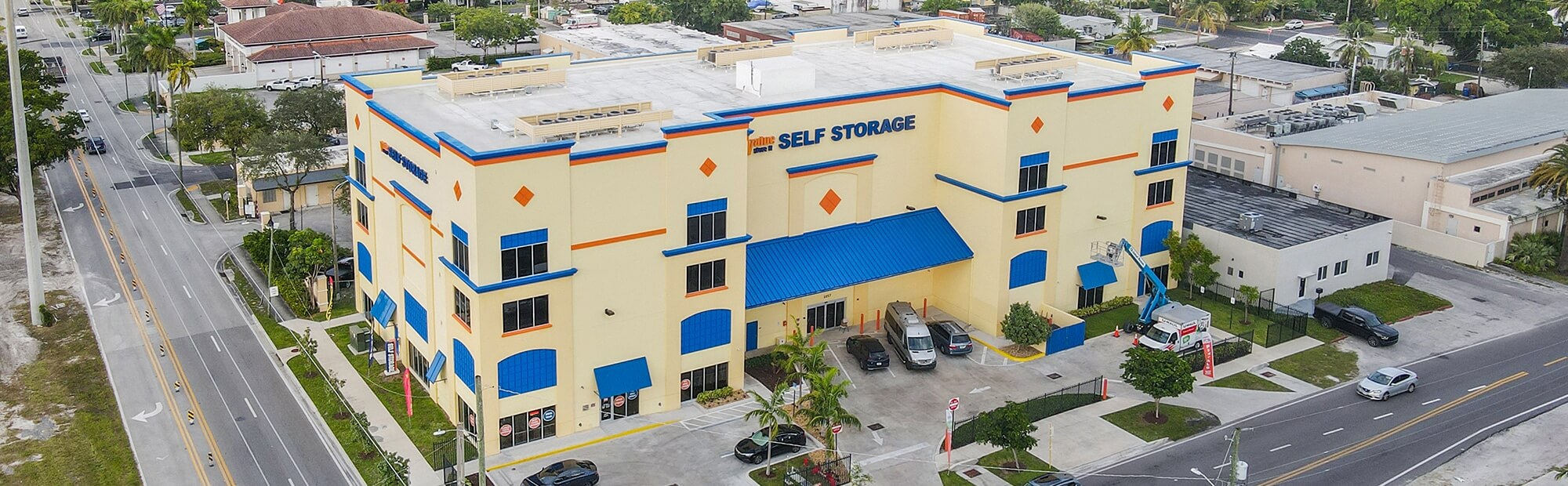
Visitors who become residents hit the same problem eventually, because South Florida homes are built without basements and the attic is unusable in the heat. Sizes at our Fort Lauderdale facility scale with that. A 10×5 unit holds the contents of one room, a 5×15 space takes a studio apartment’s worth, and 10×15 units hold a two-bedroom apartment. A 10×20 unit fits a three-bedroom home, the 10×30 is the largest we rent here and handles a four-bedroom home, and the storage size guide shows what each footprint actually holds.
Winter residents face a different version, since closing the place up in May and moving furniture twice makes little sense when a 10×10 storage unit holds a one-bedroom apartment’s worth through the summer. Rentals are month-to-month with no long-term contract, so a single season is a normal length of stay. If a Fort Lauderdale visit turns into a move, our Fort Lauderdale self-storage location carries the sizes, hours and contact details in one place.