
The best time to visit Miami, FL, is April and May. Dry season weather is still holding, spring break has cleared out, and rates come off the March peak before the summer heat and daily storms arrive in June. December through February delivers the most reliable weather and the highest prices of the year. September and October are the cheapest months to fly and stay, and they are also the statistical peak of hurricane season. This guide walks the Miami calendar season by season, with the events, closures and parking realities attached to each one.
Miami Runs on Two Seasons, Not Four
Miami has a dry season and a wet season, and everything else follows from that. The dry season runs roughly November through April: highs in the mid 70s to low 80s, low humidity, and long stretches without rain. The wet season runs roughly May through October, mid 80s to low 90s, with near daily afternoon thundershowers that usually pass in under an hour. Official climate normals for the city come from the National Weather Service Miami office, measured at Miami International Airport.
The practical version of that split is simple. In the dry season you can plan an afternoon outdoors and expect it to happen. In the wet season you plan the beach, the garden or the mural walk for the morning and keep something indoors in reserve for about 3 p.m. The rain rarely cancels a day here, but it reliably reshapes one.
Geography matters as much as the calendar. The City of Miami held 442,241 people at the 2020 Census on roughly 36 square miles, inside a metro of about 6.46 million, so most of what visitors call Miami sits in other municipalities. South Beach and the Art Deco Historic District are in the City of Miami Beach. Fairchild Tropical Botanic Garden is in Coral Gables, and Bill Baggs Cape Florida State Park is on Key Biscayne.
The Miami Calendar, Season by Season
December Through February: Peak Weather and Peak Prices
December through February is the most comfortable stretch of the Miami year and the most expensive. Highs sit in the mid to high 70s, humidity is at its annual low, and rain is uncommon. The trade is cost and company: Art Basel Miami Beach reprices the entire city for a fortnight in December, and the holidays do the same again. The Greater Miami Convention and Visitors Bureau events calendar is the place to check before booking.
January and February are the coolest and driest months, and a rare cold front can push the water below comfortable for some swimmers, which surprises first timers. February brings the Miami International Boat Show. Stone crab is in season too: Florida's stone crab claw season runs October 15 through May 1, which is why Joe's Stone Crab in South of Fifth has a line down the block in January and no claws at all in July.
March: Ultra, the Miami Open and the Year's Biggest Crowds
March is the busiest month in Miami and the one to book furthest ahead. The Miami Open, Ultra Music Festival, Miami Music Week and Carnaval Miami with its Calle Ocho street festival all land inside a few weeks, and spring break overlaps the whole thing. Hotel rates surge, South Beach parking becomes a genuine problem, and restaurant reservations that are easy in October are gone in March.
March is still a good time to be here if you came for an event or you do not mind crowds. If you did not, aim a few weeks either side of it. The weather in late February and mid April is functionally identical, and both cost less. Our guide to where to stay in Miami is worth reading before you commit to a March week.
April and May: The Value Sweet Spot
April and May are the best combination of weather and price on the Miami calendar. Spring break is over, the dry season has not broken yet, and rates fall well off the March peak. Water temperatures are climbing back after the winter fronts, so swimming is comfortable again. Stone crab runs out on May 1, and by mid May the first afternoon storms start rolling in from the Everglades.
This is also when locals reset for summer. South Miami-Dade households pull the paddleboards, coolers and beach chairs back out of the garage, and the ones who ran out of room put the off-season half in a 5×10 unit in Cutler Bay. If you want the Miami Beach Beachwalk or Ocean Drive at their best, walk them between 8 and 10 a.m., before the heat and the sidewalk touts.
June Through August: Heat, Daily Storms and Miami Spice
June through August is hot, humid and cheap, and it is the honest answer for travelers whose dates are fixed by school holidays. Expect highs in the low 90s, dew points to match, and a thundershower most afternoons. July and August are the slowest tourism months of the year in Miami, which shows up in hotel rates and in the Miami Spice prix fixe program that runs through August and September across the city's best restaurants.
Summer is when the indoor list earns its keep. Perez Art Museum Miami is free for everyone on Thursdays after 5 p.m. and stays open until 9 that night, which is the best free evening in the city. The same humidity that makes an August afternoon unpleasant is why anything left in an unconditioned garage here warps, and why climate controlled storage in Miami is the local default rather than an upgrade.
September Through November: The Cheapest Months and the Quiet Reward
September and October are the cheapest months to visit Miami and the emptiest. The water is at its warmest all year, the beaches are uncrowded, and the City of Miami Beach has run $1 per hour parking promotions from August through October, which tells you exactly where the city sits in its own season. The catch is hurricane risk, covered below.
Late October into November is the reward for waiting. Heat eases, humidity drops, hurricane risk falls away, and prices have not yet climbed back to December levels. Stone crab reopens October 15. Seasonal residents who spend summer up north start coming back, which is also when the car storage in Miami that sat quiet all summer starts emptying out.
Hurricane Season, Explained Honestly
The Atlantic hurricane season runs June 1 through November 30, statistically peaks on September 10, and concentrates its most intense activity between mid August and mid October, according to the NOAA National Hurricane Center. An average season produces 14 named storms, 7 hurricanes and 3 major hurricanes. Most Miami trips inside those dates are completely unaffected.
What a named storm usually costs a visitor is two or three days: closed beaches, cancelled boat and reef trips, and airport delays. Book refundable rates for September and early October, consider travel insurance, and watch the National Hurricane Center rather than a generic weather app, which tends to show a scary icon for a system 900 miles away.
Residents treat it differently. Hurricane season is haul-out season for anyone with a trailer, and boat storage in Miami fills up in the weeks before a forecast peak rather than after one.
Timing Your Days: Closures, Parking and Causeways
Miami's museums close on weekdays, not Mondays, which catches people out. Perez Art Museum Miami is closed Tuesday and Wednesday. Vizcaya Museum and Gardens is closed Tuesdays and open 9:30 a.m. to 4:30 p.m. otherwise, with construction on site, so check before you build a day around it. Many Miracle Mile shops in Coral Gables close on Sunday.
Parking is the other daily constraint. Miami Beach runs 66 surface lots, 12 garages and 19 residential permit zones on pay-by-plate machines and phone apps, and in peak season the garages are the only reliable option. For the Everglades, Shark Valley parking is typically full by 10 a.m. from December through April, so arrive at opening or pick a different day trip from Miami.
Getting around changes what season costs you. Brickell and downtown are walkable and served by the free Metromover, Metrorail reaches Miami International Airport, and Brightline runs north to Fort Lauderdale and West Palm Beach without a car. Everything else needs one, and the MacArthur and Julia Tuttle causeways to Miami Beach are where March traffic actually bites. Travelers on a long layover or an early flight sometimes park bags and gear in a 5×5 locker near Miami International Airport rather than dragging them around.
Frequently Asked Questions
What is the best month to go to Miami?
April is the single best month. The dry season is still running, humidity has not climbed, spring break crowds have gone home, and hotel rates have dropped off the March peak. Water is warm enough to swim comfortably, and stone crab is still on menus until May 1. February is the runner-up if you want the coolest, driest weather and do not mind paying peak season rates for it.
What is the cheapest month to go to Miami?
September is the cheapest month, with August and early October close behind. Those are the hottest, most humid weeks of the year and the statistical peak of hurricane season, so demand collapses and rates follow. Miami Beach has run dollar-an-hour parking promotions across that stretch. If you book September, book refundable and accept that two or three days could be rearranged by weather.
Is October a good time to visit Miami?
Late October is genuinely good and early October is a gamble. The first half of the month still sits inside the most active part of hurricane season, while the second half usually brings falling humidity, comfortable evenings and low crowds at prices nowhere near December's. Stone crab season reopens on October 15, so the last two weeks of the month get you the season's first claws without the winter crowd.
What is the worst time to visit Miami?
Early to mid September is the worst window: peak heat, peak humidity, peak hurricane probability, and the fewest reasons to be outside in the afternoon. March is the other one to avoid, for the opposite reason. The weather is excellent, but the Miami Open, Ultra and spring break arrive together and you pay the highest rates of the year for the busiest version of the city.
How many days in Miami is enough?
Four days covers Miami properly: one for the beach and the Art Deco district, one for Wynwood and the Design District, one for Little Havana, Coconut Grove and Coral Gables, and one for a day trip to the Everglades or Key Biscayne. Three works if you skip the day trip. Add a fifth if you are visiting in the wet season, because you will lose afternoons to rain.
Storage That Fits Around the Miami Seasons
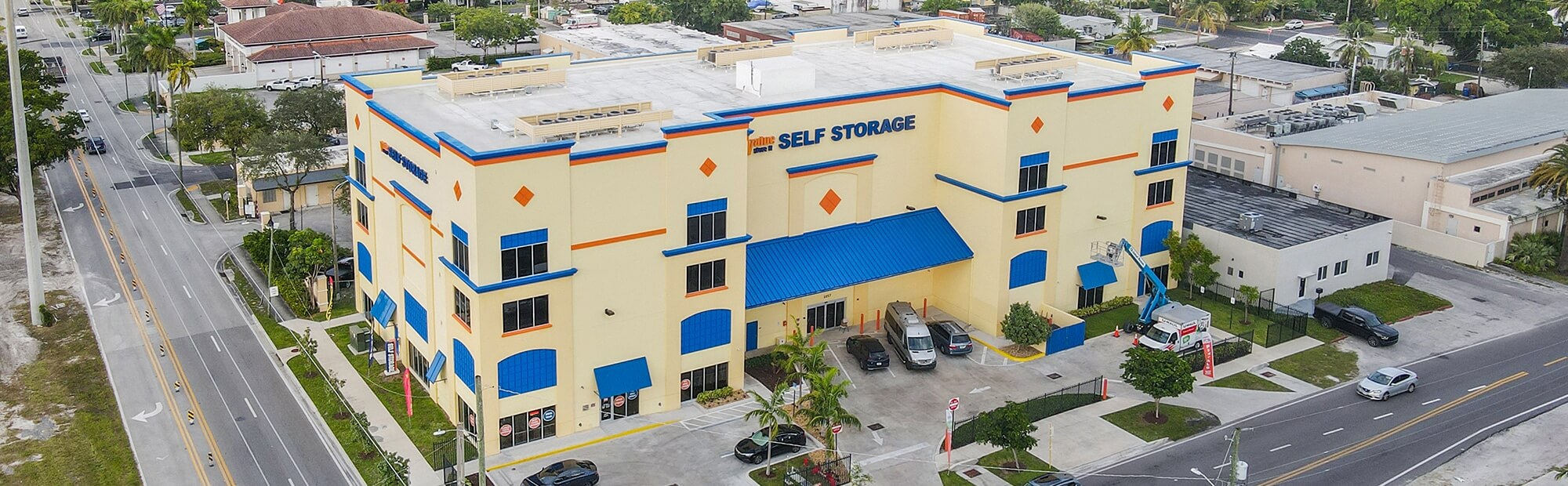
Value Store It runs three Greater Miami facilities, all month to month with no long term contract. Value Store It in Miami covers the city itself. A 5×5 unit in Miami holds a season of luggage and holiday bins, 5×10 storage in Miami and a 10×10 unit in Miami take a studio or a one bedroom, and 10×15 storage in Miami, a 10×20 unit in Miami and a 10×30 unit in Miami step up to a whole house. RV parking in Miami is there for the vehicle that will not fit at home.
Anyone basing a longer stay well south of downtown will want the Cutler Bay facility instead. Off-season gear fits inside one 5×5 locker in Cutler Bay; step up to the 10×5 unit in Cutler Bay for roughly what a small apartment holds, or 10×10 storage in Cutler Bay when the pile is bigger than that. Emptying a seasonal rental usually means the 10×15 unit in Cutler Bay, then 10×20 storage in Cutler Bay, then the 10×30 unit in Cutler Bay at the top end. Climate controlled units in Cutler Bay matter most once the wet season sets in. Visitors who leave a boat or a second vehicle down here between trips have boat storage in Cutler Bay plus RV parking in Cutler Bay alongside car storage in Cutler Bay.
The Miami Airport location suits people flying in and out. A 5×10 unit near the airport or a 10×5 unit near the airport handles a short stay, while 10×10 storage near the airport, 10×15 storage near the airport, a 10×20 unit near the airport and a 10×30 unit near the airport take bigger loads. Climate controlled storage near Miami International is the sensible default in the wet season, and the storage unit size guide works out which one you need by room.
Pick your season first and the rest of the trip gets easier. Start with things to do in Miami, then book the dates, and if a visit turns into a longer stay, Value Store It can hold what will not fit in the meantime.