Moving to Vero Beach, FL comes down to one decision you make early: barrier island or mainland. The island buys a short walk to the Atlantic and costs the most per square foot in the county. The mainland buys space, newer construction and a 10- to 15-minute drive to the sand. Cost of living, insurance and schools all read differently depending on which side of the Indian River Lagoon you land on.
Florida charges no state income tax, and Livability reports a median home value of $465,857 and a median household income of $70,004. The trade is a small job market, hot summers and hurricane season every year from June through November.
The Island, the Mainland and the I-95 Corridor
Vero Beach is smaller than newcomers expect, and the county around the city is much bigger. The 2020 Census counted 16,354 people inside the city limits against 159,788 across Indian River County, and Vero Beach is the county seat, with about 11.5 square miles of land. Much of what people mean by Vero Beach is unincorporated county, so watch which taxing and school boundaries an address falls in.
The map sorts into three price bands. The barrier island, zip code 32963, runs from The Moorings north through Central Beach to Indian River Shores and Orchid, and carries the highest prices in the county. The close-in mainland band sits between the lagoon and US 1, 10 minutes from the water at a much lower price point. The third band runs west along State Road 60 toward I-95, holding the newest subdivisions plus Indian River Mall, Vero Beach Outlets and Sandridge Golf Club.
Two bridges connect the bands, the Merrill P. Barber Bridge on State Road 60 and the 17th Street Bridge to the south, and those crossings explain local traffic entirely. One rule shapes everything else: nothing on the barrier island may be built above four stories, which is why there’s no wall of towers on the beach and why island inventory stays tight.
Barrier Island Neighborhoods and What the Premium Buys
Central Beach: The Island’s Walkable Village
Central Beach is the compact village at the heart of the island, and it’s one of the two Vero districts, along with historic downtown on the mainland, where you can get around on foot. Historic homes sit on tree-lined streets minutes from Humiston Park and the Ocean Drive shops, and the Vero Beach Farmers Market has run there every Saturday from 8 a.m. to noon since 2007. You pay a clear premium for walkability and still drive to the mainland for groceries.
South Beach and Riomar: Quieter Sand, Same Island
South Beach runs down the island below the 17th Street Bridge around South Beach Park, and it’s residential where Central Beach is commercial. Lifeguards, picnic shelters and on-site parking at South Beach Park make it the beach families default to, and Riomar just north is one of the older island addresses with direct beach access. Both suit buyers who want the island without the foot traffic.
The Moorings and Castaway Cove: Clubs, Docks and Gates
The Moorings is a gated community of houses, townhomes and condos built around The Moorings Yacht & Country Club, which runs two private 18-hole courses: Jim Fazio’s Hawk’s Nest and a Pete Dye par 64 whose front nine sits on an island in the lagoon. Castaway Cove is newer and priced in the island’s middle. Not every home in either comes with a dock, which is why boat storage is a normal line item here.
Indian River Shores and Orchid: The Far North End
Indian River Shores is its own municipality north of the city line, home to The Village Shops under the oaks and the John’s Island Club. Farther north sits Orchid, where Orchid Island Golf & Beach Club wraps an Arnold Palmer course inside a gated community. This end is quiet and heavily seasonal, which suits second-home buyers and retirees who want club life, and it means a 15- to 20-minute drive to downtown.
Mainland Neighborhoods, Where Most People Actually Buy
McAnsh Park: Established, Central and Close to Everything
McAnsh Park is an established mainland neighborhood of mostly single-family homes near the center of the city, quiet and tree-lined, with easy access to downtown, the hospital and the Miracle Mile plazas where residents actually shop. Buyers get mature landscaping at a fraction of island prices and pay for it with a 10-minute drive to the beach.
Vero Beach Highlands and Florida Ridge: The Value End
Vero Beach Highlands and Florida Ridge sit south and west of the city core, where the county’s most affordable detached houses are. Homes here are suburban and unglamorous, lots are generous, and the beach is a 10- to 15-minute drive. Anyone moving down from a high-tax state finds the most room per dollar in this band.
Grand Harbor: Golf and a Marina on the Lagoon Side
Grand Harbor is a gated mainland community on the lagoon with golf, a marina and tennis, aimed at buyers who want country club amenities without island prices. It reads as a resort more than a neighborhood, with private roads and maintained common areas. If you won’t use a club, the dues buy a lifestyle you don’t want.
West Vero: Newest Homes, Longest Drive
West Vero holds the newest construction in the county, plus Vista Plantation, Indian River Club and the county-owned Sandridge Golf Club. This band trades beach proximity for interstate access, which is the right call if you commute out of the county or fly often. Budget 15 to 20 minutes to the sand.
Cost of Living, Home Prices and the Bills Nobody Warns You About
The financial argument for the Treasure Coast is simple: no state income tax and the homestead exemption on a primary residence. Against a northern state with an income tax, that gap gets wide fast.
Housing carries an enormous range, from mainland neighborhoods well under the island’s prices to oceanfront addresses running into the millions. Property taxes stay moderate by coastal standards, and Ownwell puts the median Vero Beach property tax bill at $2,703 a year.
Electricity is the bill that catches out-of-state buyers. You’ll run air conditioning for most of the year, and summer power bills climb accordingly. Insurance is the other one: premiums run high, and lenders require flood insurance in designated flood zones, many of them on the island. Get quotes on a specific address before you make an offer.
Renting for a season first is sound. Star Suites, an all-suite inn built by Riverside Theatre to house its visiting actors, is the area’s extended-stay option, and Encore Sunshine Travel RV Resort covers the snowbird who wants a season rather than a lease. Either way you’re living out of a suitcase for months, which is when a 5×5 locker earns its keep for boxes and seasonal gear.
The Job Market and the Employers That Anchor It
Vero Beach has a small job market, and pretending otherwise helps nobody. With about 16,000 people in the city and roughly 160,000 countywide, the range of employers is narrow next to Orlando or Tampa. A large share of recent arrivals are remote workers and retirees who brought their income with them.
Piper Aircraft, which builds small aircraft beside Vero Beach Regional Airport, calls itself the largest private employer in Indian River County. Cleveland Clinic Indian River Hospital is the other pillar. Everything else is tourism, retail, construction and county government, and winter is the busy season for all of it. If you need a specific corporate role, look at Melbourne, Fort Pierce and Port St. Lucie as commuting options.
Schools, Colleges and Healthcare
The School District of Indian River County runs the county’s public schools, from Fellsmere in the north to the Oslo corridor in the south. Vero Beach High School covers grades 9 through 12 with advanced placement courses and career academies, Indian River Charter High School is a tuition-free public charter, and Saint Edward’s School is a co-educational Episcopal college-prep school running pre-kindergarten through grade 12 on the barrier island.
Indian River State College operates its Mueller Campus in Vero Beach, so finishing general education requirements locally is straightforward, with Florida Institute of Technology about 45 minutes north in Melbourne. Healthcare is stronger than a city this size has any right to expect, which is a real reason retirees pick Vero over smaller Florida towns. Cleveland Clinic Indian River Hospital carries the specialty load, so verify your plan is accepted before you move.
Getting Around Vero Beach and Which Airport to Use
You need a car. Central Beach and historic downtown are the two districts where you can walk between errands, and even there most residents drive for groceries. GoLine runs zero-fare bus routes across Indian River County on weekdays, which is genuinely useful and genuinely limited, with routes that don’t replace a car for commuting.
Four roads do the work: I-95 along the county’s western edge, US 1 as the main north-south road, State Road A1A running the length of the barrier island and State Road 60 carrying you east-west from the interstate to the causeway. Breeze Airways flies nonstop from Vero Beach Regional Airport, and for a wider schedule Orlando Melbourne International is about 45 minutes north, with Palm Beach International and Orlando International farther out. Vero Beach is approximately 105 miles southeast of Orlando.
Season, Storms and What Closes on Mondays
Hurricane season runs June 1 through November 30, and the National Hurricane Center puts the peak around September 10, with most activity between mid-August and mid-October. That doesn’t mean a storm every year, but it does mean an annual routine: panels checked in May, a supply run when a system forms, and a plan for pets and medications. Flood risk, not wind, is what drives your insurance bill on the island.
Summer is hotter and wetter than the brochures suggest. NOAA’s 1991 to 2020 normals for Vero Beach Regional Airport put the mean daily high at 90.6°F in August against 73.3°F in January, with 53.25 inches of rain a year and August and September the rainiest months. Humidity and salt air are why a climate-controlled storage unit in Vero Beach is the default rather than an upgrade for anything wood, leather, paper or electronic.
Winter season runs December through April, when snowbirds, traffic and room rates peak, and restaurant waits and beach parking are worst in January and February, though it’s also the best weather of the year. Our guide to the best time to visit Vero Beach breaks the year down month by month. Two local habits save wasted trips: several attractions close Mondays, including McKee Botanical Garden, the Indian River Citrus Museum and Walking Tree Brewery, and plenty of snowbird households leave a second vehicle behind for the summer, which is what car storage exists for.
What Vero Beach Gives You Back
The reason people accept the heat and the insurance is what fills the calendar. Riverside Theatre in Riverside Park bills itself as Florida’s largest professional theater, and the Vero Beach Museum of Art offers free admission to anyone 17 and under and to everyone on the second Saturday of each month, with a new 90,000-square-foot building planned. Downtown along 14th Avenue holds the galleries and American Icon Brewery, which pours inside the 1926 municipal power plant.
Outdoors carries the rest. Pelican Island National Wildlife Refuge, created by Theodore Roosevelt in 1903, was the first national wildlife refuge in the country and sits north of town near the Historic Jungle Trail, a nearly 8-mile sand road on the National Register. Golf Digest counts 32 courses within 15 miles of Vero Beach, 11 of them public, and our roundup of the area’s golf courses covers which ones a nonmember can play.
Our guide to where to eat in Vero Beach covers the oceanfront rooms and downtown kitchens, the local brunch rooms handle weekend mornings, and the shopping guide to Vero Beach sorts the Ocean Drive boutiques from the outlets. The city is also mid-transformation: Three Corners, a planned redevelopment of 38 city-owned acres at the western end of the 17th Street Bridge, is still in negotiation, with the four initial proposals ranging in cost from $250 million to $500 million.
Frequently Asked Questions
Is Vero Beach a good place to move to?
Vero Beach suits people who want coastal Florida without the crowds or the price tags of Miami and Palm Beach. You get 26 miles of shoreline, a four-story height limit that keeps the skyline low and no state income tax. The trade is a small job market, hot humid summers and hurricane prep every year.
Is Vero Beach a good place to live for retirees?
Yes, and retirees make up a large share of new arrivals. No state income tax and the homestead exemption stretch retirement income, and Cleveland Clinic Indian River Hospital gives the county serious specialty care. The club and nonprofit scene is unusually active for a town this size.
Is Vero Beach a safe place to live?
Residents consistently describe Vero Beach as quiet and safe in published local reviews, and the small population and low turnover are part of why. Safety varies by street and by hour rather than by city average, so check a specific address with the Indian River County Sheriff’s Office rather than a citywide score.
Do hurricanes hit Vero Beach?
Vero Beach sits on the Atlantic coast and experiences both tropical storms and hurricanes. The season runs June 1 through November 30 and peaks around September 10, with most activity between mid-August and mid-October. Flood insurance is required by lenders in designated flood zones, and storm prep is a standing annual cost.
What’s the nicest part of Vero Beach?
Central Beach is the answer most locals give: a low-rise island village where you can walk from a historic home to the beach, the Saturday farmers market and a string of restaurants. Orchid Island and John’s Island are more exclusive and more expensive. If value matters more than a walkable address, McAnsh Park is the better trade.
Is Vero Beach up and coming?
Vero Beach is growing carefully rather than fast, and that’s deliberate. The four-story limit on the barrier island caps what can be built there, so growth is pushing west. The Three Corners waterfront redevelopment, a new building planned for the Vero Beach Museum of Art and new housing in the south county are all in the works.
Settling in and Finding Room for What Doesn’t Fit Yet
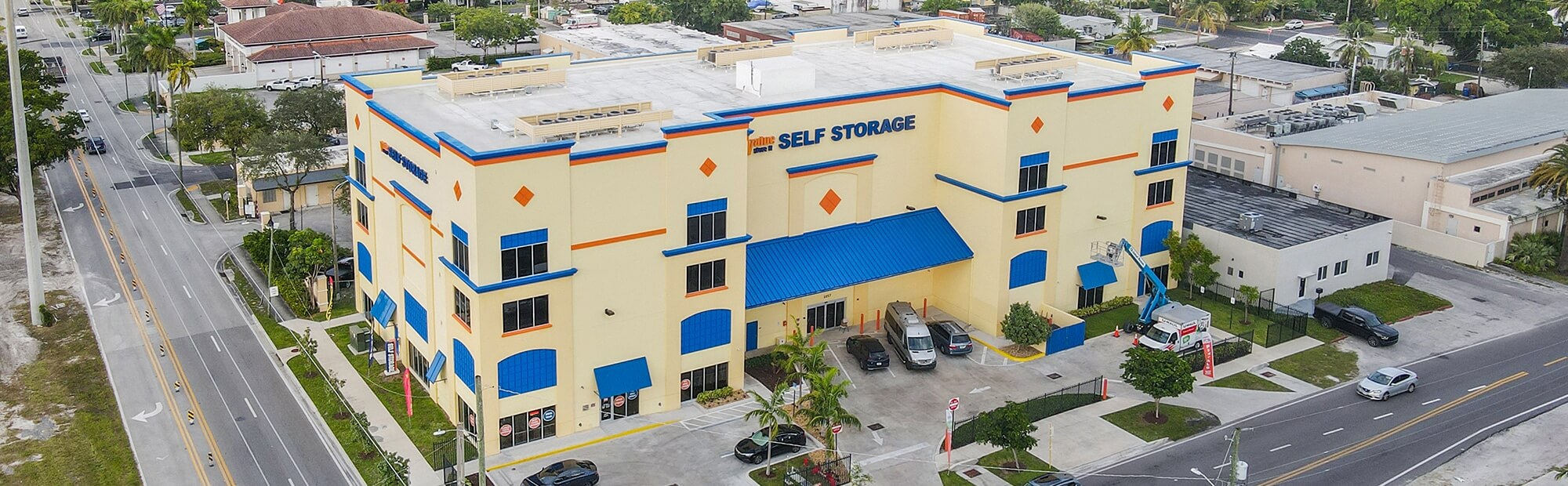
Almost every move here involves a gap. Closing dates and moving trucks rarely line up, and a Florida house holds less than the one you left up north, because square footage trades attics and basements for single-story living. Value Store It’s Vero Beach facility rents month-to-month with no long-term contract, is open every day and has truck rental on site.
A 10×10 storage unit holds a one-bedroom apartment’s worth of furniture, which is the usual answer for anyone downsizing out of a larger northern house and not ready to sell the dining set. A 5×10 unit takes the contents of one room, a 10×5 unit is that footprint the other way round, and between closings a 10×15 unit fits a two-bedroom apartment while a 10×20 unit holds a three-bedroom home.
If you’re unsure, the storage unit size calculator estimates it from what you own, and the moving checklist is worth reading before you tape the first box. If you need extra space while you settle into Vero Beach, Value Store It can help.