
The best time to visit Miami Lakes, FL, is December through April, with March the sweet spot: normal highs around 81°F, low humidity and everything outdoors comfortable at noon. Miami Lakes runs on two seasons rather than four, a wet one from roughly mid-May to mid-October and a dry one from late October through April. This guide goes season by season on weather, crowds, hotel demand and hurricane risk.
Miami Lakes Weather and the Two-Season Calendar
The nearest long-term record comes from Miami International Airport, where the NOAA 1991 to 2020 climate normals show an average high of 84°F, a low of 71°F and 67.41 inches of rain a year, with no snow. Those annual figures hide the split that governs a trip. The National Weather Service in Miami dates the rainy season from May 15 to October 15, so May and October are the hinges.
Geography decides how much that matters. Miami Lakes is a planned town of 30,467 people built from 1962 around 23 man-made lakes, about 15 miles northwest of downtown Miami (Wikipedia). Main Street Miami Lakes holds the restaurants, cinema, theater and shops, the parks and golf club fill the daylight hours, and what a 6.5-square-mile town can’t hold sits in a ring through Hialeah, Doral and Broward County. Because the center is an open-air street rather than a mall, the season decides whether noon is pleasant.
December Through February: Cool, Dry and Busy
December through February is Miami Lakes at its coolest and driest. January’s normals are 76°F for the high and 61°F for the low, and January is the driest month of the year at 1.83 inches of rain, with December close behind at 2.44. Demand follows the weather: in January 2026 more than eight of every 10 hotel rooms in Miami-Dade County were occupied, the highest rate among the country’s 25 largest metro areas, WLRN reported.
Main Street is the reason to come in this stretch. The town center covers 228,000 square feet (Graham Commercial) with about two dozen restaurants, a 13-screen cinema and a resident theater company, and the Miami Lakes farmers market runs every Saturday from 9 a.m. to 5 p.m. From December through April you can walk all of it at midday without hunting for shade.
Winter is also the prime tee sheet at Miami Lakes Golf Club, the 18-hole, par-72 course that reopened for public play in November 2025 after a complete redesign by architect Bruce Hepner. Weekday rounds are easier to land than weekend mornings, and our guide to golf courses in and around Miami Lakes covers the wider rotation. Book a room early too, because Miami Lakes Hotel on Main is the only hotel on the street and where to stay in Miami Lakes gets tight in peak season.
March Through May: The Best Weather of the Year
March through May brings the most comfortable weather of the year before the rain returns. March normals run 81°F for the high and 66°F for the low with 2.46 inches of rain, and April warms to 84°F and 70°F. It isn’t a bargain window, though. The region’s spring break stretch runs from mid-February to mid-April, so March books up fast, and late April and May are the easier weeks to find a room.
Spring is also the last comfortable stretch for the big outdoor day trips. Shark Valley in Everglades National Park has its peak season from December into April, parking usually fills by 10 a.m., private vehicles can’t go past the lot, and waits are longest between 10 a.m. and 3 p.m., according to the National Park Service. An early arrival in March is a different day out from a noon arrival in July, and our day trips from Miami Lakes guide has more in that range.
May is the pivot. Normal highs reach 87°F, rain climbs to 6.32 inches and afternoon storms start, and many seasonal residents store their gear before heading north. Bikes, patio cushions and beach gear all need somewhere to sit until fall, and a 5×10 unit, about the size of a small walk-in closet, holds the contents of one room.
June Through September: Heat, Afternoon Storms and the Indoor Backup
June through September is hot, wet and the slowest stretch for visitors. Normal highs run 89°F to 91°F, June is the wettest month at 10.51 inches, September follows at 10.22, August at 9.58 and July at 7.36. The rain usually arrives as a heavy afternoon thunderstorm rather than all-day drizzle, so the summer plan is outdoors before noon and indoors from about 2 p.m.
The indoor half of that plan is better than a town this size usually manages. CMX Cinemas Miami Lakes 13 sits on Main Street with reserved seating, so you pick your seat when you buy the ticket. The Garrison Taproom & Billiards, a few doors down, has pool tables, trivia on Wednesdays and karaoke on Fridays. Westland Mall in Hialeah, a short drive south and anchored by Macy’s and JCPenney, is the air-conditioned answer an open-air Main Street can’t be.
Evenings reopen the town. Veterans Park’s walking path and the lakefront parks are far better after 6 p.m. than at 3 p.m. in July. Summer is also why anything you leave behind between visits belongs in climate-controlled storage in Miami Lakes rather than a garage, since months of heavy humidity are hard on paper, electronics, wood and upholstery.
October and November: The Quietest Stretch of Good Weather
October and November are the most underrated months on the Miami Lakes calendar. Rain falls from 10.22 inches in September to 7.65 in October and 3.53 in November, November normals settle at 81°F and 68°F, and the winter crowd hasn’t arrived. The rainy season officially ends in mid-October, so the second half of the month is the better bet.
The calendar helps too. Sabor Fest brings Hispanic Heritage Month music, food and art to Main Street on October 10, 2026, at 4 p.m., one of the free town events listed by the Town of Miami Lakes, and Main Street Players has its 2026/2027 season underway on Main Street. October still sits inside hurricane season, so November is the safer half of this window.
Hurricane Season and Rain, Answered Straight
Atlantic hurricane season runs June 1 through November 30, and most activity falls between mid-August and mid-October, with a statistical peak on September 10, according to the National Hurricane Center. For a visitor, the everyday reality isn’t a hurricane. It’s an afternoon thunderstorm and standing water on low-lying streets for an hour or two afterward.
Street flooding is a fair thing to ask about, and the honest answer is that some streets here do hold water after heavy rain. The town sits at about 7 feet of elevation, and about 0.8 of its 6.51 square miles is water. Drainage is an active municipal project rather than a solved one: the Loch Lomond Phase II drainage improvements are out to bid, backed by a $920,000 Florida DEP legislative grant. Residents clear garage space in early June so patio furniture has somewhere to go once a storm gets named, and a 10×5 unit holds the contents of one room.
Three rules cover the season. Book refundable rates from August through October. Follow the National Hurricane Center rather than a hotel’s cancellation window. Expect that a named storm can shut attractions for a day or more. That risk is why late summer is the cheapest time to book.
Parking, Walkability and What Closes When
Parking is the quiet advantage of visiting Miami Lakes instead of central Miami. Main Street offers more than 1,600 free spaces plus a 300-space garage east of Chela’s, and every space is complimentary, so you neither pay nor circle. The town also runs Freebee, a free electric on-demand ride service, from 6 a.m. to 7 p.m. Monday through Thursday, 6 a.m. to 10 p.m. Friday, 9 a.m. to 9 p.m. Saturday and 10 a.m. to 2 p.m. Sunday.
Everything outside the town center needs a car: Westland Mall, Amelia Earhart Park in Hialeah and the nearest beach at the Hollywood Beach Broadwalk in Broward County all sit outside walking range. Amelia Earhart Park is open sunrise to sunset, with free parking Monday through Thursday and $8 parking Friday through Sunday and holidays, according to Miami-Dade County Parks.
A few hours are worth knowing. First Watch, a drive north at Palm Plaza on NW 67th Avenue, serves 7 a.m. to 2:30 p.m. daily and never opens for dinner. Miller’s Ale House, on the Main Street center’s NW 67th Avenue side, runs its dine-in kitchen until 2 a.m. every night. Santa Diabla, the speakeasy inside Chela’s Coctelería next door, opens Thursday from 6 p.m. to midnight and Friday and Saturday from 6 p.m. to 2 a.m., and it takes reservations only, with no walk-ins. If a short visit stretches into a month between leases, a 5×5 locker, about the size of a small closet, holds the boxes an extended-stay suite won’t.
Frequently Asked Questions
What’s the best month to visit Miami Lakes, Florida?
March. Normal highs are about 81°F, humidity is low and rain averages just 2.46 inches. It’s also one of the busiest months of the year, so book early. January is the driest month at 1.83 inches but runs cooler. Pick late April or May if an easier booking matters more than the best possible weather.
What’s the worst time to visit Miami Lakes?
Late August through mid-September. August highs average about 91°F with heavy humidity, September averages 10.22 inches of rain, and hurricane season peaks on September 10. It’s the cheapest time to book and still workable with mornings outdoors and afternoons indoors, but it’s the hardest window for an all-day outdoor plan.
Is October a good time to visit Miami Lakes?
Yes, especially the second half. The rainy season ends around mid-October, rain drops to about 7.65 inches from September’s 10.22, and the winter crowd hasn’t shown up. Sabor Fest lands on Main Street on October 10, 2026. The caveat is that October remains inside hurricane season, so book something refundable.
Is July a good time to visit Miami Lakes?
July works if you build the day around the weather rather than against it. Expect highs near 91°F, high humidity and a heavy afternoon thunderstorm most days. Go out early for the parks and Main Street, take the middle of the day indoors at the cinema or Westland Mall, then come back out after sundown.
What month can you swim in Miami Lakes?
Pool weather lasts most of the year, since even January’s normal high is 76°F. Check your hotel before you pack a swimsuit, though, because some pools are seasonal or closed for repairs. A January cold front can drop evenings toward the normal low of 61°F, so you’ll want a jacket walking back from an open-air patio.
Storage in Miami Lakes for the Season You’re Not Using
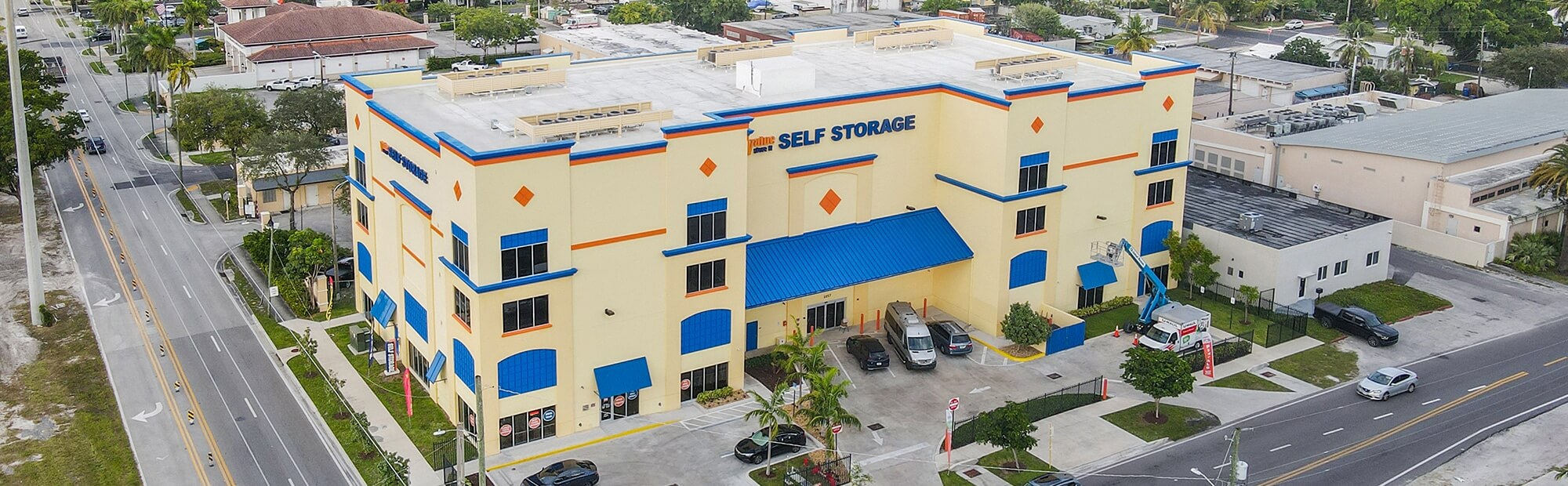
Seasonal living creates a seasonal space problem, and Value Store It’s Miami Lakes location rents month-to-month with no long-term contract. Above the small lockers, the lineup runs through a 5×15 unit for a studio apartment’s contents and a 10×10 space that takes a one-bedroom apartment, then up to a 10×15 for a two-bedroom apartment, a 10×20 for a three-bedroom home and 10×30 units for a four-bedroom home. Our storage unit size guide beats guessing at the door.
Come in the dry season, plan the summer around the afternoon rain, and treat late October as the quiet reward. Then keep going with the things to do in Miami Lakes guide, and if the trip turns into a move, Value Store It can hold what won’t fit while you settle in.