
The best time to visit North Miami Beach, FL is late November through April, when humidity drops, daily means sit between 67F and 75F, and afternoon thunderstorms stop arriving on schedule. May, October and November are the value months, with warm water and softer hotel rates. June through September is hot, wet and cheap, and it sits inside hurricane season. This guide runs the year season by season, with the weather numbers, the crowd and price swings, and the local closing days that catch visitors out.
The Two Seasons That Set the North Miami Beach Calendar
North Miami Beach is a 5.4 square mile inland city in northeast Miami-Dade, and despite the name it has no beach inside its own limits. The sand sits across the Intracoastal Waterway in Sunny Isles Beach, ten minutes east, so this guide covers the city plus what is within a short drive: Aventura, Sunny Isles Beach, Bal Harbour, Haulover, North Miami and North Beach.
Two seasons matter here, not four. NOAA's 1991 to 2020 normals put the annual daily mean at 76.0F with 68.33 inches of rain across 137.7 days. November through April is dry and mild. May through October is hot and wet, and nearly everything about timing a trip follows from that split.
December Through February: Peak Weather and Peak Rates
December through February is the most comfortable stretch of the year and the most expensive. January is both the coolest month, at a 67.1F daily mean with an average high of 75.2F, and the driest, at 2.30 inches of rain. December closes the year at 69.7F. Pack a light jacket for evenings and nothing heavier.
Price is the trade. Art Basel Miami Beach in early December lifts hotel rates across the whole metro, and snowbird season holds them up into February. Our guide to hotels near North Miami Beach sorts the Aventura, Sunny Isles Beach and Hallandale Beach options by what you want from the trip.
The Ancient Spanish Monastery is at its best now, because the visit is mostly outdoors. Its 12th century cloisters were shipped from Segovia, Spain and reassembled here in the 1950s. It closes every Monday and Tuesday and often shuts for weddings on other days, so check the current schedule before you drive over.
Winter is also when part-time residents rent their condos out at the top of the market, which is why a 10×10 storage unit in North Miami Beach tends to fill in December. It holds a one bedroom's worth of furniture while someone else has the keys.
March and April: Warm, Dry, and Crowded by Festivals
March and April give you the best combination of warmth and dryness all year. March averages a 71.3F daily mean with 2.67 inches of rain, the third driest month, and April climbs to 75.2F. The water has warmed from its winter dip, which makes spring the right window for swimming.
Crowds are the catch. Ultra Music Festival in late March pushes prices up across Miami-Dade, and spring break traffic clogs the causeways from mid-March on. Visitors staying a month or more, and residents clearing a spare room for family, park the overflow in a 5×5 locker rather than live around stacked boxes.
Haulover Park is the closest real beach and the best one to use before summer heat makes midday unbearable. It holds the largest remaining stretch of undeveloped beachfront in Miami-Dade County across a 1.4 mile shoreline, with year-round lifeguards. Parking runs $7 on weekdays and $10 on weekends, and the northern third of the beach is clothing optional, so families should use the southern lots.
Dry season is also the time to drive west. At Shark Valley in Everglades National Park, receding water concentrates alligators and wading birds along the 15 mile paved loop. Park entry runs $35 per vehicle for seven days, per VISIT FLORIDA, and the tram tour is worth reserving. Several day trips from North Miami Beach only really work in these months.
May, October, and November: The Value Months
May, October and November are where weather and price meet in the middle. May is the hinge, at a 78.5F mean and 5.68 inches of rain as the storm pattern starts. October eases back to 79.0F. November drops to 73.4F and 4.55 inches, and by Thanksgiving the dry season has usually taken hold. Rates in all three sit well below the winter peak.
Oleta River State Park, off NE 163rd Street, is the best argument for a shoulder-season trip. Florida's largest urban park has 15 miles of mountain biking trails, kayak and paddleboard rentals on a mangrove-lined estuary, and a sheltered swimming beach. Ride or paddle in the morning, since long stretches of trail have no shade.
November brings back comfortable outdoor evenings, which matters at the Miami Beach Bandshell in North Beach, 20 minutes away. The open-air amphitheater runs more than 140 concerts and festivals a year, and a fair share of them are free.
Part-time residents who come down for the cool half of the year keep bikes, paddleboards and beach chairs in a 5×10 unit between visits, which beats flying gear down twice a year.
June Through September: Heat, Afternoon Storms, and Miami Spice
June through September is genuinely hot, genuinely wet, and the cheapest time to come. Daily means run 81.5F, 82.7F, 83.1F and 82.0F, with highs near 90F, and rainfall goes 9.03, 8.30, 9.28 and 10.26 inches. September is the wettest month of the year, with rain falling on 18 days.
The daily pattern matters more than the monthly totals. Mornings are usually clear, a thunderstorm rolls through in the mid to late afternoon, and the evening clears again. Plan outdoor activity before 1 p.m. and you lose far less of the day than the rain figures suggest.
Summer's compensation is the food. Miami Spice restaurant months run through August and September, and Morton's The Steakhouse in North Miami Beach takes part. Our roundup of restaurants in North Miami Beach covers the 163rd Street corridor, where dinner rarely needs a reservation.
When the storm arrives, the reliable indoor answers are the Frost Museum of Science downtown and the 93 foot Aventura Slide Tower inside Aventura Mall. More sit in our guide to things to do in North Miami Beach.
Hurricane Season and What It Actually Means for a Trip
Atlantic hurricane season runs June 1 through November 30, with a climatological peak on September 10 and most activity between mid-August and mid-October, according to the National Hurricane Center. A named storm rarely ruins an entire trip. The common outcome is a few days of rain bands, cancelled boat trips and red flags on the beach.
Book August through early October with a flexible rate and travel insurance. Residents treat it as a season rather than an event. Patio furniture and anything that can become a projectile comes indoors when a cone appears, and the humidity that follows a storm is why climate controlled storage in North Miami Beach is the default here rather than an upgrade.
There is no winter to plan around. The coldest normal low is 59F in January, so a cold snap means a jacket after dark, not a coat.
Parking, Closing Days, and What Needs a Car
Almost nothing here is walkable between neighborhoods, so budget for a car and for parking. Greynolds Park, 249 acres with a boathouse, kayak launch, two playgrounds and six picnic shelters, charges nothing to park Monday through Thursday and $10 Friday through Sunday. A weekday picnic there costs exactly zero.
Mondays and Tuesdays are the trap. The Ancient Spanish Monastery is closed both days, and so is MOCA North Miami, which otherwise opens Wednesday from noon to 7 p.m. and Thursday through Sunday from 10 a.m. to 5 p.m. County beach lots, Haulover included, close an hour before sunset in every season.
Miami Beach has run $1 hourly parking through July and August, which makes the hottest months the cheapest time to drive the 163rd Street causeway for a Lincoln Road afternoon. Any other month, park once in a garage and walk.
Frequently Asked Questions
What is the best month to go to Miami Beach?
March is the strongest single month for the North Miami Beach area. The daily mean sits at 71.3F, rainfall averages 2.67 inches, and the ocean has warmed up from its winter low. The compromise is spring break traffic and Ultra Music Festival pricing late in the month. February offers nearly the same weather with fewer crowds.
Which is better, North or South Miami Beach?
They answer different questions. South Beach has the Art Deco district, Lincoln Road and the nightlife, plus the crowds and parking costs that come with all three. The north end, meaning North Beach, Sunny Isles Beach and Haulover, has quieter sand and easier access from North Miami Beach. Stay north for calm days and an optional night out.
When is hurricane season in Miami?
Atlantic hurricane season runs June 1 through November 30, with the statistical peak on September 10 and the busiest stretch between mid-August and mid-October. That does not make a summer trip a bad idea, but it does make a refundable booking a sensible one. Most storm impacts amount to heavy rain and closed beaches for a few days.
What is the cheapest time to visit Miami?
August and September are the cheapest months, and September is the best value if you can tolerate the heat and 10.26 inches of rain. Hotel rates bottom out, Miami Spice menus run through both months, and attractions are close to empty on weekday mornings. May and early November are the compromise: cheaper than winter, drier than late summer.
Is North Beach a good area in Miami?
North Beach is the northern end of Miami Beach, around 71st Street, and it is a different experience from South Beach. It has MiMo architecture, wide and uncrowded sand, and the Miami Beach Bandshell for outdoor concerts. Food and parking cost less than further south, and it is 20 minutes from North Miami Beach.
Storing Seasonal Gear in North Miami Beach
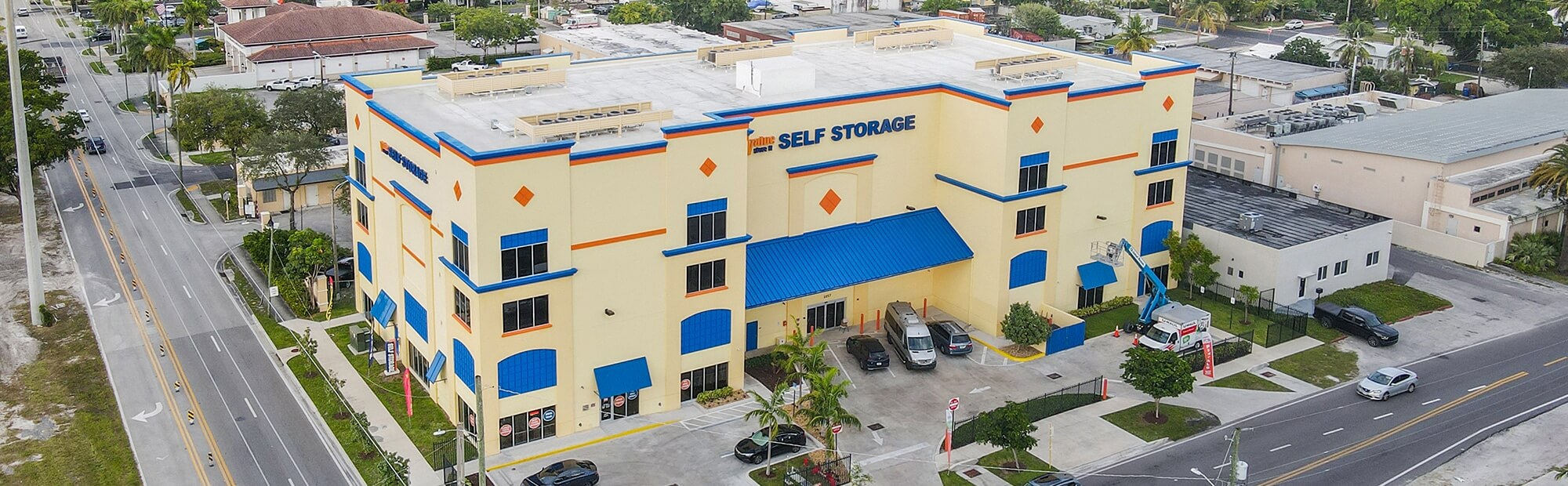
Seasonal living here means the same objects rotate in and out all year: beach chairs in winter, shutters in September, holiday bins in December. Value Store It's North Miami Beach facility rents month to month with no long term contract, which suits a calendar that changes with the weather. Beyond the sizes above, a 5×15 unit takes a bedroom plus sports gear, 10×15 units and 10×20 units hold a household through a renovation, and a 10×30 space covers a small business inventory. Our unit size calculator settles the question in a couple of minutes, and if a long stay or a summer renovation leaves you short on space, Value Store It can help.