Moving to Melbourne, FL comes down to picking one of three centers plus a beach: Historic Downtown Melbourne, the Eau Gallie Arts District, the newer Suntree and Viera corridor, and the barrier island towns a five minute causeway hop east. Melbourne is a mid sized Space Coast city of 84,678 residents at the 2020 Census, sitting 72 miles southeast of Orlando on the Indian River Lagoon. This guide covers what it costs, which neighborhood fits you, the job market, schools, hurricane season, and the first month after the truck pulls away.
Melbourne at a Glance: Geography, Size and Who Lives Here
Melbourne is a full city, not a suburb of somewhere else. It covers 44.15 square miles in Brevard County, and the metro runs continuously from Palm Bay north to Rockledge, so your address may say Melbourne, West Melbourne, Indialantic, Palm Bay or Viera depending on which side of a road you buy on. That distinction drives taxes, school zoning and insurance, so read the address rather than the listing headline.
The population skews older and comfortably middle income. U.S. News Real Estate puts the current count at about 87,278 residents with a median age of 42.3 and a median household income of $69,900. Aerospace and defense paychecks pull the income up, retirees pull the age up, and Florida Institute of Technology and Eastern Florida State College hold a student population in the middle.
Distances are short and predictable. The Eau Gallie Arts District, the causeway, Indialantic and the airport all sit inside ten minutes of downtown, Brevard Zoo and Palm Bay fall inside twenty, Viera and Rockledge run to thirty five, and Cocoa Beach and the Kennedy Space Center Visitor Complex take 35 to 60 minutes.
What It Costs to Live in Melbourne
Florida charges no state income tax, including on retirement income, and that one fact does more to sell Brevard County than any brochure. Against the $69,900 median household income, a single earner clearing roughly $60,000 lives comfortably in Palm Bay or West Melbourne, while a beachside house or new construction in Viera wants two incomes behind it.
Housing splits cleanly by geography. Palm Bay carries the cheapest housing in the metro, West Melbourne trades walkability for square footage, Melbourne Village and the Babcock Street corridor hold mid century houses at mid market prices, Suntree and Viera sell newer construction at a premium, and the barrier island commands the most per square foot in the county.
The line item newcomers underestimate is insurance. Homeowners coverage, wind coverage and, for many addresses, separate flood coverage are real monthly costs on Florida's Atlantic shoreline, and a wind mitigation inspection on an older roof can swing a quote hard. Get quotes on a specific address before you make an offer, because the number can change which house you can afford.
Budget for two cars as well, and for the gap between a closing date and a lease end that so many moves here run into. A 5×10 unit holds a studio's worth of furniture for those few weeks, and the storage unit size calculator will tell you if that is optimistic before you book.
Where to Live in Melbourne: A Neighborhood Guide
Historic Downtown Melbourne: Walkable Blocks and Free Street Parking
Historic Downtown Melbourne is the only walk everywhere address in the city. Eight blocks of New Haven Avenue and East Strawbridge run under oak canopy with more than 40 locally owned restaurants and bars, more than 45 shops and free street parking, plus waterfront parks on Crane Creek and the Indian River. Housing is older and smaller, mostly rentals and renovated bungalows, and it suits people who would rather not drive to dinner.
Meg O'Malley's Restaurant and Irish Pub at 812 E New Haven Avenue is the neighborhood living room, with a Sunday jazz brunch, live music through the week and happy hour Monday through Friday from 2 to 6 p.m. Two blocks along, Hell 'n Blazes Brewing Company pours Florida themed beer inside a restored 120 year old hardware store at 1002 E New Haven Avenue until 11 p.m. on Friday and Saturday, earlier the rest of the week.
The trade off downtown is space. Most units come without a garage, and festival Saturdays swallow the street parking. A 5×5 locker is the usual fix for bikes, holiday bins and the paddleboard that will not fit in a one bedroom apartment.
The Eau Gallie Arts District: Murals, a Brewery and River Views
The Eau Gallie Arts District, known locally as EGAD, was its own city until Melbourne absorbed it in 1969, which is why it still has a separate historic core. Oak lined streets run down to the lagoon past historic homes, galleries, murals and First Friday art walks. It draws buyers who want downtown's independence with better water views and quieter nights.
Intracoastal Brewing Company at 652 West Eau Gallie Boulevard anchors the district socially, with a rotating house lineup, food on site and a beer garden that works as the neighborhood back yard until 10 or 11 p.m. most nights. Pineapples, at 1434 Pineapple Avenue, stacks three floors above the Indian River, with a live music room on the second floor and the sunset seats on the roof. For a real dinner, The Brevardian Riverfront sits on a coquina rock cliff above the water in a 1948 river house, open under that name since 2024.
Suntree and Viera: New Construction, Newer Schools and I-95 Access
Suntree and Viera form the master planned corridor north of the city along Wickham Road and I-95, and they are where most relocating families with school age kids end up. Wide roads, newer housing stock, the county's newest schools and quick interstate access are the pitch. Nothing is walkable, so plan on driving for coffee.
The Avenue Viera is the corridor's town center, an open air property with more than 80 shops and restaurants, a free splash pad and ten new major retailers added during 2025. Brevard Zoo, at 8225 North Wickham Road, is the other anchor and better than a city this size has a right to expect, with more than 900 animals in open air habitats, kayaking through the Africa loop and a zip line course above the exhibits. Parts of its Paws On loop are closed for renovation as of August 2026.
New construction is also where timing goes wrong most often, because closings slip and families land in a rental with a full house of furniture and nowhere to put it. 10×20 units are the size that swallows a three bedroom house while a build finishes.
West Melbourne: Value Housing, Big Box Retail and the Airport
West Melbourne is the practical answer for buyers who want space for the money. The retail spine runs along New Haven Avenue, Palm Bay Road, Minton Road and Evans Road, and Melbourne Orlando International Airport sits at the edge of it, which is a real advantage if you travel for work. It is not charming, and residents are honest about that.
Melbourne Square is the metro's enclosed mall, open since 1982 with every anchor space still occupied, which is not true of most Florida malls its size. For the first week in a new house, Burlington at 1750 Evans Road keeps the latest retail hours in the city, until 11 p.m. most nights and midnight on Friday and Saturday, and stocks bedding, luggage and storage basics. The bealls store at 1401 S Babcock Street carries the home goods side, and the Melbourne shopping guide has more on where locals actually shop.
Beachside: Indialantic, Melbourne Beach and Indian Harbour Beach
The barrier island towns across the Melbourne and Eau Gallie causeways are separate municipalities, and locals say so precisely. Indialantic, Melbourne Beach, Indian Harbour Beach and Satellite Beach are low rise, uncrowded and more residential than resort, which is why people pay the premium. Melbourne Beach village around Ryckman Park is the one beachside pocket where you can walk to coffee, the library and the sand.
Djon's Steak and Lobster House is the island's fine dining room and the reservation people make for anniversaries, while Sunnyside Cafe at 300 Ocean Avenue handles a plain American breakfast a short walk from the beach access. Paradise Beach and Park gives you free parking, restrooms and beach access without a resort attached, though the lot fills by late morning on holiday weekends. Spessard Holland Golf Course, run by the nonprofit Golf Brevard between the Atlantic and the Indian River, is the only true oceanside round here.
One more thing to know before you buy on the island. South of Melbourne Beach, the Archie Carr National Wildlife Refuge protects about 20.5 miles of beach as the densest loggerhead sea turtle nesting site in the country, which brings lighting restrictions on beachfront property in nesting season.
Palm Bay and Melbourne Village: The Value Plays South and West
Palm Bay is Melbourne's much larger southern neighbor and carries the cheapest housing in the metro, which is where a lot of buyers priced out of Viera land. It also has the best hiking within ten minutes of the city at Turkey Creek Sanctuary, where a 1.8 mile boardwalk runs through hammock along the creek and manatees, alligators and wading birds are routine sightings. The sanctuary is free and best in the morning, for wildlife and for shade.
Melbourne Village and the Babcock Street corridor sit between downtown and West Melbourne, with mature trees, mid century houses and a short drive to the hospital and Florida Institute of Technology. Renters and first time buyers who want downtown without downtown prices tend to end up here.
Jobs, Employers and Schools on the Space Coast
Melbourne's economy is aerospace, defense and engineering first. L3Harris Technologies is headquartered here, and Northrop Grumman, Leonardo DRS, Embraer and Rockwell Collins all have a local presence, which is why so many arrivals are engineers, machinists and program managers. Several of those employers sit within about three miles of the West Melbourne hotel strip, so plenty of new hires start out there before they buy.
Education runs from a large county district up to a research university. Brevard Public Schools serves Melbourne, West Melbourne, Palm Bay and the beach towns, with charter options in Viera, Palm Bay and West Melbourne. Florida Institute of Technology sits just off Babcock Street, and Eastern Florida State College runs campuses across the county, so a two year to four year path is realistic without leaving Brevard.
The launch calendar is the part outsiders never plan for. Cape Canaveral is close enough up the coast that launches become part of the local rhythm, and some people set an alarm for them for years while others stop noticing by the second winter.
Hurricane Season, the Rain Machine and the Local Daily Rhythm
Melbourne has two seasons instead of four, and the National Weather Service office here dates them precisely: the wet season starts around May 28 and the dry season around October 17. From June through September, colliding Gulf and Atlantic sea breezes fire off near daily afternoon thunderstorms, a pattern the NWS calls the Florida Rain Machine, and it is why this corridor gets called the lightning capital of the United States.
Hurricane season runs June 1 through November 30, and the statistical peak falls between mid August and early October. Barrier island properties are the ones that draw evacuation orders while inland homes usually shelter in place, and hurricane deductibles and wind mitigation credits belong in your budget from the first mortgage conversation. Locals keep shutters, water and a plan on hand and treat none of it as drama.
Heat, not cold, sets the daily schedule. An older TripSavvy summary, last updated in December 2020, puts the average high at 82 F, July and August near 91 F, and August the wettest month at 7.7 inches. Residents hit the beach before 10 a.m. and move indoors after about 2 p.m. in summer. Winter costs you a jacket for a handful of nights, and the best time to visit Melbourne breaks the rest of the calendar down month by month.
Humidity carries a second cost most guides skip. Garages here are not dry, and leather, wood furniture, photographs, instruments and paper all suffer in an uncooled space through a Melbourne summer. Anything you would be upset to lose belongs in climate controlled storage in Melbourne rather than a corner of the carport.
Getting Around Melbourne Without a Long Commute
Melbourne drives easily by Florida standards. I-95 handles the runs north and south to Viera, Rockledge and Palm Bay, US-1 and Wickham Road carry local traffic, and the Melbourne and Eau Gallie causeways reach the barrier island in about five minutes each. Rush hour is measured in extra minutes rather than extra hours.
Downtown is the only district where you can park once and leave the car, and EGAD is walkable within itself. Everything else, groceries in Suntree and Viera included, assumes a vehicle. For exercise rather than transport, the paved Linear Park trail past the Brevard Zoo entrance runs about six miles round trip.
Your First Month in Melbourne: Getting Settled
Start on a Saturday morning. The farmers market at Riverview Park runs from 10 a.m. to 2 p.m. on the downtown waterfront and is the fastest way to meet neighbors and work out which growers and bakers you'll use all year. The monthly First Friday art walk in EGAD does the same job on a different night, and the moving checklist covers the address changes and utility transfers that get forgotten in week one.
Furnish the house before you decorate it. Renninger's Melbourne Flea and Farmer's Market at 4835 West Eau Gallie Boulevard opens Friday through Sunday from 9 a.m. to 4 p.m. and mixes produce, antiques and household goods, though the outdoor rows turn brutal after noon in summer. Style Encore in Melbourne works in both directions during a move, buying current season clothing for cash and selling a Florida wardrobe cheap once the wool coats stop earning their closet space.
Then start eating your way around. The independent kitchens cluster downtown and in EGAD, and our guide to the best restaurants in Melbourne sorts them by neighborhood and price, while Melbourne's brunch spots cover the wait times before you show up hungry. Families should also pick up library cards early, since the Melbourne, Eau Gallie and Melbourne Beach branches of Brevard County Public Libraries run free weekday children's programming in air conditioned rooms, which is its own argument in August.
Frequently Asked Questions
Is Melbourne, FL a good place to live?
Melbourne suits people who want beach access, an aerospace or engineering career and a real downtown without big city costs. You get no state income tax, three distinct centers and the barrier island ten minutes away. The trade offs are humidity from June through September, hurricane preparation every year, and homeowners insurance that runs higher than most of the country.
Are people moving to Melbourne, Florida?
Yes, steadily rather than explosively. Melbourne counted 84,678 residents at the 2020 Census, and U.S. News Real Estate now puts the city at roughly 87,278, a gain of a few thousand people in about five years. Most of the new construction is north of the city in Suntree and Viera and south in Palm Bay, because that is where the land is.
What is a good salary in Melbourne, Florida?
The median household income in Melbourne is $69,900, so a household above that figure is doing better than half the city. A single earner around $60,000 lives comfortably in Palm Bay or West Melbourne. Beachside and new construction in Viera realistically need two incomes, mostly because insurance and property taxes ride on top of the mortgage.
What are the pros and cons of moving to Melbourne, FL?
The pros are no state income tax, a strong aerospace and defense job market, a walkable downtown full of independent restaurants, and beaches that stay uncrowded. The cons are near daily summer thunderstorms, hurricane season from June through November, insurance costs that surprise people from other states, and a layout that needs a car almost everywhere outside downtown.
What is the nicest part of Melbourne, Florida?
It depends on what you want from a Saturday. Historic Downtown Melbourne wins on walkability and restaurants, the Eau Gallie Arts District wins on water views and character, Suntree and Viera win on newer houses and schools, and Indialantic and Melbourne Beach win outright if the ocean is the reason you're moving.
Storage While You Settle Into Melbourne
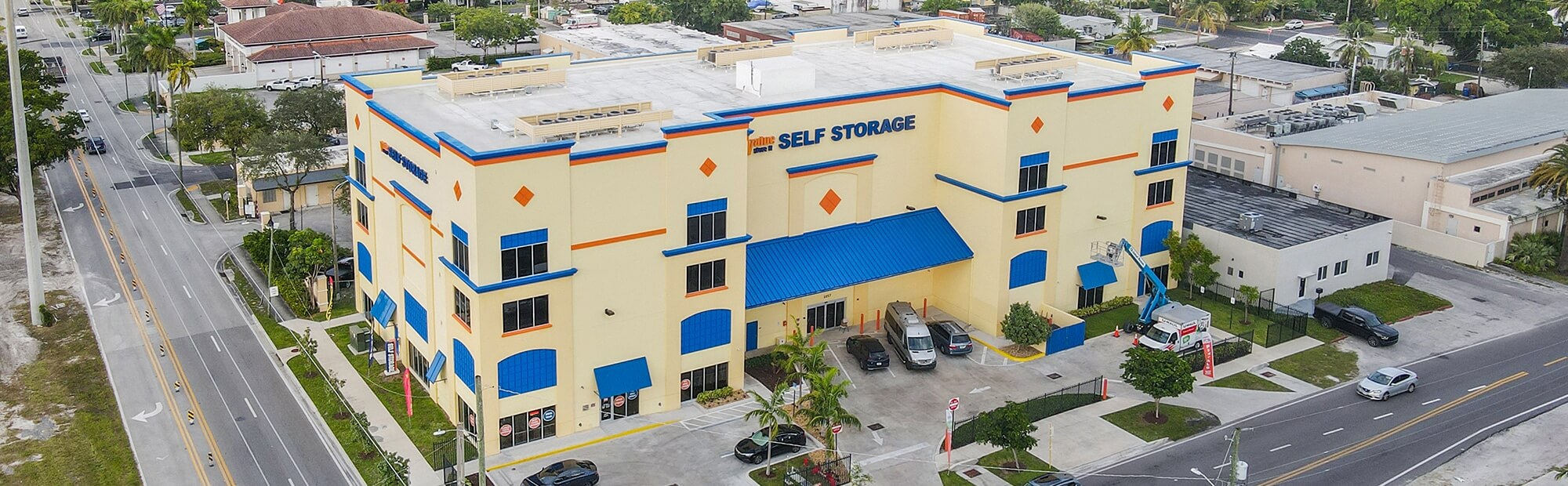
Moves here rarely happen in one clean step, so plan for an overlap. Value Store It's Melbourne facility rents month to month with no long term contract, which is what you want while a closing date is still moving. Smaller lockers cover seasonal gear and boxes, a 10×5 unit or a 5×15 space handles a bedroom set plus the beach and lawn equipment you have not unpacked yet, and 10×10 storage units hold roughly a one bedroom apartment. Larger households arriving from out of state usually land on a 10×15 unit, or the 10×30 when a full house and a workshop show up at once. If you're moving to Melbourne and the calendar will not cooperate, that is exactly the gap a unit is for.